
 Posted by
 Are All Carry On Luggage The Same Size
No, not all carry on luggage are the same size. While many people expect a standard size, real-world carry on luggage varies widely. Airlines have different rules, and brands make bags in many shapes and dimensions. This means a bag that is fine for one airline could be too large for another. It’s important to understand these differences to avoid surprises at the airport.
Why Carry On Luggage Sizes Differ
Carry on luggage size is not fixed because airlines set their own rules. Each airline decides what is best for their planes and passengers. Some airlines allow bigger bags, while others are strict about size and weight. Even within the same airline, international and domestic flights may have different limits.
Manufacturers also create bags in a range of sizes to fit these different rules. For example, a bag made for European airlines might be smaller than one made for U. S. airlines. Some brands offer “international” and “domestic” carry on sizes to help travelers choose correctly.
Besides airline rules, overhead bin space and plane size also matter. Smaller planes have smaller bins, so the allowed carry on size is less. Larger planes offer more space, but the rules still vary.
Best Carry On Luggage For Delta Airlines Under $50 :Stop Paying Over $200
The Most Common Carry On Luggage Sizes
Even though there is no single standard, some sizes are more common than others. In the U.S., the most accepted size is 22 x 14 x 9 inches (including wheels and handles). In Europe, a common size is 21.5 x 15.5 x 7.5 inches or 55 x 40 x 20 cm.
Here are some of the most used carry on sizes:
- 22 x 14 x 9 inches – Used by major U.S. airlines like American, Delta, and United.
- 21 x 14 x 8 inches – Slightly smaller, often used for international flights.
- 55 x 40 x 20 cm – Common European size.
- 56 x 45 x 25 cm – Used by British Airways and some Asian airlines.
But these are only guidelines. Always check your airline’s rules before flying.
How Major Airlines Define Carry On Size
Every airline publishes its own carry on size limits, and they can be quite different. Below is a comparison of the carry on size limits for some popular airlines:
| Airline | Carry on Size Limit (inches) | Carry on Size Limit (cm) | Weight Limit (kg) |
|---|---|---|---|
| American Airlines | 22 x 14 x 9 | 56 x 36 x 23 | No limit |
| United Airlines | 22 x 14 x 9 | 56 x 36 x 23 | No limit |
| Delta Air Lines | 22 x 14 x 9 | 56 x 36 x 23 | No limit |
| Ryanair | 21.6 x 15.7 x 7.8 | 55 x 40 x 20 | 10 |
| EasyJet | 22 x 17.7 x 9.8 | 56 x 45 x 25 | No limit |
| British Airways | 22 x 18 x 10 | 56 x 45 x 25 | 23 |
| AirAsia | 21.5 x 15.7 x 7.8 | 54 x 36 x 23 | 7 |
As you can see, both size and weight limits can change depending on the airline. Some airlines also allow a “personal item,” like a backpack or purse, with its own size rules.
Why Size Matters: Avoiding Problems At The Airport
Choosing the wrong size can cause real problems. If your bag is too big, the airline may force you to check it at the gate—and charge a high fee. Worse, you might have to repack or leave items behind. Sometimes, even if your bag fits the size, it can be rejected if it looks too full or heavy.
An insight many travelers miss: Airlines measure with wheels and handles included. Many people forget this, so their bag is a few inches too big. Another common mistake is thinking that “soft” bags are always allowed, but if you overpack, they may not fit the size checker.
:max_bytes(150000):strip_icc()/TAL-illustrated-chart-CARRYSIZE0325-35ad53e34fe94833b370f432af602978.jpg)
Credit: www.travelandleisure.com
Domestic Vs. International Carry On Sizes
Domestic and international flights often have different rules. In the U. S. , domestic flights usually allow the largest carry on size, but international flights (especially in Europe or Asia) can be stricter.
For example, U.S. airlines like United or Delta often allow 22 x 14 x 9 inches, but European airlines may require 21.5 x 15.5 x 7.5 inches or less. If you are flying multiple airlines or connecting through different countries, always use the smallest limit to avoid issues.
Another thing to remember: Some budget airlines allow only a small personal item for free and charge extra for a full-sized carry on.
The Impact Of Weight Limits
Many travelers focus only on size, but weight limits are just as important. Some airlines, especially outside the U.S., have strict weight limits for carry on bags. For example, AirAsia allows only 7 kg (about 15 lbs), while British Airways allows up to 23 kg (about 50 lbs).
If your bag is too heavy, you may have to check it or pay extra fees. Always check both size and weight before packing.
Popular Carry On Luggage Types And Their Dimensions
Carry on luggage comes in many shapes, not just sizes. Here are some common types:
- Roller suitcases – The classic, hard or soft case, usually with two or four wheels.
- Backpacks – Some are made to fit airline rules, but sizes vary.
- Duffel bags – Flexible, but easy to overpack and go over size.
- Underseat bags – Designed to fit under the seat, smaller than overhead carry ons.
- Expandable bags – Have zippers to increase space, but expanded size may not be allowed.
Here’s a quick comparison of common carry on bag types and their typical dimensions:
| Type | Typical Size (inches) | Notes |
|---|---|---|
| Roller suitcase | 22 x 14 x 9 | Most common for U.S. airlines |
| Travel backpack | 21 x 13 x 8 | Check straps and bulkiness |
| Duffel bag | 22 x 12 x 10 | Flexible, but can go over size if overpacked |
| Underseat bag | 17 x 13 x 8 | Fits under most airline seats |
| Expandable carry on | 22 x 14 x 9 (unexpanded), up to 12 inches deep (expanded) | Expanded size often not allowed |
Not all bags that say “carry on” will be accepted by every airline. Always check the exact dimensions.
How To Measure Your Carry On Correctly
To avoid surprises, measure your bag the way airlines do. Use a tape measure and include wheels, handles, and any external pockets. Measure the longest points for each dimension (height, width, depth).
Tips for measuring:
- Stand the bag on the floor and measure from the ground to the top (including wheels and handles).
- Measure width from the widest point, including side pockets.
- Measure depth from the thickest part, including front pockets.
If your bag is close to the limit, don’t overpack. Airlines may use a sizer box at the gate, and stuffed bags can become too large to fit.
Common Mistakes Travelers Make About Carry On Size
- Not checking the airline’s website before packing.
- Assuming international rules are the same as domestic.
- Forgetting to include wheels and handles in measurements.
- Using expandable bags in expanded mode—these often go over the limit.
- Ignoring weight limits, especially in Europe or Asia.
- Trusting the “carry on” label—some bags sold as carry on are too large for some airlines.
- Overpacking soft-sided bags, causing them to bulge and not fit in the sizer.
A useful tip: Always print or save the airline’s size rules before your trip. If staff question your bag, you can show the official rule.
The Role Of Personal Items
Most airlines allow a personal item as well as a carry on. This is usually a smaller bag, like a backpack, purse, or laptop bag. Size limits for personal items are stricter, often around 17 x 13 x 8 inches.
Personal items must fit under the seat in front of you. If the plane is full, airlines may ask passengers to check larger carry ons, but personal items almost always stay with you.
Be careful: Some low-cost airlines only allow a personal item for free. Larger bags may require a fee.

Credit: www.reddit.com
How Luggage Brands Label Their Bags
Luggage brands often use “carry on” to describe bags that fit most airline rules, but not all. Some brands make “international” and “domestic” versions. For example, a “domestic carry on” may be 22 inches tall, while the “international” is 20 or 21 inches.
Always look for the actual dimensions.
Some brands list interior size, not outside size. Always check the external size, including wheels and handles.
A non-obvious insight: Some brands round down dimensions. A bag listed as 22 inches could actually measure 22.5 inches with wheels. This can cause problems with strict airlines.
How To Choose The Right Carry On Size For Your Trip
When picking a carry on, consider:
- Which airlines you’ll fly – Check their size and weight rules.
- International vs. domestic flights – Choose the smaller size if flying both.
- Trip length and packing habits – Longer trips may need more space, but don’t risk oversize bags.
- Luggage type – Hard cases protect items but may be heavier. Soft bags can fit more but can bulge.
- Expandability – Use expandable bags carefully; only expand if the airline allows it.
If you travel often on different airlines, choose a bag that fits the strictest size rules. This avoids having to buy multiple bags.
Regulations And Enforcement: How Strict Are Airlines?
Enforcement of carry on size varies. Some airlines check every bag, especially budget carriers. Others are more relaxed, unless the flight is full. Airports often have “sizer” bins at check-in and boarding gates. If your bag does not fit, you may have to check it and pay extra.
Airlines are becoming stricter as more people try to bring large bags onboard. Be prepared for random checks, especially with new staff or full flights.
What Happens If Your Carry On Is Too Big Or Heavy?
If your bag is over the limit, the airline can make you:
- Check the bag at the gate (often with a fee).
- Remove items to make it fit.
- Pay overweight or oversize fees.
Fees can be high—sometimes $50 or more for a gate-checked bag. In rare cases, you may have to leave items behind.
To avoid this, always double check size and weight before leaving for the airport. Weigh your packed bag at home and measure it with a tape.
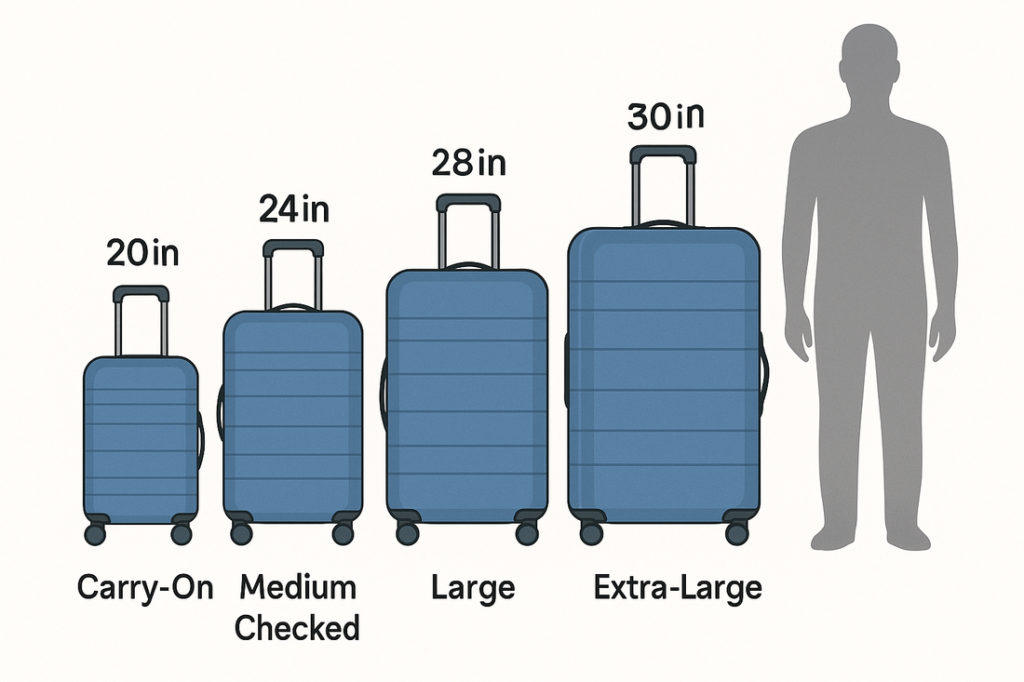
Credit: aotos.com
Tips For Maximizing Your Carry On Space
To get the most out of your carry on:
- Use packing cubes to organize clothes and save space.
- Wear your heaviest or bulkiest items on the plane.
- Roll clothes instead of folding to fit more.
- Keep liquids and electronics at the top for easy security checks.
- Choose lightweight bags to maximize the weight you can pack.
If you need more space, see if your airline allows a personal item, or pay for priority boarding, which sometimes allows extra bags.
The Future Of Carry On Luggage Sizes
Airlines may continue to change their rules as planes and passenger needs change. Some groups are trying to create a global standard carry on size, but this is not in place yet.
New smart bags have built-in scales to help travelers meet size and weight rules. Some airports are adding automated bag sizers. But for now, travelers must check each airline’s rules before every trip.
For more information on standardization efforts, you can visit the Hand luggage Wikipedia page.
Frequently Asked Questions
What Is The Most Common Carry On Luggage Size?
The most common size is 22 x 14 x 9 inches (56 x 36 x 23 cm), used by many U.S. airlines. However, this is not universal. Always check the rules for your airline.
Do Airlines Actually Measure Carry On Luggage?
Yes, especially on busy flights or with budget airlines. Many airports have “sizer” boxes at the gate. If your bag does not fit, you may have to check it.
Can I Use An Expandable Carry On Bag?
You can, but only if it fits the size limit even when expanded. Most airlines do not allow expanded bags if they exceed the allowed size.
Is There A Weight Limit For Carry On Luggage?
Some airlines, especially international and budget carriers, have weight limits (often 7-10 kg, or 15-22 lbs). U. S. airlines usually do not, but always check before you fly.
What Happens If My Carry On Is Too Big?
If your bag is too big, the airline may require you to check it, often for a fee. In some cases, you may have to remove items or leave them behind.
Choosing the right carry on luggage size is key to smooth travel. Not all carry on luggage are the same size, and rules can change based on airline, country, and even type of plane. By understanding the differences and planning ahead, you can avoid stress and extra costs on your next trip.
Safe travels!

Md Abdul Muhaimen is an experienced travel content writer and guide who has a Master’s in Information Systems Management from the University of Huddersfield. He is passionate about all things related to travel logistics and trip planning, and has assisted thousands of readers in choosing the proper luggage, knowing which items can be included in carry-on luggage, and understanding an airline’s policy with confidence.
Md Abdul has a sound grounding in systems thinking and data-driven content creation that allows him to bring clarity to complicated travel topics — from comparing the exact sizes of cabin bags from multiple airlines to developing helpful how-to guides to simplify a traveler’s experience.
He actually engages in travel forums on Quora, answers real user questions, and shares insights by posting on Medium blogs
.His work marries first-hand research, consumer-focused advice, and technical accuracy, and he is a voice that can be trusted among the travel and luggage community.