
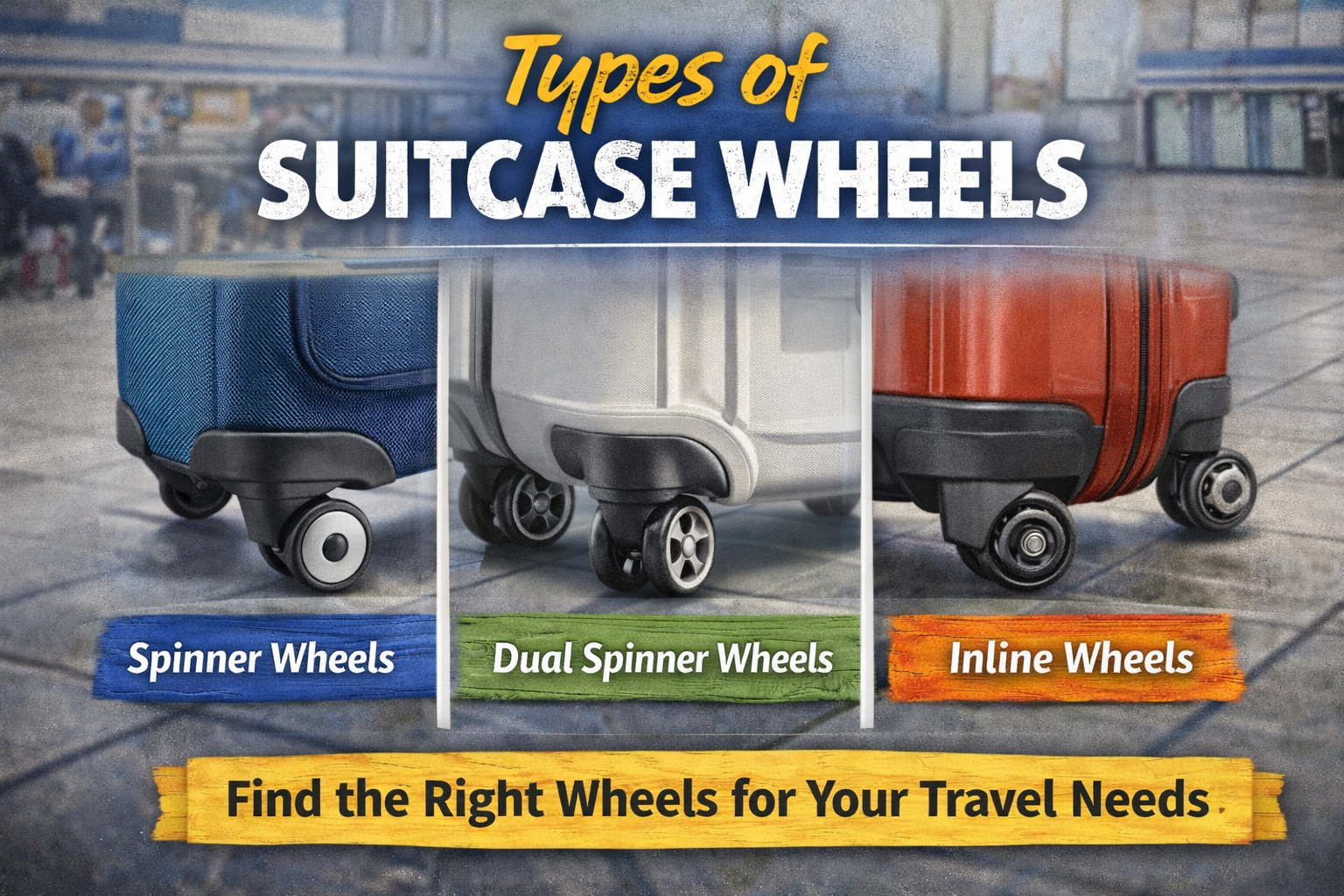
Types of Suitcase Wheels(2026) –Durable | How to Choose Wheels That Last
Overview: Types of suitcase wheels refer to the different wheel designs used on luggage to affect mobility, stability, and durability during travel. Common options include two-wheel inline skate wheels, which roll in one direction and suit rough surfaces; four-wheel spinner wheels, which rotate 360 degrees for easy maneuvering in tight spaces; and dual spinner wheels, offering improved balance and weight distribution. Wheel materials typically include rubber or polyurethane, influencing noise and wear resistance. Choosing the right wheel type depends on travel style, terrain, and suitcase size, with spinners favored for airports and two-wheel designs preferred for uneven ground.
We have comprehensive guideline on The Ultimate Carry-On Luggage
How Wheel Design Influences Travel Efficiency
Choosing the right suitcase wheels helps make travel easier and faster. The design of wheels affects how smoothly you move your luggage. It impacts control, speed, and how much effort you use. Good wheels reduce strain and help you move through airports or streets without trouble.
A suitcase is a portable, usually rectangular bag or container used for carrying clothes and personal items during travel.
Single Wheels vs. Double Wheels
Single wheels are larger and usually found on older suitcases. They roll straight but can be hard to turn quickly. Double wheels are smaller but come in pairs on each corner. They spin 360 degrees, making the suitcase easier to steer.
| Wheel Type | Pros | Cons |
|---|---|---|
| Single Wheels | Stronger on rough surfaces, simple design | Less maneuverable, harder to turn |
| Double Wheels | Better control, easy to roll in any direction | Can get stuck in cracks, smaller size |
Spinner Wheels vs. Inline Wheels
Spinner wheels rotate 360 degrees and let you push the suitcase beside you. They reduce wrist strain. Inline wheels roll in one direction and need tilting to move. They work well on uneven surfaces but need more effort.
- Spinner wheels offer better balance and smoother turns.
- Inline wheels are more durable on rough roads.
It is really important for you to know that you are allowed to carry on+ backpack before travel.
Material and Size Impact
The wheel material changes how it performs on different floors. Hard plastic wheels are light but noisy and less smooth. Rubber wheels absorb shocks and give better grip. Bigger wheels roll over bumps easier than smaller ones.
- Plastic wheels: Lightweight, best for airports.
- Rubber wheels: Quiet, good for streets and rough surfaces.
- Bigger wheels: Easier on uneven ground.
- Smaller wheels: Compact but less smooth.
Core Functions Of Suitcase Wheels
Suitcase wheels play a vital role in travel comfort and luggage durability. It is important for you to know the core functions of suitcase wheels helps travelers choose the right luggage. These wheels must support weight, allow easy movement, and reduce strain. The type and quality of wheels affect how luggage handles different surfaces and how comfortable it is to use. Below, we explore two main functions of suitcase wheels: load-bearing and weight distribution, and maneuverability and traveler ergonomics.
New Rules! Ryanair Carry-On Luggage Size
Load-bearing And Weight Distribution
Suitcase wheels must carry the entire weight of the luggage without breaking or slowing down. Good wheels evenly spread the weight to avoid putting too much pressure on one spot. This prevents damage to the suitcase and makes it easier to roll.
Key points about load-bearing and weight distribution:
- Strong materials: Wheels made from durable plastics or rubber handle heavy loads better.
- Wheel size: Larger wheels can support more weight and roll over rough surfaces easily.
- Wheel placement: Evenly spaced wheels help balance the load and improve stability.
| Wheel Type | Load Capacity | Weight Distribution |
|---|---|---|
| Inline wheels | Up to 25 kg | Focused on two points, less balanced |
| Spinner wheels | Up to 35 kg | Four points, evenly spread weight |
| Fixed wheels | Up to 30 kg | Two points, moderate balance |
Proper load-bearing wheels reduce wear on suitcase parts and help keep contents safe. They also make moving luggage easier on different surfaces like tiles, carpets, or pavement.
Maneuverability And Traveler Ergonomics
Maneuverability means how easily a suitcase moves in different directions. Good wheels allow smooth turns and quick stops. This helps travelers avoid stress and accidents in crowded places. Ergonomics focus on comfort and body movement while pulling or pushing luggage.
Features that improve maneuverability and ergonomics:
- 360-degree spinner wheels: Let you roll the suitcase in any direction without tilting it.
- Wheel suspension: Absorbs shocks from uneven floors, reducing wrist strain.
- Wheel size and material: Larger, rubber wheels glide better and reduce noise.
- Handle height: Adjustable handles match traveler height, improving posture.
Primary Classification Of Suitcase Wheels
Suitcase wheels make travel easier. They help move bags smoothly through airports, streets, and hotels. Choosing the right wheel type is important for comfort and convenience. Primary classification of suitcase focuses on wheel count, rotation style, and placement on the suitcase.
Overview Of Wheel Types By Count, Rotation, And Placement
Suitcase wheels mainly differ in three ways: the number of wheels, how they rotate, and where they are placed. These factors affect how easily you can pull or push your suitcase.
- Wheel Count: Suitcases usually have two or four wheels.
- Rotation Type: Wheels either spin 360 degrees or only roll forward and backward.
- Wheel Placement: Wheels can be fixed or set inside the suitcase corners.
Two-wheel suitcases have wheels only on one side. They roll straight and tilt when pulled. This design works well on rough surfaces like cobblestone or gravel.
Four-wheel suitcases have wheels on all four corners. These wheels spin 360 degrees. They offer smooth movement in any direction. Travelers can push or pull them without tilting.
| Wheel Feature | Two-Wheel Suitcase | Four-Wheel Suitcase |
|---|---|---|
| Number of Wheels | 2 | 4 |
| Rotation | Forward and backward only | 360-degree spinner wheels |
| Placement | On one side, usually rear corners | One wheel on each corner |
| Best Surface | Rough, uneven surfaces | Smooth, flat surfaces |
| Movement Style | Pull tilted suitcase | Push or pull upright suitcase |
Wheel placement also impacts suitcase balance. Wheels set inside corners protect them from damage. Fixed wheels stay in one direction. Spinner wheels rotate freely and offer more flexibility.
Suitcase Wheel Basics
Wheels support your bag and make moving through airports, hotels, and streets less tiring. Understanding the basics of suitcase wheels is key. This includes the materials used to make them and the sizes available. Both affect how well your suitcase rolls and lasts. Knowing these basics helps pick the best suitcase for your trips.
Materials Used
Suitcase wheels come in different materials. Each type offers different benefits and drawbacks. The most common materials include:
- Plastic: Lightweight and affordable but less durable. Can crack or wear quickly on rough surfaces.
- Rubber: Provides better grip and smoother rolling. More resistant to damage and noise.
- Polyurethane (PU): A mix of plastic and rubber qualities. Offers durability, smooth rolling, and shock absorption.
- Thermoplastic Elastomers (TPE): Soft, flexible, and quiet on hard floors. Less common but increasing in use.
Each material suits different travel needs. Plastic wheels work well for light travelers or short trips. Rubber and PU wheels handle rough surfaces and heavy loads better.
| Material | Durability | Noise Level | Best For |
|---|---|---|---|
| Plastic | Low | High | Light use, smooth surfaces |
| Rubber | Medium | Low | Various surfaces, moderate use |
| Polyurethane (PU) | High | Low | Heavy loads, rough surfaces |
| Thermoplastic Elastomers (TPE) | Medium | Very Low | Quiet rolling, indoor use |
Wheel Sizes
Wheel size affects how easily a suitcase moves over different surfaces. Larger wheels roll better over bumps, cracks, and uneven ground. Smaller wheels work best on smooth floors.
Common suitcase wheel sizes range from about 2 to 4 inches in diameter. Here is what to expect from different sizes:
- 2-2.5 inches: Compact and lightweight. Best for carry-on bags and flat surfaces like airport floors.
- 3 inches: A balance of portability and smooth rolling. Suitable for most travel conditions.
- 4 inches and above: Handles rough terrain well. Ideal for checked luggage and outdoor travel.
Choosing the right wheel size depends on travel style. Frequent travelers on city streets or airports might prefer smaller wheels. Travelers facing uneven pavements or outdoor trips benefit from larger wheels.
| Wheel Size | Advantages | Best Use |
|---|---|---|
| 2 – 2.5 inches | Lightweight, easy to store | Carry-on bags, airports |
| 3 inches | Good balance of size and durability | General travel |
| 4 inches and larger | Rolls smoothly over rough ground | Checked luggage, outdoor trips |
Spinner Wheels
Spinner wheels are one of the most popular options. These wheels stand out because they can spin in multiple directions, offering great control. They help travelers move their luggage smoothly in tight spaces like airports or train stations. Spinner wheels usually have four small wheels placed at each corner of the suitcase. This design helps keep the bag steady and balanced while rolling.
360-degree Rotation
Spinner wheels can rotate a full 360 degrees. This means the suitcase can move forward, backward, and side to side without lifting it. You can push, pull, or glide your luggage next to you with little effort. The 360-degree rotation improves maneuverability in crowded places. Here are some key points about this feature:
- Allows smooth turns on any surface
- Reduces wrist strain by letting you roll the suitcase alongside you
- Helps in narrow spaces like airplane aisles
- Increases control when changing direction quickly
This rotation makes spinner wheels different from traditional two-wheel suitcases. Those usually require tilting and dragging. Spinners let you keep the suitcase upright, which protects your belongings better. Below is a simple comparison table:
| Feature | Spinner Wheels | Two-Wheel Suitcases |
|---|---|---|
| Wheel Count | Four | Two |
| Movement | 360-degree rotation | Forward and backward only |
| Ease of Use | Rolls upright, less effort | Requires tilting |
| Best For | Crowded, tight spaces | Flat surfaces, longer distances |
Advantages And Drawbacks
Spinner wheels offer many benefits but also come with some downsides. Travelers enjoy them for easy movement and better handling. The main advantages include:
- Effortless navigation: Roll luggage in any direction with little force.
- Better balance: Four wheels keep the suitcase stable.
- Protects contents: Upright rolling reduces shaking inside.
- Convenient in crowded areas: Quick turns in airports or train stations.
Drawbacks to consider:
- Less durable on rough terrain: Small wheels can get stuck on gravel or uneven surfaces.
- More prone to damage: Wheels are exposed and can break if hit hard.
- Heavier luggage: The wheel system can add extra weight.
- Requires maintenance: Wheels may need cleaning and occasional repair.
Inline Skate Wheels
Among various types, inline skate wheels stand out for their smooth rolling and sturdy build. These wheels borrow their design from inline skates, making them popular for travelers who want a quiet, reliable ride across airports and streets.
Design Features
Inline skate wheels are usually larger and narrower than other suitcase wheels. This design helps in rolling smoothly over many surfaces. They often come in pairs on each corner of the suitcase, allowing better control and stability.
- Material: Made from hard polyurethane, which offers a good balance of grip and smoothness.
- Shape: Cylindrical, resembling small inline skate wheels for efficient movement.
- Bearings: High-quality ball bearings inside the wheels reduce friction and noise.
- Mounting: Wheels are fixed in a straight line, giving a sleek look and easy forward motion.
Here is a simple comparison table showing some key design features:
| Feature | Inline Skate Wheels | Spinner Wheels |
|---|---|---|
| Size | Medium to Large | Small to Medium |
| Shape | Round, Cylindrical | Round, Flat |
| Movement | Forward and backward | 360-degree rotation |
| Material | Polyurethane | Plastic or Rubber |
The design makes inline skate wheels ideal for long distances and uneven surfaces. They glide quietly and reduce the effort needed to pull a suitcase.
Durability Factors
Durability is a major reason travelers prefer inline skate wheels. These wheels are built to last through rough airport floors and bumpy sidewalks.
- Material Strength: Polyurethane resists wear and tear better than plastic.
- Shock Absorption: The wheels can absorb small shocks, protecting your luggage.
- Bearings Quality: Sealed ball bearings prevent dust and water damage, extending wheel life.
- Maintenance: Easy to clean and maintain for long-lasting performance.
Inline skate wheels handle heavy loads well. Their solid construction means fewer replacements and repairs. Below is a list of durability benefits:
- Strong against cracks and chips
- Resistant to flat spots after long use
- Less noise from rough surfaces
- Stable rolling even on uneven ground
Overall, these wheels provide reliable performance over many trips. Their durability keeps your suitcase rolling smoothly, no matter the journey.
Caster Wheels
Caster wheels are one popular option. They are small wheels that can spin 360 degrees. This feature lets you move your suitcase smoothly in many directions. Caster wheels help you navigate crowded places and tight spaces. They often appear on carry-on and checked luggage.
Movement Mechanism
Caster wheels rotate on a vertical axis. This allows the wheel to turn freely in any direction. The main parts of the movement mechanism include:
- Swivel bearing: Connects the wheel to the suitcase and enables rotation.
- Wheel axle: Holds the wheel in place and allows it to spin horizontally.
- Wheel tread: The part that touches the ground, usually made of rubber or plastic.
These parts work together for smooth movement. The swivel bearing lets you change direction easily. The wheel axle allows rolling forward and backward. The tread provides grip on different surfaces.
Benefits of caster wheels include:
- Easy to steer your suitcase with little effort.
- Good for crowded airports or busy streets.
- Allows 360-degree rotation for quick turns.
| Feature | Purpose |
|---|---|
| Swivel bearing | Enables wheel to rotate vertically |
| Wheel axle | Allows the wheel to spin horizontally |
| Wheel tread | Provides traction and smooth rolling |
Suitcase Compatibility
Caster wheels fit well on many suitcase styles. They are common on both soft and hard shell luggage. Here are some suitcase types that use caster wheels:
- Carry-on suitcases: Lightweight and easy to maneuver in airports.
- Spinner suitcases: Usually have four caster wheels for smooth rolling.
- Checked luggage: Often equipped with larger caster wheels for stability.
Caster wheels work best on flat surfaces like airport floors and sidewalks. They might struggle on rough terrain such as gravel or cobblestones. Suitcases with caster wheels often have:
- Four wheels for balanced movement.
- Reinforced corners to protect wheels from damage.
- Lightweight frames to ease pushing and pulling.
Here is a simple comparison table of suitcase types and caster wheel use:
| Suitcase Type | Caster Wheel Use | Advantages |
|---|---|---|
| Carry-on | Yes, usually four wheels | Easy to move, fits overhead bins |
| Checked luggage | Yes, larger caster wheels | More stable, handles heavier loads |
| Duffel bags | No, usually no wheels | Flexible, lightweight |
Ball Wheels
Ball wheels are a unique type of suitcase wheel that stands out for their smooth movement and 360-degree rotation. These wheels resemble small balls rather than traditional flat wheels. They allow for easy gliding on many surfaces, making them a popular choice for modern luggage.
Unique Characteristics
Ball wheels differ from standard suitcase wheels in shape and movement. They are usually made of durable plastic or rubber and are mounted inside a round housing. This design allows the wheel to rotate freely in all directions, offering excellent maneuverability.
- 360-degree rotation: Move the suitcase in any direction without lifting it.
- Compact design: Wheels are often smaller and less bulky.
- Shock absorption: They can absorb small bumps on uneven surfaces.
- Durability: Made from hard materials that resist wear and tear.
- Quiet movement: Roll smoothly with minimal noise.
Here is a quick comparison with traditional inline wheels:
| Feature | Ball Wheels | Inline Wheels |
|---|---|---|
| Rotation | 360 degrees | Forward and backward only |
| Size | Smaller, compact | Larger, protruding |
| Terrain Adaptability | Good on flat and slightly rough surfaces | Better on rough terrain |
| Noise Level | Quiet | Can be noisy on hard surfaces |
Usage Scenarios
Ball wheels work well in many travel situations. Their smooth rotation suits busy airports and train stations. Travelers can quickly change direction without extra effort. This makes moving through crowds easier.
- Airport terminals: Glide past crowds and sharp turns.
- Shopping malls: Maneuver smoothly on polished floors.
- Hotel lobbies: Quiet and easy to control on smooth surfaces.
- Urban travel: Handle sidewalks and pavements with ease.
However, ball wheels may struggle on very rough or gravel paths. They are best for flat or mildly uneven surfaces. Travelers who often walk on dirt or stones might prefer larger, inline wheels.
For business travelers and casual vacationers, ball wheels offer a lightweight, easy-to-handle option. They reduce wrist strain during long walks. This makes them ideal for short trips or frequent moves between terminals.
Two-wheel Suitcase Systems
One popular style is the two-wheel suitcase system. This system uses two wheels placed on one side of the suitcase. It is simple but very effective for many travel needs.
How Two-wheel Suitcases Work
Two-wheel suitcases have wheels fixed on the back bottom corners. These wheels do not rotate 360 degrees. Instead, they roll forward and backward.
Travelers tilt the suitcase and pull it behind them. This design works well on smooth surfaces like airport floors and sidewalks.
Benefits Of Two-wheel Suitcases
- Durability: Wheels are large and strong, perfect for rough surfaces.
- Stability: The suitcase stays upright when pulled.
- Easy to repair: Fewer moving parts mean fewer problems.
- Lightweight: Often lighter than four-wheel models.
Limitations Of Two-wheel Suitcases
- Less maneuverable: Cannot spin or roll sideways easily.
- Requires tilt: Must be tilted to roll, which can strain the wrist.
- Not ideal on uneven terrain: Wheels may get stuck on rough paths.
Best Uses For Two-wheel Suitcases
- Long trips with smooth airport floors.
- Travelers who prefer pulling the suitcase behind.
- Trips involving bumpy roads or cobblestones.
- Those wanting strong, durable luggage wheels.
Four-wheel Spinner Systems
Four-wheel spinner suitcases offer easy movement in all directions. These suitcases have four wheels that rotate 360 degrees. This design helps travelers push or pull their bags with less effort.
How Four-wheel Spinner Systems Work
Each of the four wheels on a spinner suitcase spins independently. This allows the bag to glide smoothly on flat surfaces. The wheels can turn in any direction, making it easy to change paths quickly.
Advantages Of Four-wheel Spinner Wheels
- Effortless mobility: Move your suitcase beside you or push it in front.
- Better balance: Four points of contact keep the bag stable.
- Less strain: Carrying weight shifts to the wheels, not your arms.
- Easy to maneuver: Navigate through crowded airports or narrow aisles.
Materials Used In Spinner Wheels
| Material | Description | Benefit |
|---|---|---|
| Polyurethane (PU) | Hard and smooth surface | Durable and rolls quietly |
| Rubber | Softer and grippier | Good for rough surfaces |
| Plastic | Lightweight but less durable | Affordable option |
Maintenance Tips For Four-wheel Spinners
- Clean wheels regularly to remove dirt and dust.
- Check for loose screws and tighten them.
- Lubricate wheel axles to keep spinning smoothly.
- Store suitcase in a dry place to avoid rust.
Eight-wheel (double Spinner) Configurations
Eight-Wheel (Double Spinner) Configuration stands out for its smooth movement and stability. This design uses two wheels on each corner, allowing the suitcase to glide in all directions with less effort.
Design And Structure Of Eight-wheel Suitcases
Each corner of the suitcase has two small wheels, totaling eight wheels. These wheels spin 360 degrees, which helps the suitcase move sideways, forward, or backward. The double wheels spread the weight, making it easier to push or pull.
- Two wheels per corner
- 360-degree rotation for easy maneuvering
- Better weight distribution
Advantages Of Double Spinner Wheels
Eight-wheel suitcases offer several benefits:
- Effortless movement: The wheels roll smoothly on flat surfaces.
- Easy direction changes: Move sideways without lifting the bag.
- Stability: Less chance of tipping over.
- Durability: Double wheels last longer under heavy loads.
Best Uses For Eight-wheel Suitcases
These suitcases work well in many travel situations:
- Airport terminals with smooth floors
- Hotels with tiled or wooden floors
- Urban trips where you walk long distances
- Travelers carrying heavy luggage
Comparison Table: Eight-wheel Vs. Four-wheel Suitcases
| Feature | Eight-Wheel (Double Spinner) | Four-Wheel (Single Spinner) |
|---|---|---|
| Maneuverability | Excellent, moves in all directions | Good, but less smooth sideways |
| Stability | High, less tipping | Moderate, can tip on uneven surfaces |
| Durability | Long-lasting with double wheels | Wheels wear out faster |
| Weight | Heavier due to extra wheels | Lighter overall |
Fixed Vs. Swivel Wheel Mechanisms
Suitcase wheels play a big role in how easy a bag moves. There are two main types: fixed wheels and swivel wheels. Each type offers different benefits. Choosing the right one can make your travel smoother and less tiring.
Fixed Wheel Mechanism
Fixed wheels only roll forward and backward. They do not turn side to side. This design keeps the suitcase stable on straight paths.
- Simple design: Fewer moving parts reduce the chance of breaking.
- Durable: Strong wheels that handle rough surfaces well.
- Easy to push: Good for long, straight walks.
- Limited maneuverability: Harder to turn corners or navigate tight spaces.
Swivel Wheel Mechanism
Swivel wheels rotate 360 degrees. They allow the suitcase to move in all directions easily.
- Great maneuverability: Turns smoothly in crowded places like airports.
- Effortless control: Pull or push the suitcase from any angle.
- Smooth movement: Less strain on your wrist and arm.
- More moving parts: Can be less durable than fixed wheels.
Comparison Table: Fixed Vs. Swivel Wheels
| Feature | Fixed Wheels | Swivel Wheels |
|---|---|---|
| Movement | Roll only forward/backward | Rotate 360 degrees |
| Maneuverability | Limited, harder to turn | Excellent, easy to steer |
| Durability | Very durable, fewer parts | Less durable, more parts |
| Best Use | Long, straight paths | Crowded, tight spaces |
Wheel Size And Diameter Considerations
Choosing the right suitcase wheel size and diameter affects how easily you move your luggage. Wheels come in different sizes, and each size offers a unique travel experience. Understanding these differences helps you pick the best suitcase for smooth journeys.
What Wheel Size Means For Suitcase Mobility
Wheel size refers to the diameter of each wheel on your suitcase. Smaller wheels are usually under 2 inches, while larger wheels can be 3 inches or more. The size influences how well the suitcase rolls on various surfaces.
- Small wheels (less than 2 inches): Best for smooth airport floors but struggle on rough ground.
- Medium wheels (2 to 3 inches): Offer a balance between easy rolling and compact design.
- Large wheels (over 3 inches): Ideal for uneven surfaces like cobblestones or sidewalks.
How Diameter Affects Suitcase Stability And Maneuverability
The diameter of wheels impacts stability and handling. Larger diameters improve stability by keeping the suitcase steady. They also make it easier to roll over bumps and cracks.
Smaller diameter wheels can make the suitcase lighter but less stable on rough paths. These wheels turn quickly, which helps in tight spaces like crowded airports.
Choosing The Right Wheel Size For Your Travel Needs
Consider your travel style when selecting wheel size:
- Urban travel: Medium or small wheels work well on smooth surfaces.
- Outdoor or mixed terrain: Large wheels provide better performance.
- Frequent flyers: Lightweight suitcases with medium wheels balance convenience and durability.
Wheel Size Comparison Table
| Wheel Size | Best Surface | Advantages | Disadvantages |
|---|---|---|---|
| Small (< 2 inches) | Smooth floors | Lightweight, easy to store | Not good on rough terrain |
| Medium (2-3 inches) | Mixed surfaces | Good balance of stability and size | May struggle on very uneven ground |
| Large (> 3 inches) | Rough or uneven terrain | Stable, rolls over obstacles easily | Heavier, bulkier |
Noise And Vibration Control In Wheels
Choosing the right suitcase wheels affects your travel comfort. Noise and vibration control in wheels is key for a smooth trip. Loud wheels can disturb others and make pulling your suitcase tiring. Good control means less noise and fewer shakes on rough surfaces.
Types Of Wheel Materials And Their Noise Levels
Wheel material affects noise and vibration. Here are common types:
| Material | Noise Level | Vibration Control |
|---|---|---|
| Hard Plastic | High | Low |
| Rubber | Low | High |
| Polyurethane (PU) | Medium | Medium |
Wheel Design Features That Reduce Noise
- Shock Absorbers: Small springs or cushions absorb vibrations.
- Wide Tread: Distributes weight and reduces surface noise.
- Precision Bearings: Smooth rotation lowers noise and friction.
- Soft Edges: Round edges prevent harsh contact with the ground.
Tips For Maintaining Noise-free Wheels
- Clean wheels regularly to avoid dirt build-up.
- Lubricate bearings to keep them spinning smoothly.
- Check for cracks or damage and replace if needed.
- Store suitcase in a dry place to prevent rust.
Terrain Performance Analysis
Choosing the right suitcase wheels is vital for smooth travel. Different wheels perform better on different surfaces. Terrain performance analysis helps understand how suitcase wheels handle various grounds. This knowledge helps pick luggage that suits your travel style and locations.
Airports
Airports have flat, smooth floors ideal for most suitcase wheels. Hard plastic wheels and spinner wheels work best here. They glide easily and offer 360-degree movement.
- Hard plastic wheels: Durable and fast on smooth surfaces.
- Spinner wheels: Rotate fully for easy turning in tight spaces.
- Inline skate wheels: Smooth but less flexible in corners.
Wheels with shock absorption are less important at airports because the floors are even. Lightweight wheels reduce travel fatigue during long walks. Avoid soft rubber wheels here as they can wear out faster on smooth surfaces.
Pavements
Pavements vary from smooth concrete to rough asphalt. Wheels need to be strong and slightly flexible for these surfaces. Inline skate wheels and rubber wheels excel on pavements.
| Wheel Type | Performance on Pavements | Durability |
|---|---|---|
| Inline Skate Wheels | Roll smoothly, handle bumps well | High |
| Rubber Wheels | Good grip and shock absorption | Medium |
| Hard Plastic Wheels | Can be noisy, less shock absorbent | High |
Choose wheels with good shock absorption for uneven pavement. Wider wheels prevent getting stuck in cracks. Regular maintenance extends wheel life on rough pavements.
Cobblestones And Rough Surface
Cobblestones and rough surfaces challenge most suitcase wheels. Small hard wheels struggle and cause bumpy rides. Large, soft rubber wheels perform better here.
- Large diameter wheels: Roll over gaps and uneven stones easily.
- Soft rubber material: Absorbs shocks and prevents damage.
- Spinner wheels: May get stuck; inline wheels better for rough terrain.
Travelers facing cobblestones should pick wheels designed for rough terrains. Some suitcases come with replaceable wheels. This feature helps adapt to different surfaces without buying new luggage.
Weight Impact Of Wheel Systems
The type of wheels on a suitcase affects its total weight. Wheel systems can add extra pounds to your luggage. This weight influences how easy it is to carry or roll your suitcase. Choosing the right wheels can make a big difference during travel.
Single Wheels Vs. Double Wheels Weight
Single wheels are usually lighter than double wheels. They add less weight but may not roll as smoothly on rough surfaces.
- Single wheels: Light, simple design, less weight added.
- Double wheels: Heavier but provide better stability and smoother movement.
Spinner Wheels Weight Considerations
Spinner wheels rotate 360 degrees and improve maneuverability. They often weigh more than fixed wheels. This extra weight can affect the suitcase’s overall mass.
- Spinner wheels typically add 0.5 to 1 pound more than fixed wheels.
- Better for smooth surfaces but might be heavier for long trips.
Impact Of Wheel Material On Weight
Wheel material plays a key role in suitcase weight. Hard plastic wheels are light but can wear out quickly. Rubber or polyurethane wheels weigh more but last longer and roll better.
| Material | Weight Impact | Durability |
|---|---|---|
| Plastic | Lightest | Low |
| Rubber | Moderate | High |
| Polyurethane | Moderate | Very High |
How Wheel Weight Affects Carry-on And Checked Bags
Carry-on suitcases benefit from lighter wheels to stay within airline weight limits. Checked bags can handle heavier wheels but may become bulky.
- Light wheels help keep carry-ons easy to lift and move.
- Heavier wheels on checked luggage improve durability but add weight.
- Balance between wheel weight and performance is key.
Maintaining Suitcase Wheels
Maintaining suitcase wheels extends their life and keeps your luggage rolling smoothly. Dirt, debris, and damage can cause wheels to stick or break. Regular care ensures easy movement and prevents costly repairs.
Cleaning Tips
Clean suitcase wheels regularly to avoid buildup of dirt and grime. Dirt trapped in the wheels slows them down and may cause damage. Follow these simple steps for effective cleaning:
- Remove loose dirt: Use a soft brush or cloth to wipe away dust and debris.
- Use warm soapy water: Dip a cloth in mild soap and water to clean the wheels thoroughly.
- Clean wheel axles: Dirt often collects around the axles. Use a cotton swab or toothpick to remove grime carefully.
- Dry completely: Wipe wheels dry with a clean cloth to prevent rust or mold.
- Lubricate moving parts: Apply a small amount of silicone spray or light oil to keep wheels rolling smoothly.
Cleaning frequency depends on travel frequency. For frequent travelers, clean wheels after every trip. For occasional use, clean at least twice a year. Regular cleaning reduces wear and improves wheel function.
| Cleaning Step | Tools Needed | Purpose |
|---|---|---|
| Remove loose dirt | Soft brush, cloth | Clear dust and debris |
| Wash wheels | Soapy water, cloth | Deep clean dirt buildup |
| Clean axles | Cotton swab, toothpick | Remove stuck grime |
| Dry wheels | Dry cloth | Prevent rust and mold |
| Lubricate | Silicone spray, light oil | Ensure smooth rolling |
Repair And Replacement
Damaged wheels affect suitcase performance. Check wheels often for cracks, wobbling, or broken parts. Early repairs save money and improve safety.
Use this guide to spot problems and fix suitcase wheels:
- Inspect wheels: Spin each wheel and listen for noise or resistance.
- Tighten loose screws: Use a screwdriver to secure wheel attachments.
- Fix minor cracks: Apply strong adhesive or tape as a temporary fix.
- Replace broken wheels: Buy replacement wheels that fit your suitcase model.
- Professional repair: Visit a luggage repair shop for complex issues or rare wheel types.
Replacement wheels come in different types and sizes. Measure your wheel diameter and axle width before buying. Use this table to understand common wheel replacements:
| Wheel Type | Common Size (inches) | Replacement Tips |
|---|---|---|
| Spinner Wheels | 2 to 3 | Match 4-wheel sets for balance |
| Inline Skate Wheels | 2 to 3 | Use durable polyurethane wheels |
| Double Wheels | 2 to 3 | Replace in pairs for smooth ride |
Proper repair and timely replacement keep your suitcase reliable for every trip. Regular checks avoid wheel failure during travel.
Choosing Wheels For Travel
Choosing the right wheels for your suitcase can change how easy your travel experience is. Wheels affect how your luggage moves, handles rough surfaces, and fits your travel style. Picking wheels that match your journey helps avoid stress and makes moving your bag smoother and faster. This guide focuses on important factors for selecting suitcase wheels to suit your travel needs.
Travel Terrain Considerations
Suitcase wheels must handle the surfaces you travel on. Different terrains need different wheel types to avoid damage and make rolling easier.
- Airport Floors: Smooth, flat surfaces need small, hard wheels. These roll quietly and easily on tile or polished floors.
- City Streets: Rough pavements and cobblestones require bigger, tougher wheels. Look for wheels made from durable rubber or polyurethane.
- Gravel and Dirt Paths: Wide, sturdy wheels work best. They prevent sinking and help roll over uneven ground.
- Stairs and Curbs: Multi-directional spinner wheels help with quick turns but may struggle on stairs.
Here is a simple table to compare wheel types and terrains:
| Wheel Type | Best Terrain | Material | Durability |
|---|---|---|---|
| Spinner Wheels | Airport, Smooth Floors | Plastic/Polyurethane | Moderate |
| Inline Skate Wheels | City Streets, Pavement | Rubber/Polyurethane | High |
| Wide Off-Road Wheels | Gravel, Dirt Paths | Rubber | Very High |
Choose wheels that match your usual travel spots. This keeps your suitcase rolling smoothly and reduces wear and tear.
Weight And Maneuverability
Wheel choice impacts the suitcase’s weight and how easily you move it. Heavy wheels add weight but can be more durable. Lightweight wheels make carrying easier but may not last as long.
Consider these points:
- Lightweight Wheels: Help reduce overall luggage weight. Good for air travel with weight limits.
- Larger Wheels: Roll over bumps and cracks more easily. Add some weight but improve control.
- Spinner Wheels: Rotate 360 degrees. Great for maneuvering tight spaces like airplane aisles.
- Two-Wheel Designs: Simpler, lighter, but harder to steer in crowded areas.
Balance is key. Wheels must be light enough for easy carrying but strong enough for stable movement.
Here is a comparison of wheel features related to weight and maneuverability:
| Wheel Type | Weight | Maneuverability | Best Use |
|---|---|---|---|
| Spinner Wheels | Light to Moderate | Excellent | Airports, Smooth Floors |
| Two-Wheel Inline | Light | Good | Simple Travel, Uneven Surfaces |
| Wide Off-Road | Heavy | Moderate | Rough Terrain, Outdoor Travel |
Test how your suitcase feels with the wheels. Push and turn it on different surfaces to find the best balance of weight and control.
Frequently Asked Questions
What Are The Main Types Of Suitcase Wheels?
The main types include spinner wheels, inline skate wheels, and fixed wheels. Spinner wheels rotate 360 degrees for easy maneuvering. Inline skate wheels are durable and smooth on rough surfaces. Fixed wheels are basic and only roll forward and backward.
Which Suitcase Wheels Are Best For Smooth Surfaces?
Spinner wheels are best for smooth surfaces. They offer excellent mobility and glide effortlessly on flat floors. Their 360-degree rotation allows easy navigation in airports and hotels, making them ideal for polished or tiled floors.
How Do Inline Skate Wheels Differ From Spinner Wheels?
Inline skate wheels are larger and tougher, designed for rough terrain. Spinner wheels are smaller and rotate fully for easy steering. Inline wheels provide stability, while spinner wheels offer more maneuverability indoors.
Are Fixed Suitcase Wheels Durable For Heavy Loads?
Fixed wheels are simpler and usually more durable under heavy weight. They don’t swivel, so they reduce wear and tear from constant turning. However, they offer less flexibility in movement compared to spinner wheels.
Conclusion
Choosing the right suitcase wheels makes travel easier and less tiring. Spinner wheels offer smooth movement in all directions. Inline wheels work well on rough surfaces and stairs. Hard wheels last longer but may be noisy. Soft wheels provide quiet rides but wear out faster.
Think about your travel style before picking wheels. Good wheels help your luggage glide with less effort. Now, you can travel comfortably and enjoy every trip.

Md Abdul Muhaimen is an experienced travel content writer and guide who has a Master’s in Information Systems Management from the University of Huddersfield. He is passionate about all things related to travel logistics and trip planning, and has assisted thousands of readers in choosing the proper luggage, knowing which items can be included in carry-on luggage, and understanding an airline’s policy with confidence.
Md Abdul has a sound grounding in systems thinking and data-driven content creation that allows him to bring clarity to complicated travel topics — from comparing the exact sizes of cabin bags from multiple airlines to developing helpful how-to guides to simplify a traveler’s experience.
He actually engages in travel forums on Quora, answers real user questions, and shares insights by posting on Medium blogs
.His work marries first-hand research, consumer-focused advice, and technical accuracy, and he is a voice that can be trusted among the travel and luggage community.