
 Posted by
 Are Lithium Batteries Allowed In Carry On Luggage
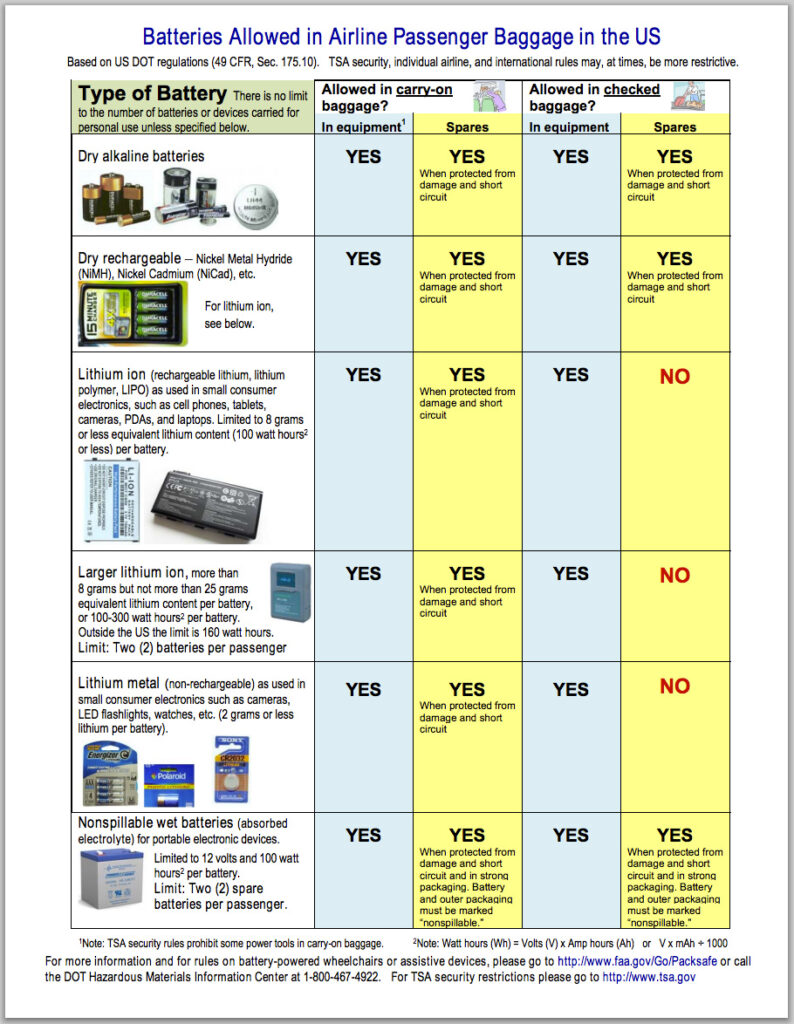
Yes, lithium batteries are allowed in carry on luggage, but there are important rules to follow. Airlines and airport security worldwide have strict guidelines because lithium batteries can be a fire risk if not handled correctly. If you travel with devices like smartphones, laptops, cameras, or power banks, you are likely carrying lithium batteries, so it’s essential to understand the rules before you fly.
Key Rules For Carrying Lithium Batteries On Planes
You can bring most lithium batteries in your cabin bag, but not all types and sizes are allowed. Airlines use the battery’s watt-hour (Wh) rating or lithium content to decide if you can carry it. Here’s what you need to know:
- Devices with lithium batteries (like phones, laptops, tablets): Allowed in carry-on, must be switched off or in airplane mode during flight.
- Spare lithium batteries (like extra camera or drone batteries): Must be carried only in the cabin, never in checked baggage.
- Battery size matters: Most airlines follow international guidelines:
- Up to 100 Wh (like phones, laptops, most cameras): Allowed without airline approval.
- Between 100 Wh and 160 Wh (large power banks, some equipment): Allowed with airline approval, usually limited to two per person.
- Over 160 Wh: Not allowed in carry-on or checked baggage.
These rules are based on recommendations from the International Air Transport Association (IATA) and are enforced by airport security worldwide.
Best Carry On Luggage For Delta Airlines Under $50 :Stop Paying Over $200
Why Are There Restrictions On Lithium Batteries?
Lithium batteries can catch fire if damaged, short-circuited, or overheated. Fires in the airplane cabin can be quickly controlled, but fires in the cargo hold (checked bags) are more dangerous. That’s why airlines want these batteries in the cabin, where crew can respond fast.
Also, loose batteries can cause short circuits if their terminals touch metal objects. Carrying them in their original packaging, or with terminal covers, can prevent accidents.
Types Of Lithium Batteries Allowed In Carry-on
Not all lithium batteries are the same. Here are the main types allowed:
Lithium Ion (li-ion) Batteries
These are rechargeable and used in laptops, phones, tablets, cameras, power banks, drones, and e-cigarettes.
- Up to 100 Wh: Allowed in devices or as spares.
- 100–160 Wh: Allowed with airline approval, max two spares per person.
- Over 160 Wh: Prohibited.
Lithium Metal Batteries
Non-rechargeable, often found in watches, calculators, hearing aids, car keys, and medical devices.
- Up to 2 grams of lithium metal: Allowed.
- More than 2 grams: Not allowed.
Power Banks
Power banks are treated as spare lithium batteries. They must be in carry-on bags and follow the same Wh limits.
- Up to 100 Wh: Allowed.
- 100–160 Wh: Allowed with airline approval (max two).
- Over 160 Wh: Not allowed.
E-cigarettes And Vaping Devices
Must be in carry-on, not checked bags. Batteries must stay installed in the device.
Devices With Installed Lithium Batteries
Laptops, cameras, tablets, and phones are allowed in carry-on. Most airlines limit you to 15 electronic devices per passenger.
Airline And Country Differences
While most airlines follow IATA rules, some have stricter policies. For example, some Asian and Middle Eastern airlines may require approval even for smaller batteries. Always check your airline’s website before flying.
Here’s a quick comparison of airline policies for lithium batteries:
| Airline | Max Battery Size (Carry-On) | Spare Batteries Allowed | Approval Needed Above |
|---|---|---|---|
| Delta Airlines | 100 Wh | Yes, up to 20 | 100 Wh |
| Emirates | 100 Wh | Yes, up to 15 | 100 Wh |
| Lufthansa | 100 Wh | Yes, up to 15 | 100 Wh |
| Singapore Airlines | 100 Wh | Yes, up to 20 | 100 Wh |
How To Calculate Watt-hours (wh)
If your battery only shows milliamp-hours (mAh), you can calculate Wh with this formula:
Wh = (mAh × V) ÷ 1000
For example, a 10,000mAh power bank at 3.7 volts:
(10,000 × 3.7) ÷ 1000 = 37 Wh
This is well below the 100 Wh limit.
How To Pack Lithium Batteries Safely
To avoid problems at security and stay safe:
- Keep batteries in original packaging or use plastic cases.
- Tape the terminals of loose batteries to prevent short circuits.
- Do not pack loose batteries in checked luggage—only in carry-on.
- Turn off devices and protect against accidental activation.
- Pack devices where they can be easily removed for inspection.
What Does 22 x 14 x 9 Luggage Mean? Avoid $50 Fees and Fit in Overhead Bins
Real-world Examples
- A traveler with a spare drone battery (99 Wh): Allowed in carry-on, not checked bags.
- A photographer with six camera batteries (each 12 Wh): Allowed, but must carry all in hand luggage, not checked.
- Someone with a medical device battery over 160 Wh: Needs airline and airport authority approval or must ship by cargo.
What Happens If You Break The Rules?
If you put lithium batteries in checked luggage or carry batteries over the allowed size, security may:
- Remove your batteries and leave a note in your bag
- Stop you at security and make you throw them away
- Delay your boarding or even deny you boarding
Most airports use X-ray machines and can spot lithium batteries easily.
Differences Between Carry-on And Checked Bag Rules
You can bring more types of batteries in your cabin bag than in checked luggage. Here’s a summary:
| Battery Type | Carry-On Allowed? | Checked Bag Allowed? | Notes |
|---|---|---|---|
| Device-installed lithium battery | Yes | Yes (if device is off) | Best to keep in carry-on |
| Spare lithium battery | Yes | No | Carry-on only |
| Lithium metal battery (≤2g) | Yes | Yes | Check airline |
| Power bank | Yes | No | Carry-on only |
| Batteries over 160 Wh | No | No | Not allowed |
Non-obvious Insights Travelers Miss
Many travelers don’t realize that power banks are counted as spare batteries and must always be in your cabin bag, not checked. Also, most airlines do not allow you to use or charge e-cigarettes or vapes during the flight—even if the battery is allowed onboard.
Another detail: If your battery is damaged, swollen, or leaking, it will not be accepted. Security may confiscate it, even if it is under the size limit.
How To Check Your Battery’s Size
Look for labels on the battery itself. Most modern batteries print the Wh rating or mAh and voltage. If you can’t find it, check the device manual or the manufacturer’s website.
If you travel with old or non-standard devices, bring proof (like a photo of the specs or a printout) in case security asks.
Traveling Internationally: What To Watch Out For
Rules for lithium batteries are similar worldwide, but some countries are stricter. For example:
- China: Limits power banks to 20,000mAh (about 74 Wh) without approval.
- Japan: No more than two spare batteries per person over 100 Wh.
- United States (TSA): Follows IATA rules, but officers can use their judgment.
Before every trip, check both your departure and arrival country rules. Some countries may check your bags again on arrival.
What If You Need To Carry Large Batteries?
If you are traveling for work and need large batteries (over 160 Wh), you must send them as cargo, not with you. Airlines and couriers have special rules for shipping dangerous goods. Contact your airline before buying a ticket.
Tips For A Smooth Security Check
- Pack all batteries and electronics together in your carry-on.
- Remove devices and batteries at security if asked.
- Have documentation (manual or label) ready for large batteries.
- Don’t argue with security—they have the final say.

Credit: www.reddit.com
When Airline Approval Is Needed
Some batteries between 100 Wh and 160 Wh require airline approval. You must contact your airline at least 48 hours before your flight. They may ask for battery details, proof of purchase, and explain how you will pack them.
Approval is rarely given for personal travel unless you have a special reason (like medical equipment).
What About Special Devices?
Medical devices like CPAP machines, wheelchairs, and portable oxygen concentrators may use larger batteries. Airlines usually allow these, but you need to tell them in advance and bring medical paperwork.
If you are traveling with a wheelchair or scooter, the battery must be removed and carried in the cabin if possible.
Common Mistakes Travelers Make
- Packing spare batteries in checked bags—not allowed.
- Bringing power banks over 160 Wh—not allowed, even in carry-on.
- Forgetting to protect battery terminals—risk of short circuit.
- Not checking for damaged or swollen batteries.
- Not asking for airline approval when needed.
Recent Incidents And Safety Data
In 2022, the FAA reported over 60 incidents of lithium battery fires on US planes, mostly from power banks and e-cigarettes. Most were controlled quickly, but some caused flight delays and emergency landings. This shows why airlines are strict and why you must follow the rules.
Where To Get The Latest Information
Check your airline’s website and the International Air Transport Association (IATA) page for the most recent rules. You can also find updates from the TSA.
Frequently Asked Questions
Can I Bring A Laptop With A Lithium Battery In My Carry-on?
Yes, laptops with built-in lithium batteries are allowed in your cabin bag. Make sure it is turned off during takeoff and landing, and be ready to remove it for security screening.
Are Power Banks Allowed In Checked Luggage?
No, power banks are only allowed in carry-on luggage. They are treated as spare batteries and are not permitted in checked bags.
How Many Spare Lithium Batteries Can I Carry?
Most airlines allow up to 20 spare batteries under 100 Wh per person. For batteries between 100–160 Wh, you can usually carry up to two with airline approval.
What Happens If I Bring A Battery Over 160 Wh?
Batteries over 160 Wh are not allowed in cabin or checked baggage. You must ship them as cargo under special rules.
Do I Need To Declare Lithium Batteries At The Airport?
For most devices and small spare batteries, you do not need to declare them. If you carry larger batteries (over 100 Wh), or more than two between 100–160 Wh, you should inform your airline and declare them at security.
Traveling with lithium batteries is safe and easy if you follow the rules. With a little preparation, you can avoid delays and keep your devices powered wherever you go. Safe travels!

Md Abdul Muhaimen is an experienced travel content writer and guide who has a Master’s in Information Systems Management from the University of Huddersfield. He is passionate about all things related to travel logistics and trip planning, and has assisted thousands of readers in choosing the proper luggage, knowing which items can be included in carry-on luggage, and understanding an airline’s policy with confidence.
Md Abdul has a sound grounding in systems thinking and data-driven content creation that allows him to bring clarity to complicated travel topics — from comparing the exact sizes of cabin bags from multiple airlines to developing helpful how-to guides to simplify a traveler’s experience.
He actually engages in travel forums on Quora, answers real user questions, and shares insights by posting on Medium blogs
.His work marries first-hand research, consumer-focused advice, and technical accuracy, and he is a voice that can be trusted among the travel and luggage community.