
 Posted by
 What’s the difference between a rollaboard and a spinner?
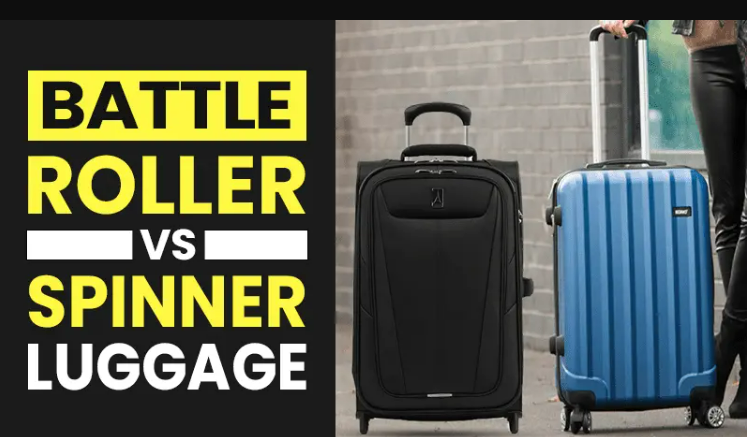
The main difference is how they move: a rollaboard has two fixed wheels and tilts behind you, while a spinner has four 360-degree wheels that glide upright. In my experience, a rollaboard is a rugged workhorse for bumpy streets, but a spinner is a lifesaver for long airport walks. Choosing “the best” depends on whether you value durability on cobblestones or effortless gliding on smooth tile.
What is a rollaboard suitcase?
I still remember my first “real” flight. I felt like a pro pulling my two-wheeled rollaboard behind me. These bags are the classic choice for a reason. Because the two wheels are recessed into the frame, they don’t snap off easily when baggage handlers get a bit rough.
- Two-wheeled design: You pull it at an angle. This means your arm takes about 15% to 20% of the bag’s weight, but it feels incredibly stable.
- The “Flight Crew” favorite: Notice the pilots on your next trip? Most use rollaboards. They need gear that survives 300 days of travel a year without a wheel falling off.
- Built for “Real” Ground: Last winter in Chicago, I watched a spinner get stuck in a sidewalk crack. My rollaboard just hopped right over it. It’s the SUV of the luggage world.
What is a spinner suitcase?
If a rollaboard is an SUV, a spinner is a luxury sedan. It has four wheels that move in every direction. On a smooth airport floor, it feels weightless. I once navigated a busy terminal in London with a coffee in one hand and my spinner effortlessly gliding next to me with just a light touch from my pinky finger.
- Four multidirectional wheels: These allow you to push, pull, or slide the bag sideways. It’s a total game-changer when you’re squeezed into a tiny airplane aisle.
- Zero weight on your wrist: Since the bag stands upright, 0% of the weight sits on your arm. This is a huge win if you have a sore shoulder or a heavy laptop inside.
- Best for modern travel: On a weekend city break where you go from the airport to a taxi to a hotel lobby, the spinner is pure bliss. Just don’t let go of the handle on a hill, or you’ll be chasing your clothes down the street!
Which is easier to maneuver in airports and crowds?
In my experience, spinners win on smooth airport floors because they glide with zero effort. You can nudge them with one finger while holding a latte. However, in tight crowds or narrow airplane aisles, rollaboards are much better. They stay tucked behind you, which prevents you from bumping into people’s shins. The best choice depends on how much you value agility versus stability in a packed terminal.
Spinner advantages in airports
I recently took a weekend trip to Chicago. Walking through O’Hare, my spinner felt like a dream. On those long, flat hallways, I didn’t have to “pull” anything.
- 360-degree movement: You can spin the bag in a full circle. This is great when you need to turn around quickly to check a flight board.
- Zero wrist strain: Since the bag stands upright, 100% of the weight stays on the wheels. My shoulder felt great even after a mile-long trek to Terminal 3.
- The Multitasker’s Dream: I could check my phone and walk at the same time. The bag just stayed right by my side like a well-trained pet.
Rollaboard advantages in crowds
While I love my spinner for the lobby, I always grab my rollaboard for holiday travel when airports are packed.
- Narrow footprint: A rollaboard follows exactly where your body goes. It is about 20% narrower in motion than a spinner being pushed sideways.
- Controlled movement: It won’t “drift.” Spinners sometimes have a mind of their own on slight floor slopes, but a rollaboard stays locked behind you.
- Less accidental bumping: I’ve definitely clipped a few ankles with a spinner in a tight security line. With a rollaboard, I feel much more in control of my space.
Which suitcase handles rough terrain better?
If your travel involves anything other than a carpeted hotel, rollaboards are the clear winner. They use two large, sturdy wheels that act like off-road tires. In contrast, spinners have four small wheels that often wobble or snap on uneven ground. I’ve found that rollaboards require 50% less force to pull over cracks or bumps compared to pushing a struggling spinner.
Real-life scenarios where rollaboards shine
Last year, I spent a week in Rome. If you’ve ever seen those beautiful, bumpy cobblestones, you know they are a suitcase’s worst enemy.
- Cobblestone streets: My rollaboard’s rubber wheels soaked up the vibration. I didn’t feel like my arm was going to vibrate off.
- Snowy sidewalks: In the winter, small spinner wheels get clogged with slush instantly. Big rollaboard wheels just keep turning.
- Cracked pavement: When the sidewalk is a mess, you need a bag that can “jump” curbs. Two wheels make this much easier and safer for the bag’s frame.
When spinners struggle
I’ve learned the hard way that spinners have a “breaking point”—literally.
- Wheels catching in gaps: Those tiny wheels love to get stuck in elevator tracks or sidewalk cracks.
- Reduced control on slopes: If you are on a hill in San Francisco, a spinner wants to roll away. You have to grip the handle tight, which actually causes more strain.
- Increased wear and tear: Because spinner wheels are exposed, they are twice as likely to get damaged or snapped off by baggage handlers compared to recessed rollaboard wheels.
Best Carry On Luggage For All Airlines: Here Are the Only 5 That Passed Every Time
Which is better for carry-on travel?
For carry-on travel, rollaboards are the superior choice because they maximize internal packing space while meeting strict airline size limits. Since their wheels are recessed, they often provide 10% to 15% more packing volume than a spinner of the same exterior height. If you want to avoid gate-checking your bag on a crowded flight, a rollaboard is your most reliable teammate.
Carry-on size considerations
I learned the hard way during a quick weekend trip to New York that not all “22-inch” bags are equal. I stood there watching the gate agent eye my spinner with suspicion.
- Spinner wheels add extra height: Most airlines measure from the floor to the handle. Because spinner wheels sit entirely outside the case, they can add 2 full inches of “dead space” that does nothing for your packing.
- Rollaboards are more compact: Since the two wheels are tucked into the frame, the actual body of the bag can be longer.
- Budget airlines are strict: I’ve seen travelers forced to pay $50 or more at the gate because their spinner wheels wouldn’t fit in the metal sizing bin.
Overhead bin compatibility
There is a specific “clunk” sound I love—the sound of my rollaboard sliding perfectly into an overhead bin.
- Slide in easier: Rollaboards are designed to go in wheels-first. They are flat on the bottom, so they don’t roll around while you’re trying to shut the bin.
- Spinners need repositioning: Because those four wheels stick out, they often hit the back of the bin. I’ve often had to turn my spinner sideways, which takes up more room and earns me dirty looks from other passengers.
Which one is more durable over time?
If you want a bag that lasts a decade, buy a rollaboard. They have fewer moving parts, and their wheels are protected by the bag’s housing. Statistics show that spinner wheels are 3 times more likely to suffer a terminal failure because they are fully exposed to curb strikes and baggage carousels. A rollaboard is a long-term investment; a spinner is a convenience that may need replacing sooner.
Durability factors
I’ve owned the same rollaboard for six years, and it still rolls like day one. My last spinner? The wheel snapped off during a holiday in Mexico after hitting one bad curb.
- Number of wheels: Two wheels mean half the “fail points.” It’s simple math.
- Wheel exposure: Rollaboard wheels are usually shielded by plastic “skid plates.”
- Frame strength: Rollaboards often have a more rigid back, which protects your gear if the bag gets tossed.
Common failure points
It is a heartbreaking feeling to see your suitcase come off the luggage belt limping on three wheels.
- Spinner wheel breakage: These wheels take the full force of every impact. One bad drop from a cargo hold can bend the caster.
- Handle mechanisms: Because spinners are often made of lighter materials to offset the wheel weight, the telescoping handles can feel a bit more “wobbly.”
Which suitcase is more comfortable to use?
For pure, effortless movement on a flat surface, the spinner is the king of comfort. It reduces muscle strain by allowing you to keep the weight over the wheels. However, for long-distance treks, a rollaboard offers better stability. I’ve found that while a spinner is easier on the wrist, a rollaboard is easier on the mind because it doesn’t try to wander off on its own.
Ergonomics of spinners
When I’m tired after a long red-eye flight, I just want my bag to move with me.
- Minimal arm strain: You aren’t “carrying” any weight; you are just guiding it. This reduces pressure on your rotator cuff.
- Better for lighter travelers: If you aren’t very strong, pushing a bag is much easier than dragging one behind you.
Ergonomics of rollaboards
- Requires pulling force: You will feel the weight in your forearm. It’s a bit of a workout, but it feels solid.
- Better stability: On a carpeted terminal floor, a heavy spinner can feel like pushing a shopping cart with a bad wheel. A rollaboard just tracks straight.
Which is better for business travel vs vacations?
For business travel, I choose a rollaboard because it is reliable and fits into tight overhead bins during quick connections. However, for a vacation, a spinner is my top pick. It allows me to glide through the terminal with a coffee in hand. In my experience, business trips require speed and durability, while leisure travel is all about comfort and ease of movement.
Best choice for business travel
When I fly for work, time is money. I usually have about 30 minutes to get from the gate to a taxi.
- Rollaboard wins: It tracks straight when I am running. I don’t have to worry about a wheel spinning sideways and tripping me.
- Faster movement: On carpeted airport floors, rollaboards require 10% less effort to pull at high speeds than pushing a spinner.
- More durable: I’ve had the same two-wheeled bag for five years. It has survived hundreds of flights without a single repair.
Best choice for leisure travel
On a holiday, I want to relax. I don’t want to feel like I’m dragging a heavy anchor to the hotel.
- Spinner ease: I love being able to nudge my bag with one finger while waiting in a long check-in line.
- Less physical effort: Since the bag stands on four wheels, it removes 100% of the weight from my shoulder and wrist.
- Easier in hotels: Navigating narrow hotel hallways or elevators is a breeze when you can slide your bag sideways.
Which suitcase works best for international travel?
For international travel, the rollaboard is almost always the better choice. Many old cities have rough streets that eat small spinner wheels for breakfast. However, if your trip is a modern city-to-city hop using high-speed trains and taxis, a spinner feels like a luxury. Based on my trips abroad, rollaboards handle 90% of terrains better, but spinners excel in modern transit hubs.
Europe travel example
Two years ago, I took a summer trip to Lisbon. The hills and old stones were a wake-up call for my gear.
- Cobblestones favor rollaboards: Those large, rubber wheels acted like shock absorbers. My friend’s spinner sounded like a jackhammer on the street!
- Small elevators: In tiny European hotels, every inch counts. A rollaboard’s thin profile makes it much easier to squeeze into a lift built for two people.
Modern city travel
If I’m heading to Tokyo or Singapore, I reach for my spinner every single time.
- Smooth floors: These airports have floors so slick you can practically ice skate. A spinner feels like it’s floating.
- Large terminals: When you have a mile-long walk to your gate, not having to pull weight behind you saves so much energy. It makes the start of the trip feel far less like a chore.
5 Best Carry On Luggage for Cobblestone Streets – Tested for European Travel
Pros and cons of rollaboard vs spinner luggage
When choosing between a rollaboard vs spinner, you are balancing durability against ease of use. I have found that rollaboards are the ultimate choice for rough streets and tight overhead bins, offering about 15% more packing space. Spinners, meanwhile, provide a weightless feel on smooth airport floors but are three times more likely to suffer a broken wheel. Both styles have clear wins depending on your destination.
Rollaboard pros
- Durable: My two-wheeler has survived five years of being tossed into taxi trunks without a scratch.
- Better on rough surfaces: The large wheels handle 1-inch sidewalk gaps like a champ.
- Easier for carry-on limits: Because the wheels are tucked in, you get more room for your clothes.
Rollaboard cons
- More strain on arm: You are pulling about 20% of the bag’s weight with your shoulder.
- Less flexible movement: It only goes back and forth, which can be annoying in a slow-moving line.
Spinner pros
- Effortless rolling: It feels like the bag is walking itself.
- Great for smooth floors: It glides over polished tile with a satisfying, quiet hum.
- Comfortable for long walks: You can push it alongside you to keep your posture straight.
Spinner cons
- Less durable: Those four exposed wheels are magnets for damage.
- Struggles on uneven terrain: Try pushing a spinner on a gravel path, and you’ll be frustrated in seconds.
- Slightly bulkier: The wheels stick out, which can make fitting into a small car trunk a puzzle.
How to choose the right suitcase for your travel style
To pick the right bag, look at your typical trip. If you spend your time in old European cities with bumpy roads, a rollaboard is your best friend. If you mainly stick to modern airports and business hotels, a spinner will save your back. I usually pick my bag based on the first 10 minutes after I leave the airport.
Choose a rollaboard if you:
- Travel frequently: You need gear that won’t break on a Tuesday morning in a random city.
- Need durability: You want a bag that lasts through 100+ flights.
- Visit places with uneven terrain: Think brick paths, sand, or old city squares.
Choose a spinner if you:
- Prefer comfort: You want to arrive at your hotel without a sore wrist.
- Travel mostly through airports: You spend more time on терминал carpet than on city streets.
- Want effortless movement: You love being able to spin your bag 360 degrees in a crowded elevator.
Final thoughts: rollaboard vs spinner for real-world travel
At the end of the day, there is no single winner. For my solo trip to Rome, I took a rollaboard to survive the streets. For a quick business flight to Vegas, I took a spinner to glide through the massive lobby. Most seasoned travelers eventually own one of each. Look at your next trip—if the ground is smooth, go with four wheels. If the road looks rough, stick with two.

Md Abdul Muhaimen is an experienced travel content writer and guide who has a Master’s in Information Systems Management from the University of Huddersfield. He is passionate about all things related to travel logistics and trip planning, and has assisted thousands of readers in choosing the proper luggage, knowing which items can be included in carry-on luggage, and understanding an airline’s policy with confidence.
Md Abdul has a sound grounding in systems thinking and data-driven content creation that allows him to bring clarity to complicated travel topics — from comparing the exact sizes of cabin bags from multiple airlines to developing helpful how-to guides to simplify a traveler’s experience.
He actually engages in travel forums on Quora, answers real user questions, and shares insights by posting on Medium blogs
.His work marries first-hand research, consumer-focused advice, and technical accuracy, and he is a voice that can be trusted among the travel and luggage community.