 Posted by
 What Can You Carry On The Plane In Hand Luggage
You can carry most personal items, small electronics, travel-sized liquids (under 100ml each), medications, and essential documents in your hand luggage. However, sharp objects, large liquids, and certain foods are restricted. Always check your airline’s rules, as some items may be allowed on one airline but not another.
Security regulations are strict, so knowing what you can bring saves time and stress at the airport.
Basic Rules For Hand Luggage
You’re allowed to bring one cabin bag and often a small personal item like a purse or laptop bag. All items must fit under the seat or in the overhead bin and meet airline size and weight limits. Common size limits are 55 x 40 x 20 cm and 7–10 kg, but always check with your airline first.
Airports worldwide follow the International Civil Aviation Organization (ICAO) and Transportation Security Administration (TSA) guidelines, but airlines may add extra restrictions. Over 90% of delayed security checks happen because passengers pack restricted items, so knowing the basics helps avoid problems.
Most airlines also require that your hand luggage can be lifted easily into the overhead compartment by yourself. This rule protects staff and keeps boarding efficient.
6 Best Carry-On Luggage of All Time: The Only Bags I’ll Ever Trust
Liquids, Gels, And Aerosols
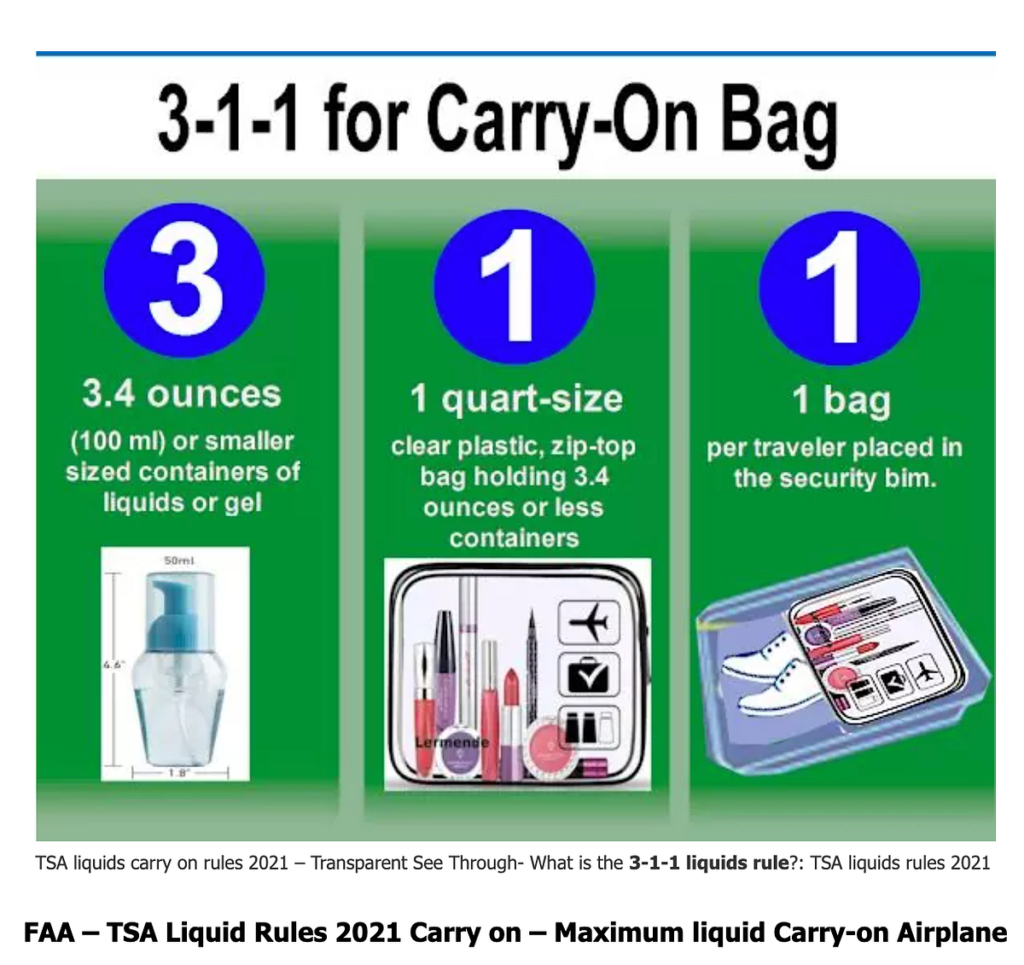
You can carry liquids, gels, and aerosols in containers of 100ml or less, packed together in a transparent, resealable plastic bag (max 1 liter). Each passenger may bring only one such bag.
This “3-1-1” rule is enforced at nearly all international airports. For example, if you bring toothpaste, sunscreen, and shampoo, make sure each is under 100ml. Larger containers, even if half-full, will be taken by security. In 2023, over 1. 2 million liters of liquid were confiscated at London Heathrow alone.
Medically necessary liquids (like insulin) and baby food are exceptions but must be declared and screened separately.
Tips For Packing Liquids
- Use travel-size bottles and label them.
- Place the plastic bag at the top of your hand luggage for easy removal during security.
- Avoid packing unnecessary gels or sprays to save space and reduce inspection time.
Electronics And Gadgets
You can bring laptops, tablets, smartphones, cameras, and chargers in your hand luggage. Power banks under 100 Wh are allowed. Devices must be charged, as security may ask you to turn them on.
Airlines and security agencies require all electronics to be scanned separately at checkpoints. In 2022, over 70% of hand luggage included at least one electronic device, so efficient packing helps speed up lines.
It’s also smart to pack all chargers and cables together in a small pouch. Devices with lithium batteries (like laptops and phones) are not allowed in checked luggage due to fire risk.
Comparison Of Electronics Allowed
| Device | Carry-on | Checked Bag |
|---|---|---|
| Laptop | Yes | Not recommended |
| Tablet/E-reader | Yes | Not recommended |
| Power bank (under 100 Wh) | Yes | No |
| Camera | Yes | Yes |
Medicines And Medical Devices
You are allowed to carry prescription medicines, medical devices (like inhalers or glucose meters), and essential non-prescription drugs. Always bring them in their original packaging, with a doctor’s note if possible.
Medicines exceeding 100ml are permitted if needed for your journey but must be declared at security. Airports confiscate over 500,000 containers of unlabelled medicine each year, so proper labeling is crucial.
For medical devices, notify the security officer before screening. Most airports have special procedures for travelers with medical needs.
Examples Of Medical Items Allowed
- Prescription pills (in labeled bottles)
- Liquid medicine (with prescription)
- EpiPens and inhalers
- Blood glucose monitors

Credit: allurelakestorey.com
Food And Snacks
Solid foods like sandwiches, fruits, and packaged snacks are allowed in your hand luggage. However, creamy or liquid foods (like yogurt or soup) must follow the 100ml liquid rule.
Food is often a source of confusion. For example, a jar of peanut butter is considered a liquid, but a granola bar is not. Many airports report that up to 10% of hand luggage delays are due to food misunderstandings.
International flights have extra restrictions on meat, dairy, fruits, and vegetables. Always check destination country rules, as some items may be confiscated on arrival.
Foods Commonly Allowed
- Bread and sandwiches
- Dry snacks (chips, nuts, cookies)
- Hard cheese (small amounts)
- Sealed candy and chocolate
Duty-free Purchases
Duty-free liquids (alcohol, perfume) bought after security are allowed, even over 100ml, if sealed in a tamper-evident bag with the receipt inside. Do not open the bag until you reach your final destination.
If you have connecting flights, some countries will rescreen your hand luggage and confiscate large liquids, even if sealed. In 2022, travelers lost over $10 million worth of duty-free liquids this way.
When transferring, always ask staff if your duty-free items will be accepted at the next security checkpoint.
Credit: www.allurelakestorey.com
Items Not Allowed In Hand Luggage
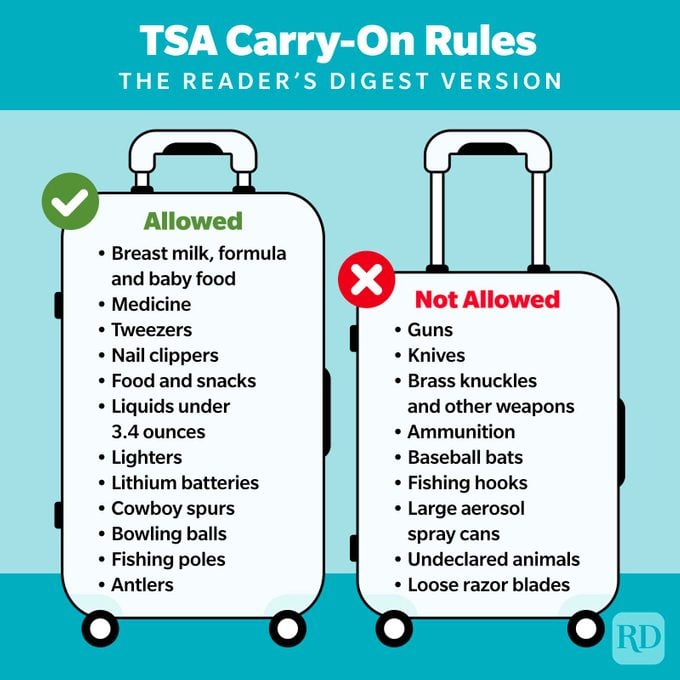
You cannot carry sharp objects, self-defense items, or tools in your hand luggage. Aerosols like pepper spray, scissors longer than 6 cm, and sporting bats are banned.
Security agencies confiscate more than 2 million sharp items globally each year. Even small nail scissors or pocket knives are not allowed.
Other restricted items include:
- Toy or replica guns
- Flammable substances (lighters, matches, fuel)
- Explosives or fireworks
- Large sports equipment (bats, clubs, sticks)
Carry-On Luggage vs Checked Luggage: The Travel Hack That Saves Me $100+ Per Trip
Special Items: Baby Needs And Mobility Devices
You can bring breast milk, formula, and baby food in reasonable quantities, even over 100ml, but you must declare them. Strollers and car seats are allowed, usually gate-checked for free.
Passengers with disabilities can bring wheelchairs, crutches, and mobility aids. Security will screen these items, sometimes by hand.
Comparison: Baby And Mobility Items Allowed
| Item | Allowed in Hand Luggage | Special Instructions |
|---|---|---|
| Baby milk/formula | Yes | Declare at security |
| Stroller | Yes | Usually gate-checked |
| Wheelchair | Yes | Screened separately |
Credit: www.woolyyarn.com
Documents, Money, And Valuables
Always carry your passport, boarding pass, travel insurance, and visa documents in your hand luggage. Keep cash, credit cards, jewelry, and important electronics with you at all times.
Lost luggage reports show that valuables in checked bags are rarely recovered. Airlines strongly recommend never placing expensive or irreplaceable items in checked baggage.
A money belt or secure pouch is a smart choice for keeping your documents and cash safe, especially during busy security checks.
Regional Differences And Airline Policies
While most rules are global, some countries have unique restrictions. For example, Australia bans fresh fruit, and the USA has strict limits on powders and electronics.
Airlines like Ryanair, easyJet, and Wizz Air have smaller size and weight limits compared to legacy carriers like Lufthansa or Emirates. Always check your airline’s website before packing.
In 2023, over 15% of travelers had to repack or pay extra fees due to hand luggage rule differences. Checking in advance prevents surprises and saves money.
Comparison Of Hand Luggage Size Limits
| Airline | Max Size (cm) | Max Weight (kg) |
|---|---|---|
| Ryanair | 40 x 20 x 25 | 10 |
| Emirates | 55 x 38 x 20 | 7 |
| United Airlines | 56 x 35 x 22 | No limit stated |
Non-obvious Insights And Practical Tips
Many travelers overlook these helpful tips:
- Pack a spare shirt and toothbrush in your hand luggage in case your checked bag is lost.
- Keep all prescription medicine in hand luggage, as airlines don’t take responsibility if checked bags are delayed.
- Use packing cubes to separate electronics, liquids, and documents for faster security checks.
- Download your boarding pass to your phone and print a copy. Phones sometimes lose battery, and some airports require a paper version.
- Check for country-specific bans on items like batteries, seeds, or cultural artifacts. Some countries have strict fines for breaking these rules.
Travel data shows that organized hand luggage can reduce security wait times by up to 30%. Also, travelers who pack essentials in their hand luggage report less stress during delays.
Frequently Asked Questions
What Is Not Allowed In Hand Luggage?
Items like sharp objects, large liquids, self-defense sprays, and most tools are not allowed. Explosives, flammable materials, and some sporting equipment are also banned.
Can I Bring Food On The Plane In Hand Luggage?
Yes, but only solid food. Liquid or creamy foods must be under 100ml each and packed in your liquid bag. Always check destination country restrictions for fresh food.
Are Power Banks Allowed In Hand Luggage?
Yes, as long as each power bank is under 100 Wh. Power banks are not allowed in checked baggage because of fire risk.
Do I Need To Remove Electronics At Security?
Yes, you must remove laptops, tablets, and other large electronics from your bag for separate screening. Small items like phones usually stay inside.
Can I Bring Baby Formula And Medicine Over 100ml?
Yes, but you must declare them at security. They may be screened separately, and you might be asked to taste or open them.
For detailed, updated rules and exceptions, always check your airline’s website or visit the TSA official guidelines before you travel.
Traveling with hand luggage is simple when you know the rules. Pack smart, stay organized, and you’ll move through security with ease. With preparation, you avoid delays and keep your essentials close by for a stress-free journey. Safe travels!

Md Abdul Muhaimen is an experienced travel content writer and guide who has a Master’s in Information Systems Management from the University of Huddersfield. He is passionate about all things related to travel logistics and trip planning, and has assisted thousands of readers in choosing the proper luggage, knowing which items can be included in carry-on luggage, and understanding an airline’s policy with confidence.
Md Abdul has a sound grounding in systems thinking and data-driven content creation that allows him to bring clarity to complicated travel topics — from comparing the exact sizes of cabin bags from multiple airlines to developing helpful how-to guides to simplify a traveler’s experience.
He actually engages in travel forums on Quora, answers real user questions, and shares insights by posting on Medium blogs
.His work marries first-hand research, consumer-focused advice, and technical accuracy, and he is a voice that can be trusted among the travel and luggage community.