 Posted by
 The 3-1-1 rule for packing is a TSA carry-on guideline that limits liquids in your bag. Each passenger can bring liquids, gels, creams, and aerosols in 3.4-ounce (100 ml) containers or smaller, all placed inside one clear, quart-size bag, with one bag allowed per traveler. This rule helps speed up airport security screening and ensures liquids are safely packed when flying.
The 3-1-1 Rule, Explained Like You’re Running Late for a Flight
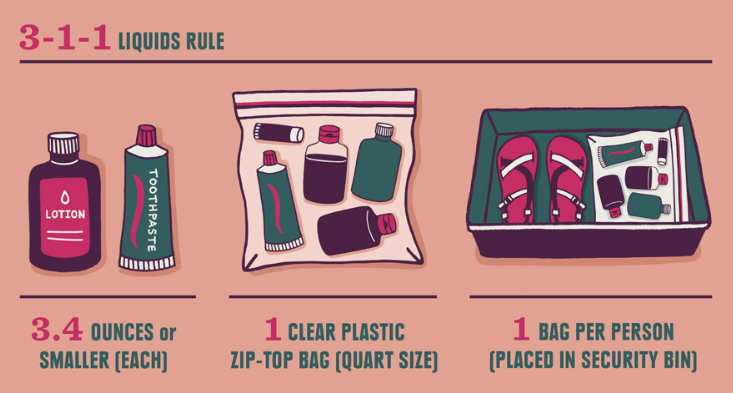
The 3-1-1 rule is the TSA’s standard for liquids: each passenger can bring liquids, gels, aerosols, creams, and pastes in containers of 3.4 oz (100ml) or less. These must all fit inside one clear, quart-sized bag, with one bag per person. That’s it. Three simple numbers. It’s one rule that has caused more airport stress and frantic bin-shuffling than even the worst delayed flights.
Where the 3-1-1 Rule Comes From (And Why It Exists)
I used to think the liquid limit was just an annoying airline policy designed to sell us overpriced water. Nope. It is a federal security requirement from the Transportation Security Administration (TSA) and the Department of Homeland Security (DHS).
This rule gained traction after a foiled 2006 UK liquid bomb plot. The government realized that certain substances could be combined to create explosives. It’s not about making your packing life difficult; it’s a security measure meant to keep everyone on the plane safe. When I realized that, I stopped grumbling about it quite as much—well, mostly.
Breaking Down the Numbers: What 3, 1, and 1 Actually Mean
Think of this as your packing code. Getting it wrong is the fastest way to get pulled aside in the security line.
- 3: This is the size limit. Your containers must be 3.4 ounces (100ml) or less. Note that this is per container, not the total volume. Even if you have a 10-ounce bottle that is almost empty, the TSA will flag it because the container itself is too large.
- 1: You get one clear, quart-sized, zip-top bag to hold everything.
- 1: You are limited to just one bag per traveler. No exceptions.
That little bag fills up much faster than you think. Once I squeeze in my contact lens solution and a few skincare basics, I’m usually playing a high-stakes game of Tetris. Pro tip: look for TSA-approved containers that are specifically marked as 3.4 oz or smaller to avoid any guessing games at the checkpoint.
What Counts as a Liquid Under the 3-1-1 Rule? (The List Will Surprise You)
Liquids under the 3-1-1 rule aren’t just water and shampoo. The TSA defines “liquids” broadly—gels, aerosols, creams, and pastes all count. Peanut butter? Liquid. Mascara? Liquid. Even a snow globe. The rule is surprisingly wide, and most travelers don’t realize it until they’re standing at the security bin with a confused agent watching them.
Obvious Liquids Everyone Knows About
We all know the basics: water, juice, shampoo, conditioner, lotion, perfume, and cologne. You also need to include your contact lens solution, mouthwash, liquid foundation, and eyeliner.
If you travel often, save yourself the headache and buy travel-sized versions of these items. Better yet, grab a set of reusable silicone travel bottles. They are easy to fill, leak-proof, and help you stay well within that 3.4 oz limit.
Which Luggage Wheels Are Most Durable? (2026) – Best Options for Heavy Bags & Rough Surfaces
Surprising Things That Count as Liquids (Yes, Really)
The TSA’s definition of a liquid often catches people off guard. If you can spread it, spray it, smear it, or pour it, it usually counts.
- Foods: Peanut butter, hummus, yogurt, jam, salad dressing, and pudding are all technically liquids. I once had a jar of fancy almond butter confiscated on a Monday morning before a work trip. The grief was very real.
- Beauty & Grooming: Lip gloss, mascara, gel deodorant, hair gel, and toothpaste are all on the list.
- Aerosols: Spray sunscreen, dry shampoo, and hairspray are strictly regulated.
- Miscellaneous: Even snow globes are often restricted. The TSA website even gives them a specific shout-out, which tells you just how many people have tried to carry one through!
What’s NOT a Liquid and Can Go in Your Regular Bag
The secret to a stress-free carry-on is swapping liquid items for solid versions whenever you can. Things like solid deodorant, bar soap, solid shampoo bars, and classic chapstick don’t need to go in your 3-1-1 bag. They can live in your main luggage, which frees up so much space.
For a quick weekend getaway, switching to solid toiletries is a total game-changer. It simplifies your packing and means one less bag to pull out at security.
How to Actually Pack Your 3-1-1 Bag Without Leaving Half Your Skincare at Home
Packing your 3-1-1 bag is a game of Tetris you didn’t sign up for. The trick is knowing what to buy travel-sized, what to swap for solid alternatives, and what you can pick up at your destination. A little planning at home saves a 10-minute standoff with a TSA agent at the security checkpoint, which is a win for everyone involved.
Step-by-Step: Packing Your Quart-Sized Bag the Right Way
I have learned the hard way that preparation is everything. For a 3-day holiday weekend trip, I have successfully fit my entire routine into one bag. It was a tight squeeze, but it worked. Here is how I manage it:
- Focus on the Essentials: I only pack what I absolutely need. This means toothpaste, face wash, moisturizer, and any essential liquid medications.
- Check Your Containers: Remember, the 3.4 oz (100ml) limit applies to the bottle, not the amount of product inside. You cannot bring a half-filled 8 oz bottle of shampoo; it will be confiscated.
- Pack Flat: I never stack items. I lay them flat so everything is visible through the clear plastic.
- The Last-In Strategy: I always pack my 3-1-1 bag last. That way, it sits right at the top of my carry-on, making it easy to grab and place in a bin at the airport.
Best Travel-Sized Toiletries and What to Skip
Choosing the right gear makes a huge difference. I stopped wasting money on expensive travel-sized everything and started getting strategic.
- Buy These: Travel-sized shampoo, conditioner, face wash, and body wash are worth the convenience. Brands like GoToob or Muji make durable, leak-proof silicone bottles that hold up for years.
- Swap to Solids: Switching to shampoo bars, bar soap, and solid deodorant is a game-changer. These don’t count as liquids, so they don’t take up any space in your precious quart-sized bag.
- Skip These: Don’t bother with full-size items or fancy glass perfume bottles. They are just dead weight. If I’m staying at a hotel for more than three days, I usually just plan to buy sunscreen or extra toiletries locally.
What to Do If You Have More Liquids Than Fit
Sometimes, you just have too much stuff. If you are going on a two-week trip, don’t stress about fitting everything into one tiny bag.
- Check a Bag: If you’re going somewhere for two weeks, checking a bag is not defeat. It’s just common sense. Checked luggage allows for containers larger than 3.4 oz.
- Decant Early: If you must carry on, decant your favorite products into smaller, TSA-compliant containers long before you head to the airport.
- Ship Ahead: For longer trips, shipping your toiletries directly to your hotel is an underrated move. It saves you the hassle of carrying them through the airport entirely.
Exceptions to the 3-1-1 Rule You Should Actually Know About
The 3-1-1 rule isn’t absolute. There are real, important exceptions for medically necessary liquids, baby formula, breast milk, and certain food items for infants. These items get special treatment and often bypass the standard volume limits. Knowing these rules ahead of time can save you from a genuinely frustrating security interaction during your next flight.
Medical Liquids and Medications
If you have prescription or over-the-counter liquid medications, you are exempt from the 3-1-1 rule in “reasonable quantities.”
- Declare Them: You must declare these items to the TSA officer at the checkpoint separately from your main bag.
- Types Covered: This includes eye drops, insulin, liquid vitamins, and other vital medications.
- Be Prepared: I always carry a doctor’s note or keep the original prescription label attached to the bottle. It makes the screening process move much faster.
Baby Formula, Breast Milk, and Infant Food
Traveling with a baby is already difficult, so the TSA does cut parents some slack here.
- No Size Limit: Formula, breast milk, toddler drinks, and pureed baby food pouches are exempt from the 3.4 oz limit.
- Be Ready for Screening: These items must be declared. Be aware that they may be subject to additional screening, which might include opening the containers or using specialized detection equipment. It’s worth the extra minute to get these essentials through.
Duty-Free Liquids Bought at the Airport
If you buy liquids at an airport duty-free shop after you clear security, you are generally allowed to take them on the plane.
- Keep It Sealed: You must keep these items in the official tamper-evident, sealed bag provided by the retailer, along with your original receipt.
- International Travel: Be careful if you have a connecting flight. Some countries, especially those in the EU, have stricter rules for liquids brought from outside the European Union. Always check the local regulations for your connecting airport if you are making a purchase.
- How to Identify the Luggage Wheel Type – 4 Types | Simple Guide for Easy Replacement
Does the 3-1-1 Rule Apply to International Flights? (Not Exactly)
The “3-1-1” name is distinctly American, but the underlying 100ml liquid rule is actually the global standard. Based on ICAO guidelines, most major countries follow this same framework. Whether you are flying out of London, Sydney, or Toronto, the rules are nearly identical. While the spirit of the law remains the same worldwide, enforcement and specific airport technology can vary, so always stay alert.
The EU and UK 100ml Liquid Rule
The 100ml limit and 1-liter zip-lock bag are standard across the EU and UK. However, things have been in flux lately. Some airports, like London Heathrow, have tested high-tech CT scanners that allow for more liquid. In some cases, rules were relaxed, only to be paused again shortly after. It has been a confusing ride for frequent flyers. My best advice? Assume the 100ml limit is still in play unless you see official signage saying otherwise.
Countries Where the Rules Differ
While most of the world sticks to the ICAO 100ml standard, it is never a safe bet to assume consistency.
- Check Local Authority: I have encountered specific variations in parts of Asia and the Middle East where additional restrictions apply. Always check the aviation security authority for your departure country.
- The “Checked” Safety Net: When I travel internationally, I follow a simple rule: if I am even slightly unsure about a product, I put it in my checked luggage.
Does TSA PreCheck or CLEAR Let You Skip the 3-1-1 Rule?
TSA PreCheck makes airport security much faster and less annoying, but it does not exempt you from the 3-1-1 liquid rule. You still need your quart-sized bag. What you actually skip is the hassle of removing your shoes, laptop, and liquids from your carry-on during screening. It is a massive time-saver, but the liquid volume limit remains strictly in place for everyone.
What PreCheck Actually Gets You (And Doesn’t)
I love having PreCheck for the peace of mind. It allows me to keep my shoes on, leave my laptop in my bag, and keep my jacket on, which feels like a luxury during a busy holiday rush.
- The Reality Check: You do NOT keep liquids in your bag. They must still be in a quart-sized bag and easily accessible for a quick scan if requested.
- CLEAR vs. PreCheck: Remember that CLEAR is a separate service that only speeds up your identity verification. It does not replace security screening or change the 3-1-1 requirements.
I have PreCheck and still forget to pack my liquids accessibly half the time. It’s a habit I am still trying to break!
The Mistakes People Make With the 3-1-1 Rule (Almost All of Us Have Made Them)
Most 3-1-1 rule mistakes come down to the same three things: the wrong container size, a bad bag choice, or forgetting a non-obvious liquid. None of these are “dumb” mistakes. The rules are oddly specific in ways that aren’t obvious until you’ve had a favorite bottle of face wash confiscated at the bin.
Packing a Half-Full Large Container
This is the most common trap. A container’s size matters, not how full it is. A half-empty 8 oz bottle still violates the rule because the container itself exceeds 3.4 oz. I’ve watched many travelers lose expensive products because they didn’t realize that a partially used bottle is still a violation. Always transfer products into 3.4 oz or smaller travel containers.
Using the Wrong Bag (Size, Opacity, or Type)
Your bag must be clear. Frosted, opaque, or tinted bags often get flagged by agents. It must also be a true quart-sized bag. A gallon freezer bag is technically wrong, and honestly, it looks pretty chaotic when you’re trying to organize your gear. Make sure your bag closes fully; overstuffed bags that won’t zip are a frequent target for extra screening.
Forgetting to Pull the Bag Out at Screening
Even with PreCheck, you are often expected to have your bag easy to reach. I try to pack my 3-1-1 bag in an exterior pocket of my carry-on. It saves me from digging through my clothes while the person behind me in line sighs. If you keep your bag buried at the bottom of your luggage, you are asking for a much longer screening process.
How to Manage the 3-1-1 Rule for Different Types of Trips
How you handle the 3-1-1 rule depends entirely on your trip. A quick day trip is easy, but a two-week vacation to Europe is a different kind of puzzle. Matching your toiletry strategy to the trip length and destination makes the whole process much less stressful. With a little foresight, you can sail through security without constantly worrying about your liquid limits.
One-Day or Overnight Trips
For a short jaunt, I keep things minimal. Usually, I only need toothpaste and contact solution.
- Pack Light: On a one-night work trip to New York, I bring exactly four items in my bag. That is it.
- Keep It Simple: Don’t feel pressured to bring your full skincare routine for a 24-hour stay. Your skin will survive one night with just the basics.
Weekend Getaways (2–4 Days, Carry-On Only)
This is the sweet spot for mastering the 3-1-1 rule. I love the challenge of traveling carry-on only for a long holiday weekend.
- The Strategy: I combine solid toiletries with just one or two travel-sized liquid essentials.
- My Pro Tip: If I’m heading to Mexico for a beach weekend, I don’t waste precious space on sunscreen. I either ship it ahead of time or buy it at my destination.
Extended Travel (One Week or More)
When I travel for a week or longer, I have to be more disciplined. Did you know that studies show checked bags are roughly 15% more likely to be delayed on connecting flights? To avoid this risk, I try to stick to carry-on, but I prioritize efficiency.
- Use Local Resources: Check if your hotel provides shampoo or body wash. A quick call ahead can save you space.
- Consider Checking: If you are traveling for two weeks, checking a bag is not defeat. It is just common sense. It lets you pack full-sized items without the stress of measuring every single bottle.
Quick Answers to the Most Common 3-1-1 Rule Questions
The TSA website is a vital resource, but it is not exactly light reading. I have compiled the most common questions I get from friends so you can get the answers you need in a flash.
- Can I bring a full-size toothpaste if it is mostly empty? No. The rule focuses on the container size, not the amount of product. If the bottle says 6 oz, it is a no-go, even if it is only a quarter full.
- Can two people share one 3-1-1 bag? No. It is one bag per person. If you are traveling as a couple, you each need your own quart-sized bag.
- Does the 3-1-1 rule apply to checked luggage? No, this rule is strictly for carry-on items. You have much more freedom with liquids in your checked bags, though you should still avoid packing anything flammable or pressurized.
- What happens if I don’t follow the rules? The agent will confiscate the item at the checkpoint. You cannot run back to the check-in counter to stow it. I learned this the hard way with a jar of almond butter; it was a sad Monday morning.
- Can I bring alcohol through security? Only if it is in containers of 3.4 oz or less. Those tiny airplane-sized liquor bottles are perfectly fine, provided they fit inside your quart-sized bag.

Md Abdul Muhaimen is an experienced travel content writer and guide who has a Master’s in Information Systems Management from the University of Huddersfield. He is passionate about all things related to travel logistics and trip planning, and has assisted thousands of readers in choosing the proper luggage, knowing which items can be included in carry-on luggage, and understanding an airline’s policy with confidence.
Md Abdul has a sound grounding in systems thinking and data-driven content creation that allows him to bring clarity to complicated travel topics — from comparing the exact sizes of cabin bags from multiple airlines to developing helpful how-to guides to simplify a traveler’s experience.
He actually engages in travel forums on Quora, answers real user questions, and shares insights by posting on Medium blogs
.His work marries first-hand research, consumer-focused advice, and technical accuracy, and he is a voice that can be trusted among the travel and luggage community.