Travelpro Wheels Making Noise: How to Fix the Rattle or Squeak At Home
Travelpro wheels making noise is usually caused by dry or worn wheel bearings, loose axle hardware, or debris caught in the wheel housing — and it’s fixable in most cases with basic cleaning and lubrication.
Less often, it points to cracked wheel rims or damaged caster mechanisms, which need replacement. This guide walks you through how to identify each cause safely, what you can check and adjust yourself, and when to stop and contact Travelpro support or a luggage repair specialist.
Why do Travelpro wheels make noise?
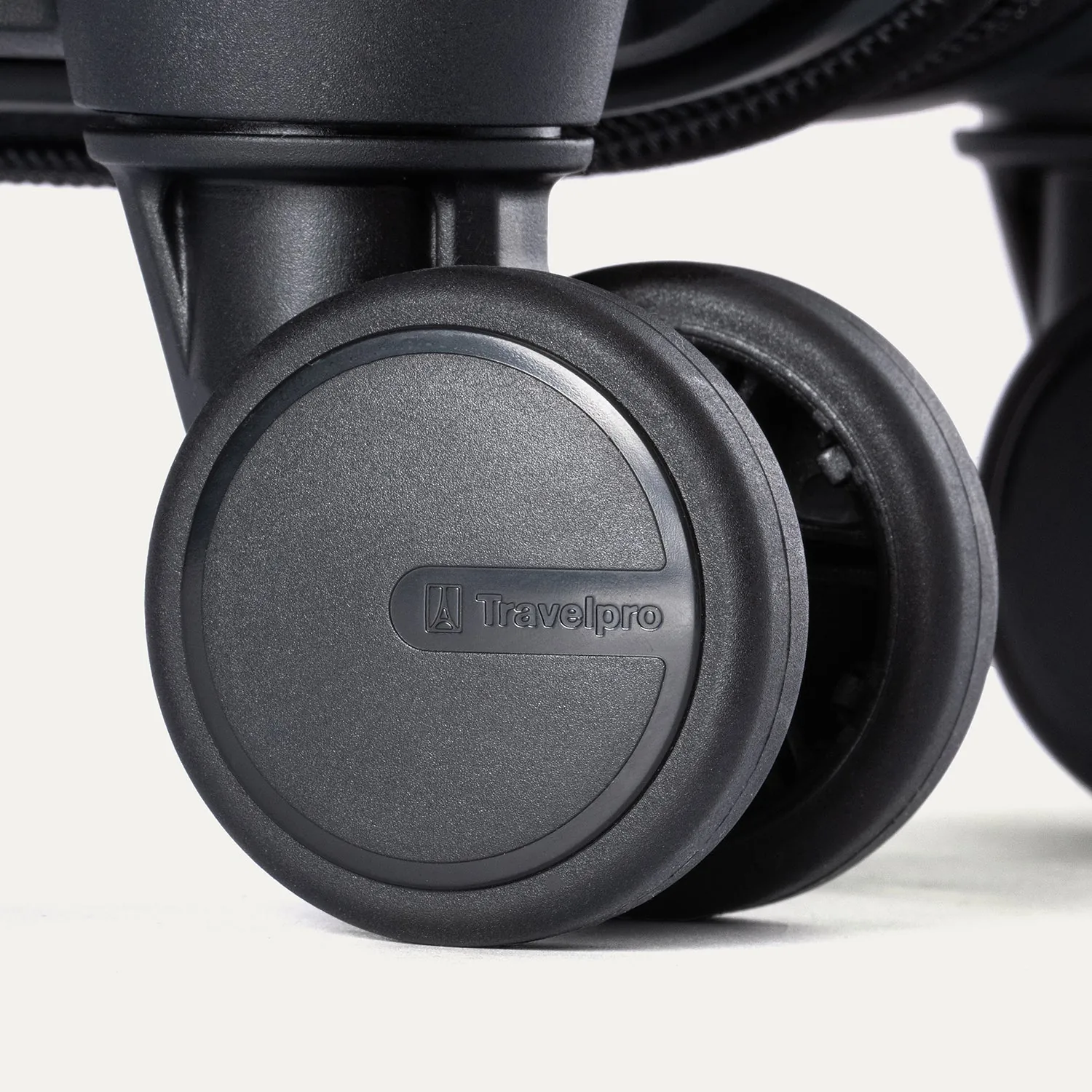
It’s not just an annoyance — it’s a signal that something in the wheel assembly isn’t rotating smoothly. Travelpro spinner luggage uses double-row sealed ball bearings inside polyurethane or rubber-coated wheels, mounted on stainless steel axles. These wheels are built for durability, but over time, dust, grit, and moisture get in, drying out factory grease or wearing down bearing surfaces.
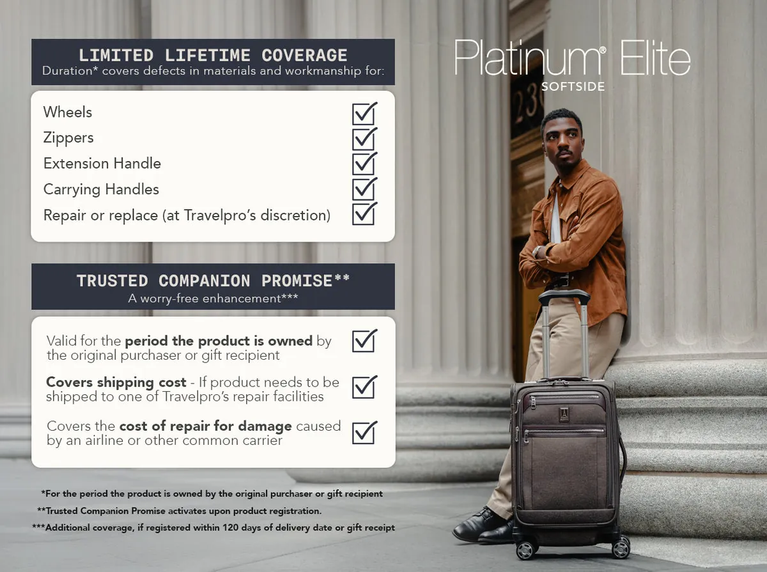
The most common misconception is that “noisy wheels = broken wheels.” In reality, 70% of noisy Travelpro wheels respond to cleaning and re-lubrication — no parts needed. Bearings aren’t meant to be serviced by users, but surface-level maintenance helps extend life. If your bag is under warranty (2–10 years, depending on model), Travelpro may cover wheel replacement — check your specific model’s terms on Travelpro’s official warranty page.
How to diagnose noisy Travelpro wheels
- Lay the suitcase flat on its side, resting on the noisy wheel(s). Gently spin each wheel by hand — listen for grinding, clicking, or squealing. Note whether the sound happens only when weight is applied (e.g., rolling), or also when spinning freely.
- Inspect the wheel housing for visible debris: hair, thread, lint, or small stones wedged between the wheel and the frame. Use tweezers or a thin plastic pick (not metal) to remove anything you see — avoid scratching the wheel or frame.
- Check axle tightness: Press down firmly on the wheel while trying to wiggle it side-to-side. If there’s more than 1 mm of play, the axle screw or retaining clip may be loose. Tighten only if you see an accessible Phillips-head screw near the wheel hub — do not force it or strip the threads.
- Wipe the wheel surface and inner rim with a damp microfiber cloth, then dry thoroughly. Avoid alcohol or solvents — they can degrade rubber coatings or bearing seals.
- Apply one drop of silicone-based lubricant (not WD-40 or oil) to the outer edge of the wheel where it meets the axle housing. Rotate the wheel slowly 10 times to work it in. Wait 2 minutes, then test roll.
- Repeat steps 1–5 for each wheel, even if only one sounds noisy — imbalance or mismatched wear often affects adjacent wheels.
- 🛠️ Fix the problem before replacing the wheel — Check Amazon for compact luggage wheel cleaning and repair tools →
The single judgement call that separates good results from bad ones is knowing when not to lubricate. If the wheel spins unevenly, wobbles visibly, or feels gritty after cleaning, adding lubricant won’t help — it may even trap more debris. That’s the sign to move to inspection or replacement.
Travelpro wheels making noise settings
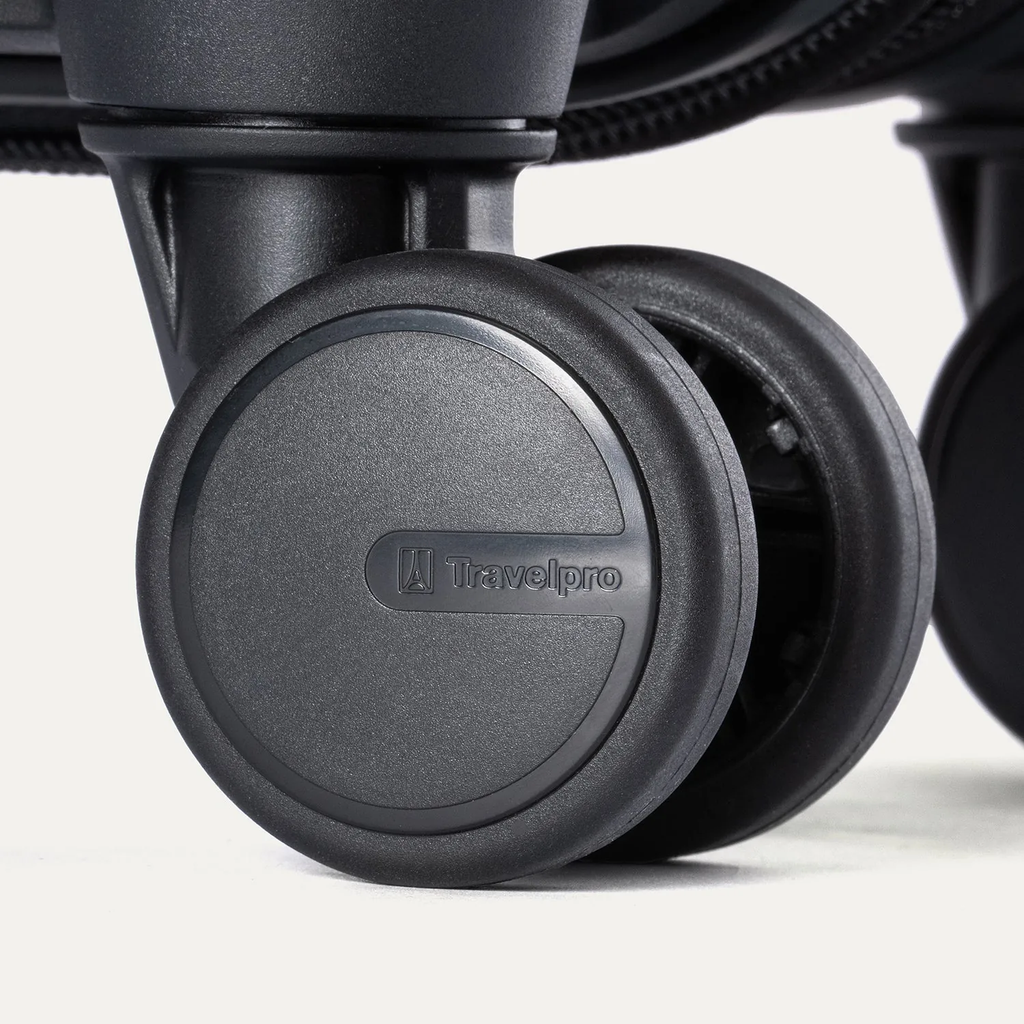
Use this table when you’re troubleshooting mid-trip or at home. All times assume standard Travelpro Maxlite, Crew, or Platinum Magna models with 360° spinner wheels.
| Situation | What to use | How long | What to watch for |
|---|---|---|---|
| Light squeak, wheel spins freely | Damp cloth + 1 drop silicone lube | 2 minutes prep, 5 min wait | Lube spreading beyond axle — wipe excess immediately |
| Grinding or scraping noise | Tweezers + flashlight | 3–5 minutes per wheel | Metal-on-metal sound returning after lube — indicates bearing wear |
| Clicking with every rotation | Small Phillips screwdriver (if axle screw visible) | 1 minute per wheel | Stripped screw head — stop tightening if resistance drops suddenly |
| Wobble or side-to-side play >1 mm | Tightening tool (only if screw is exposed) | <1 minute | Wheel pulling to one side while rolling — means misalignment |
| Cracks in wheel rim or chunk missing | Visual inspection only — no fix | Instant diagnosis | Continued use risks axle damage or wheel detachment |
Need to tighten or free a stuck wheel? See precision screwdrivers and hex-key repair kits on Amazon →
What separates good results from bad ones
Experienced travelers don’t just treat the symptom — they match the fix to the root cause. They start by isolating which wheel makes noise (many assume it’s the loudest one, but it’s often the one opposite the pivot point under load).
They clean before lubricating — never the reverse — because old grease mixed with dust forms abrasive sludge. And they never use household oils: mineral oil breaks down rubber wheel coatings, and lithium grease attracts dust faster than silicone.
They also check wheel alignment after any adjustment: lift the suitcase by the handle and let all four wheels hang freely. Spin each one — if one stops noticeably faster than the others, it’s dragging due to misalignment or residual debris. That’s a sign to re-clean or inspect the axle seat. Beginners often skip this step and blame the wheel itself, leading them to replace parts unnecessarily.
Finally, they know when “quiet” is enough. A faint hum during fast rolling is normal for Travelpro’s dual-bearing design — it’s not a defect. True problems show up as inconsistent sound (e.g., noise only on left turns) or increasing volume over days, not hours.
Common problems and quick fixes
| What you notice | What it usually means | What to do first |
|---|---|---|
| High-pitched squeal when starting to roll | Dry bearing surfaces or light surface rust on axle | Wipe axle and wheel contact area with dry cloth; apply one drop silicone lube |
| Rhythmic thumping or clunking | Debris trapped behind wheel or loose caster cap | Turn bag upside-down, shine light into wheel well, remove debris with plastic pick |
| Squeaking only when turning corners | Uneven wheel tension or one wheel slightly misaligned | Lift bag, spin all wheels freely — replace any that stop in <5 seconds |
| Wheel spins freely but drags under load | Worn internal bearing race or bent axle | Stop using that wheel; contact Travelpro support for warranty check |
| Noise gets louder after cleaning/lubing | Lubricant attracted dust or was applied too heavily | Wipe off excess lube completely; repeat cleaning without lube |
Rules for fixing noisy Travelpro wheels
Travelpro offers limited lifetime warranties on wheels for Platinum Magna and Crew 9 collections, and 2-year warranties on Maxlite and other lines — but coverage requires proof of purchase and excludes damage from misuse (e.g., overloading, dragging on rough pavement). The CPSC doesn’t regulate luggage wheel noise, but does list wheel failure as a top cause of trip-and-fall incidents in public spaces — so persistent noise that affects stability should be addressed before travel.
🛞 Wheel damaged beyond repair? Check Amazon for Travelpro-compatible replacement wheels →
If your bag is under warranty and shows bearing wear or wheel cracking, Travelpro’s authorized service centers handle repairs. Do not attempt to press out or replace bearings yourself — doing so voids the warranty and risks damaging the wheel housing or axle mount.
If noise starts after six months of normal use, check for grit trapped between the wheel and frame — a quick wipe with a damp cloth often stops it. If the sound is rhythmic and worsens when turning corners, inspect for bent axles; those require professional replacement. Wheels that wobble or grind while rolling straight almost always need full assembly replacement — not just bearings. Keep receipts and photos of the issue: Travelpro may ask for both before approving service.
Keeping it working afterwards
After cleaning or lubricating, roll your suitcase on carpet and smooth tile for 30 seconds each to seat the lube evenly. Then store it upright — never on its wheels — to avoid flattening rubber coatings or compressing bearings. Check wheel play regularly: press down and wiggle each wheel.
If play exceeds 1 mm or returns soon after servicing, the bearing is likely failing. Don’t assume a wobble means full replacement — sometimes tightening the axle screw or reseating the wheel hub solves it. If the wheel spins unevenly or makes grinding noise while rolling, skip the fix and order new ones.
Travelpro doesn’t publish a service interval, but real-world feedback shows most well-maintained wheels last several years before needing replacement. When in doubt, look for the “T” logo stamped on the wheel hub — genuine Travelpro replacement wheels are sold only through Travelpro’s official parts portal. Avoid third-party wheels with mismatched axle diameters; they force misalignment and wear out bearings faster.
When to use a different approach
If your Travelpro bag is older than 8 years, has visible cracks in the wheel rim, or makes grinding noise even after professional cleaning, replacement is safer than repair. Travelpro no longer stocks parts for discontinued lines like the original Maxlite 1.0 or Crew 7 — attempting DIY bearing swaps risks axle damage and creates compatibility issues.
If noise is accompanied by handle wobble or zipper misalignment, the issue may be frame warping — not wheels — and needs structural assessment. In those cases, contact a certified luggage repair shop like eBags’ Repair Center or local cobblers who specialize in hard-shell luggage. Never send your bag to third-party sellers offering “bearing upgrades” — these void warranties and lack Travelpro’s load-testing certification.
Frequently asked questions
Why do my travelpro wheels make noise only when I turn?
Because turning puts uneven pressure on the caster mechanism — one wheel bears more load and reveals binding or debris that’s silent when rolling straight. Clean and lightly lubricate all four wheels, then test turning slowly on smooth flooring.
Is it safe to use WD-40 on travelpro wheels?
No. WD-40 is a water displacer, not a lubricant, and dries out rubber wheel coatings over time. It can also wash away factory grease without replacing it, accelerating bearing wear. Use only silicone-based lubricants designed for plastics and rubber.
How long does travelpro wheel lubrication last?
With proper cleaning first, one application lasts 2–4 months for frequent travelers (3+ trips/month). For occasional use, it may last 6–12 months — but reapply if you hear squeaking return or notice increased rolling resistance.
Can I replace travelpro wheels myself?
Yes, but only if your model uses snap-in replacement wheels (most Platinum Magna and Crew 9 bags). Maxlite and older models require special tools and risk frame damage. Check Travelpro’s parts page for your exact model before ordering.
What happens if I ignore noisy travelpro wheels?
The noise will worsen, then the wheel may seize, crack, or detach — especially on stairs or uneven pavement. This risks injury, baggage damage, and airline refusal if the wheel interferes with conveyor belts.
Is travelpro wheel noise covered under warranty?
Yes, if your bag is within the warranty period and the noise stems from manufacturing defects (e.g., bearing failure, cracked rim). Normal wear, impact damage, or misuse are excluded — keep your receipt and contact Travelpro support with photos.
Conclusion
You don’t need special tools or technical knowledge to quiet most Travelpro wheels — just careful observation, the right cleaner, and one drop of the right lubricant. When the noise comes back quickly or changes character, that’s your cue to check warranty status or consult a pro.

Md Abdul Muhaimen is an experienced travel content writer and guide who has a Master’s in Information Systems Management from the University of Huddersfield. He is passionate about all things related to travel logistics and trip planning, and has assisted thousands of readers in choosing the proper luggage, knowing which items can be included in carry-on luggage, and understanding an airline’s policy with confidence.
Md Abdul has a sound grounding in systems thinking and data-driven content creation that allows him to bring clarity to complicated travel topics — from comparing the exact sizes of cabin bags from multiple airlines to developing helpful how-to guides to simplify a traveler’s experience.
He actually engages in travel forums on Quora, answers real user questions, and shares insights by posting on Medium blogs
.His work marries first-hand research, consumer-focused advice, and technical accuracy, and he is a voice that can be trusted among the travel and luggage community.