
 Posted by
 TSA security dogs are specifically trained to detect explosives and, in some jurisdictions, agricultural products, rather than focusing on the detection of personal quantities of cannabis or edibles.
While the primary mission of these canines involves ensuring the safety of aircraft by sniffing for hazardous materials, the reality of air travel means that security checkpoints are dynamic environments where various law enforcement agencies operate. Understanding the nuances of airport security protocols helps travelers manage their expectations regarding the screening process and the legal realities of carrying various items through federal checkpoints.
Key Takeaways
- TSA detection dogs are primarily trained for explosives rather than narcotics or edibles.
- Security checkpoints remain under federal jurisdiction, where cannabis is prohibited regardless of state laws.
- If a local law enforcement officer is called due to a suspicious discovery, they may enforce local or state statutes.
- Travelers should prioritize compliance with federal regulations to avoid unnecessary delays or legal complications.
- Packaging that masks scent doesn’t change the legal status of the items being transported.
Are TSA Dogs Trained for Edibles?
The canine units encountered at airports are typically part of a specialized program designed to identify chemical signatures associated with explosive devices. These highly trained animals focus on the volatile organic compounds found in bomb-making materials. While some airport K9 units are trained for dual purposes, including narcotics, the TSA’s stated mission is the security of the traveling public against threats to aviation, not the enforcement of drug laws.
Explosive detection is the standard operating procedure for the vast majority of K9 teams seen patrolling concourses or screening lines. The training process for these dogs is rigorous, requiring them to ignore common scents, including food items, to maintain focus on their primary objective. Despite this, a dog’s sense of smell is incredibly sensitive, and they may occasionally show interest in a bag that contains strong-smelling food, even if that food isn’t on their training list. This behavioral response can sometimes lead to a secondary inspection of your belongings by human officers.
Do Dogs Sniff for Cannabis?
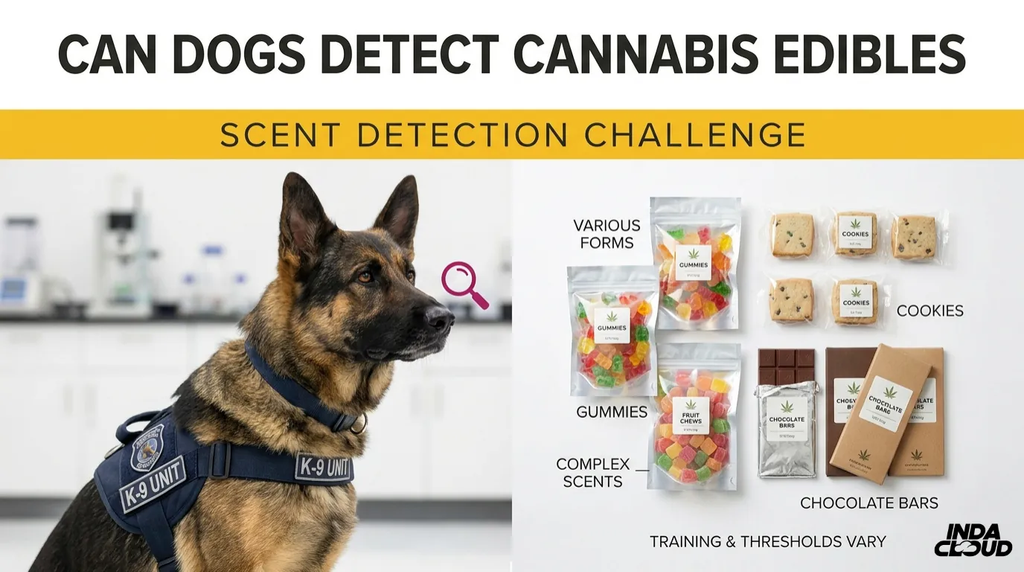
Whether an airport dog is interested in your luggage depends heavily on which agency manages the canine. Local police departments often maintain a presence in airports, and these officers may utilize dogs trained specifically for narcotics detection. If you’re traveling through an airport where local police dogs are present, those animals may indeed be trained to alert their handlers to the presence of cannabis products, including edibles.
Narcotics detection dogs are common in high-traffic areas and international arrivals. It’s important to distinguish between the TSA, a federal agency, and local law enforcement. While the TSA isn’t actively hunting for edibles, their officers are obligated to report any illegal activity they encounter during the normal course of their screening duties. If a TSA officer discovers an item that appears to be a controlled substance, they will typically defer to local law enforcement to determine how to proceed.
Can TSA Dogs Smell Edibles Through Packaging?
The efficacy of scent-masking techniques is often overstated by travelers. Canines possess a sense of smell thousands of times more sensitive than that of a human. While vacuum-sealing or using smell-proof bags might reduce the concentration of particles escaping a container, it rarely eliminates the scent entirely for a trained animal. If a dog is trained to look for a specific scent, they’re often able to perceive it even through layers of plastic or other barriers.
Scent-proof packaging isn’t a foolproof method for bypassing security protocols. Relying on specialized bags or containers provides a false sense of security. Furthermore, if a package appears suspicious during an X-ray scan, security officers may choose to manually inspect the item regardless of whether a dog has alerted to it. The X-ray technology used at checkpoints is highly effective at identifying the density and composition of items, which can alert officers to the presence of dense, organic materials that don’t match the profile of standard snacks.
How to Handle Security Screenings
| Screening Method | Primary Detection Focus | Risk Level for Edibles |
|---|---|---|
| Explosive Detection K9 | Bomb-making materials | Low |
| Narcotics K9 | Controlled substances | High |
| X-ray Inspection | Density and shape | Moderate |
| Manual Search | Visual identification | High |
Maintaining composure during a security screening is essential. If you’re stopped for a secondary search, follow the instructions provided by the TSA officers calmly. The officers are performing a task mandated by the Transportation Security Administration, which governs the items permitted through federal checkpoints. Arguments or erratic behavior are more likely to result in a thorough inspection of your belongings than the actual presence of innocuous items.
Why Airports Are Federal Jurisdictions
The most critical factor for any traveler to understand is that airports are federal facilities. In the eyes of the federal government, cannabis remains a Schedule I controlled substance. Even if you’re traveling between two states where cannabis is legal for recreational or medicinal use, the flight itself crosses state lines and enters federal airspace. This legal framework means that federal laws supersede state regulations while you’re inside the terminal.
Federal law enforcement officers have the authority to intervene if they discover prohibited items. While many local airports have adopted policies of non-enforcement regarding small amounts of cannabis to align with local sentiment, this isn’t a universal rule. Relying on local leniency is a gamble that can lead to missed flights, confiscation of property, or potential legal trouble. Always be aware of the specific policies of the airport you’re departing from and arriving at, as these can vary significantly.
Are There Differences Between Airports?
Not all airports operate with the same level of scrutiny. Large international hubs often have a more robust law enforcement presence, including dedicated narcotics teams, compared to small regional airports. Some major cities have explicitly stated that their airport police won’t prioritize the enforcement of cannabis possession laws, while others maintain a strict zero-tolerance policy.
Airport security policies can change based on current threat levels or local administrative directives. It’s never safe to assume that a policy in place one month will remain the same the following month. If you’re concerned about the presence of specialized dogs, you might look for information regarding the specific police department that patrols your departure airport. However, even with this knowledge, there’s no guarantee that you won’t encounter a K9 unit on any given day.
What Happens if You Are Caught?
If a canine alerts to your bag or a TSA officer finds edibles during a search, the situation typically follows a set path. First, the TSA officer will pause the screening process and contact a supervisor. If the substance is suspected to be illegal, local law enforcement is summoned to the checkpoint. At this point, the TSA is essentially “out of the loop” regarding the legal outcome; their primary concern is that they have identified a potential violation of law.
Local law enforcement will then determine the next steps based on state and local statutes. In many instances, the officer may simply ask you to dispose of the item in a trash bin before proceeding to your gate. In more restrictive jurisdictions, you could face questioning, documentation of the incident, or even arrest depending on the quantity and local laws. Being honest and cooperative is generally the best approach if you find yourself in this position.
Is It Worth the Risk?
The decision to carry edibles through an airport is a personal one, but it’s rarely worth the potential disruption to your travel plans. The stress of worrying about security dogs, the possibility of a secondary search, and the potential for legal complications can significantly impact your journey. Many travelers find that the inconvenience of being delayed at a checkpoint outweighs any benefit of having these items at their destination.
Travel security risks extend beyond the legal consequences. Even a minor delay caused by a secondary search can result in missing a flight, especially if you’re traveling with tight connections. When you consider that most destinations have their own local sources for these items, the risk of bringing them through a federal security checkpoint becomes difficult to justify for most casual travelers.
Frequently Asked Questions
Do TSA dogs specifically target edibles?
No, TSA dogs are primarily trained to detect explosives. Their training focuses on the chemical signatures of materials that could pose a threat to the safety of an aircraft. They aren’t trained to sniff for cannabis or other narcotics. However, because they’re highly trained animals, they may occasionally show interest in items that have strong odors, which can lead to a search by human officers.
Can an X-ray see through my snacks?
Yes, modern X-ray technology used at airport checkpoints is highly advanced. It allows security officers to see the density and shape of objects inside your luggage. If your edibles are packed in a way that appears unusual or dense, the X-ray operator may flag your bag for a manual search. The machine doesn’t necessarily identify the substance, but it alerts officers to investigate the contents.
What happens if a dog alerts to my bag?
If a dog alerts to your bag, it doesn’t automatically mean you’re in trouble. The officer will ask to perform a secondary search of your belongings to ensure there’s no explosive threat. If they find cannabis or edibles during this search, they will typically call local law enforcement. The police officer will then decide whether to allow you to dispose of the item or pursue legal action.
Is it legal to fly with edibles in legal states?
No, it isn’t legal. Even if you’re flying between two states where cannabis is fully legalized, the airport and the aircraft are under federal jurisdiction. Federal law classifies cannabis as a prohibited substance. Therefore, carrying it through a TSA checkpoint is a violation of federal regulations, regardless of the laws in the state you’re departing from or the state where you’re landing.
Should I try to hide my edibles?
Attempting to hide or mask the scent of edibles is generally discouraged. Efforts to conceal items often make them appear more suspicious during X-ray screening. If an officer finds that you have intentionally attempted to hide a substance, it may be perceived as an attempt to bypass security, which can lead to more serious scrutiny and potential legal consequences compared to simply having the item in your bag.
Conclusion
Preparation for your flight is the most effective way to ensure a smooth transition through the airport. By understanding the federal nature of the security environment and the primary duties of the personnel involved, you can make informed decisions about your travel plans. If you’re uncertain about the regulations, the safest course of action is to leave restricted items at home and research local options at your destination.

Md Abdul Muhaimen is an experienced travel content writer and guide who has a Master’s in Information Systems Management from the University of Huddersfield. He is passionate about all things related to travel logistics and trip planning, and has assisted thousands of readers in choosing the proper luggage, knowing which items can be included in carry-on luggage, and understanding an airline’s policy with confidence.
Md Abdul has a sound grounding in systems thinking and data-driven content creation that allows him to bring clarity to complicated travel topics — from comparing the exact sizes of cabin bags from multiple airlines to developing helpful how-to guides to simplify a traveler’s experience.
He actually engages in travel forums on Quora, answers real user questions, and shares insights by posting on Medium blogs
.His work marries first-hand research, consumer-focused advice, and technical accuracy, and he is a voice that can be trusted among the travel and luggage community.