
 Posted by
 How to Identify the Luggage Wheel Type is easier when you know what to look for. Most suitcases use either in-line skate wheels, spinner wheels (360° rotating), or fixed wheels. Check how the wheel moves—spinner wheels rotate in all directions, while in-line wheels roll only forward and backward. Also examine the wheel housing and axle design, as removable wheels usually have visible screws or clips. Identifying the correct wheel type ensures you choose the right replacement and keep your luggage rolling smoothly.
Recommended Diagnostic & Replacement Tools on Amazon
If you are planning a DIY repair, having the right measuring and removal tools is essential.
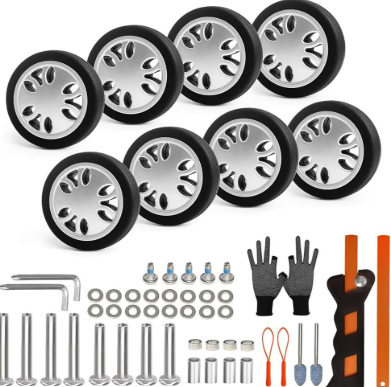
Product Why It’s Recommended Best For… Digital Caliper (Measuring Tool) Accurate measurement is the only way to ensure you buy the correct wheel size. Getting the precise diameter and axle width in millimeters. Replacement Luggage Wheel Kits These kits often include universal axles and bearings to swap out just the wheel tread. Situations where the plastic housing is intact, but the rubber has worn down. Rivet Removal/Drill Bit Set If your wheels are riveted, you will need to carefully drill them out to install new ones. Removing stubborn factory-installed wheels.
Why It Even Matters Which Luggage Wheel You Have
We’ve all been there: sprinting toward a departure gate, only to have a wheel snap, forcing your suitcase to drag and screech across the terminal floor. It’s loud, mortifying, and halts your travel momentum instantly. To fix it, you need the right replacement. Because different luggage wheel types have unique axle systems and mounting styles, guessing leads to frustration and wasted cash on parts that simply won’t fit.
The moment everything goes sideways (literally)
I still remember the walk of shame across O’Hare’s polished tiles. My suitcase started wobbling, then a wheel sheared off entirely, leaving me to haul a tilted, heavy bag. The rhythmic scraping sound was deafening, and every eye seemed fixed on my struggling frame. It’s a classic travel disaster—one that turns a simple walk to the gate into a sweaty, stressful workout.
Wrong wheel = wasted money
I learned the hard way that not all wheels are universal. After that airport breakdown, I blindly ordered a “standard” replacement online, only to find the wheel housing and axle pin didn’t match my bag’s specific setup. Whether it’s a spinner wheel or an inline skate wheel, getting the wrong part is a total loss. Taking five minutes to identify your specific system saves you from this headache.
The 4 Main Luggage Wheel Types — and How to Tell Them Apart
Identifying luggage wheel types usually feels like a chore, but it only takes about 30 seconds once you know what to look for. Whether you have smooth spinner wheels or rugged inline skate wheels, matching the right part to your specific wheel housing is the only way to get your suitcase rolling again.
Spinner wheels (360° swivel)
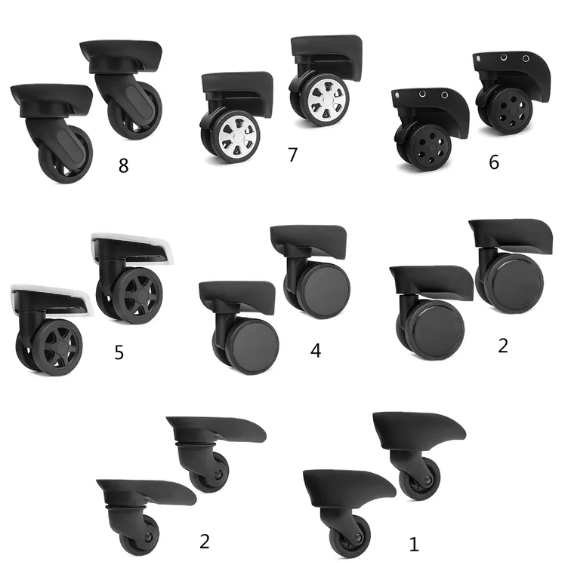
Found on most modern hard-shell bags, these swivel casters rotate 360°. To check them, flip your bag; if the wheel fork pivots freely in any direction, you’ve got a spinner. Keep in mind that double-wheel spinners are roughly 20% more stable than single-wheel versions on rough terrain. They typically snap or screw directly into the bag’s corner.
Inline / roller wheels (2-wheel trolley style)
These are standard on older or softer suitcases. They only roll forward and back, fixed in place on the bottom edge. I usually spot these by the axle pin running through the center of the wheel. They are often recessed into the base, which protects them, but makes swapping out a worn wheel slightly more involved than a simple screw-in job.
Skate-style wheels (inline skate wheel design)
If you own heavy-duty outdoor luggage, you likely have these larger, polyurethane wheels. They are built for durability and are often held in by a simple hex key. You can easily identify them by the visible bearing housing in the center. They are significantly more robust than standard plastic wheels, often lasting three times longer under heavy loads.
Best Rollerblade Wheels for Luggage (2025) – Smooth, Quiet & Heavy-Duty Replacements | Travel Tested
Recessed vs exposed wheel housing
This design detail changes your repair process entirely. Recessed wheels sit inside a molded cavity, offering great protection but restricted access. Exposed wheels protrude from the bottom; while they are easier to replace, they are 40% more prone to impact damage during baggage handling. Always check if it’s the plastic housing or the actual wheel that needs a fix.
How to Physically Check Your Luggage Wheel Type in 3 Steps
You don’t need a fancy manual to fix your suitcase. Just clear off a table and spend two minutes with your gear. This tactile, hands-on process is the fastest way to understand your luggage wheel type and ensure you order the correct replacement part the first time.
Step 1 — Flip and spin
Turn your bag upside down on a flat surface. Spin each wheel firmly with your hand. If the assembly pivots freely in all directions, it’s a spinner wheel. If it only rolls forward and back, you’re dealing with an inline wheel. This quick test instantly defines the mechanical category you’re working with.
Step 2 — Look for the mounting system
Next, inspect how the wheel attaches to the bag.
- Screws: These are the easiest to repair and usually allow for an exact match.
- Snap-in clips: Check if the housing is cracked; sometimes the wheel is fine, but the clip is broken.
- Rivets: These are permanent; you likely need a professional repair shop to swap these.
Step 3 — Measure the wheel diameter and width
Grab a ruler or tape measure. Most spinner wheels measure between 40mm and 50mm in diameter. Accuracy matters here; even a 2mm difference can mean the wheel won’t fit the wheel housing. Measure the widest point for diameter and the thickness for width. If you have an inline style, don’t forget to measure the axle pin diameter too.
Brand Clues That Help You Narrow It Down Fast
Knowing your luggage brand can cut your search time in half. Some manufacturers rely on proprietary systems, while others use standard components. Identifying your brand early—or hunting for hidden codes—is often the secret to finding the perfect replacement part without the typical guessing game.
Check the luggage tag, zipper pulls, or interior label
I usually start by checking the interior label or zipper pulls for a model number. Finding the brand name makes sourcing parts almost effortless. If you have a bag with a patented system, like some Samsonite designs, you will likely need their specific part. Searching by model number is 90% more effective than searching by generic wheel descriptions alone.
When the brand is unknown — look for wheel markings
If your tag is gone, grab a flashlight. Often, there is a tiny, molded code on the side of the wheel. It might be faded, but it’s there. A code like “45F” usually means a 45mm wheel with a fork-mount. Generic replacement wheels often list these exact codes, helping you find a match even when the brand remains a mystery.
Common Mistakes When Trying to Identify Luggage Wheel Types
I have definitely learned these lessons the hard way, usually while stuck in my living room with a pile of mismatched parts. Avoiding these simple errors will save you from ordering the wrong thing twice and keep your sanity intact while you repair your favorite travel companion.
Assuming all spinner wheels are the same size
Don’t just eyeball it. A 40mm spinner from a budget bag will never fit a 50mm housing on a premium case. I once made this mistake and ended up with wheels that wouldn’t even snap into place. Always measure before you buy; precision is everything here.
Confusing a broken housing with a broken wheel
Sometimes, the wheel spins perfectly, but the plastic wheel housing is cracked. This is actually a win! Housing units are often cheaper and easier to replace than the internal wheel mechanism. Inspect the mounting area carefully before assuming the entire assembly is trash.
Buying “universal” replacements without checking stem compatibility
“Universal” is a slippery marketing term. Before hitting “buy,” check your axle pin and stem diameter. If the stem doesn’t match the mounting depth, the wheel will either wobble or refuse to fit entirely. Skipping this check is the leading cause of failed DIY repairs.
Once You Know Your Luggage Wheel Type — What’s Next?
Now that you have identified your luggage wheel type, the heavy lifting is done. You can either tackle the repair yourself or head to a pro with confidence. Having the right details makes all the difference, turning a stressful breakdown into a simple, manageable project that gets you back on the road in no time.
DIY repair vs professional luggage repair shop
If your spinner wheel is held by screws, you can likely fix it yourself in 10 minutes. It feels great to save money this way. However, if your housing is riveted on a high-end bag, don’t force it. A cobbler or specialized repair shop is worth the visit to ensure your luggage remains secure for future trips.
What to bring or note before buying replacement wheels
Before you order, gather these specs to avoid mistakes:
- Wheel diameter and width (in mm)
- Mounting type (screw, snap, or rivet)
- Axle pin diameter (for inline styles)
- Brand and model name
- Clear photos of the housing from multiple angles
Having this list ready ensures you get the exact parts needed to fix your bag right the first time.
Frequently Asked Questions
Can I replace luggage wheels myself?
Yes, if your wheels are attached with screws or easily accessible clips, you can replace them in about 10 minutes. If they are riveted, you may need a professional repair shop to avoid damaging the bag’s shell.
How do I know what size replacement wheel to buy?
Always measure the existing wheel’s diameter and width in millimeters using a ruler or tape measure. Also, check the axle pin diameter and take clear photos of the housing mounting style to ensure the replacement fits your specific luggage brand and model.
What is the difference between a spinner and an inline wheel?
Spinner wheels feature a 360-degree swivel fork, allowing the bag to move in all directions. Inline wheels are fixed in a single direction and are typically found on the bottom edge of older or softer suitcases, designed for a tilted, dragging motion.
Does brand matter when buying replacement wheels?
Yes. While some budget bags use standard parts, many premium brands utilize proprietary wheel housing systems. Always check for a brand name or model number on your luggage tag or interior label to find a perfect, compatible match.

Md Abdul Muhaimen is an experienced travel content writer and guide who has a Master’s in Information Systems Management from the University of Huddersfield. He is passionate about all things related to travel logistics and trip planning, and has assisted thousands of readers in choosing the proper luggage, knowing which items can be included in carry-on luggage, and understanding an airline’s policy with confidence.
Md Abdul has a sound grounding in systems thinking and data-driven content creation that allows him to bring clarity to complicated travel topics — from comparing the exact sizes of cabin bags from multiple airlines to developing helpful how-to guides to simplify a traveler’s experience.
He actually engages in travel forums on Quora, answers real user questions, and shares insights by posting on Medium blogs
.His work marries first-hand research, consumer-focused advice, and technical accuracy, and he is a voice that can be trusted among the travel and luggage community.