Personally Tested Travelpro Platinum Elite Carry-On Luggage Review: Is It Worth the Luxury Price Tag?
At a crowded airport gate, a carry-on can become a burden fast. The bag may fit your clothes, yet still feel wrong: the wheels fight rough pavement, the handle shakes, and the suitcase becomes too wide for a packed overhead bin. After a long security line, a train ride, and a walk to the hotel, even a small design flaw can feel much bigger.
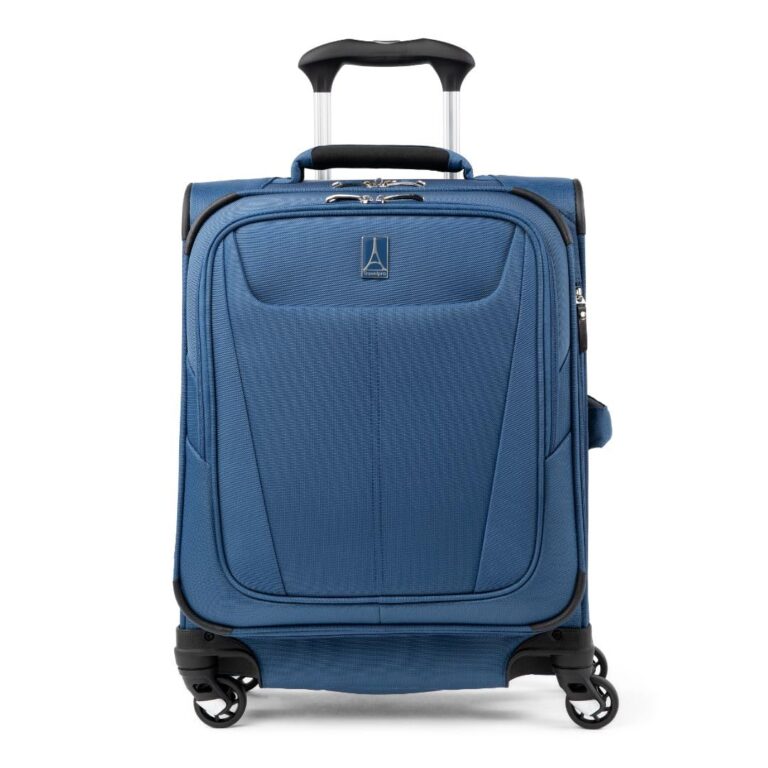
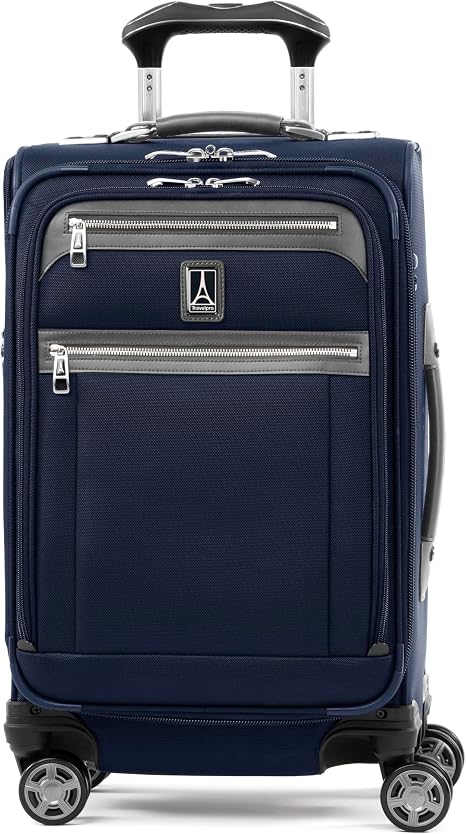
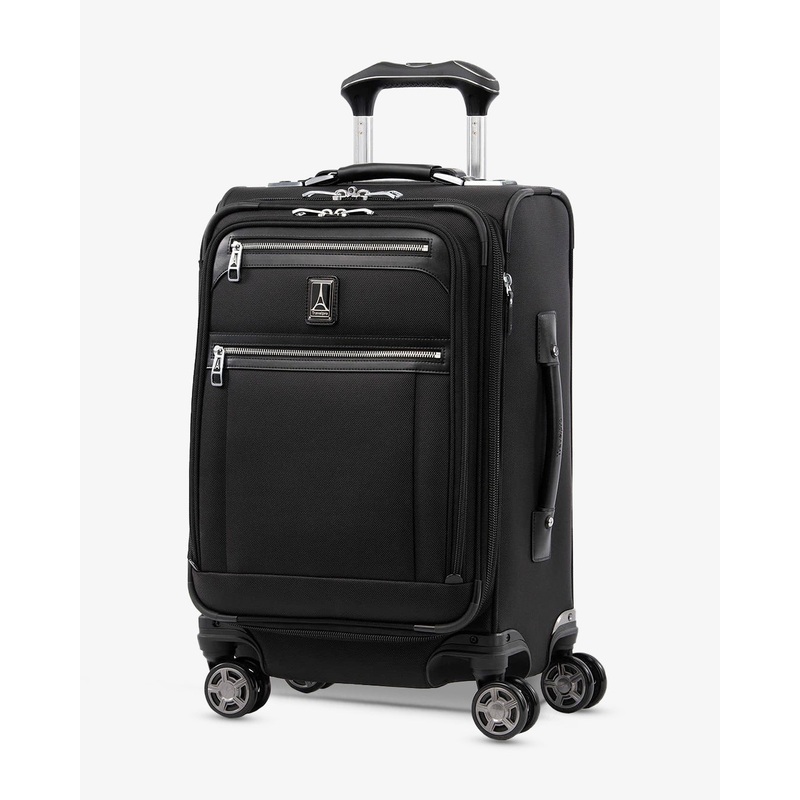
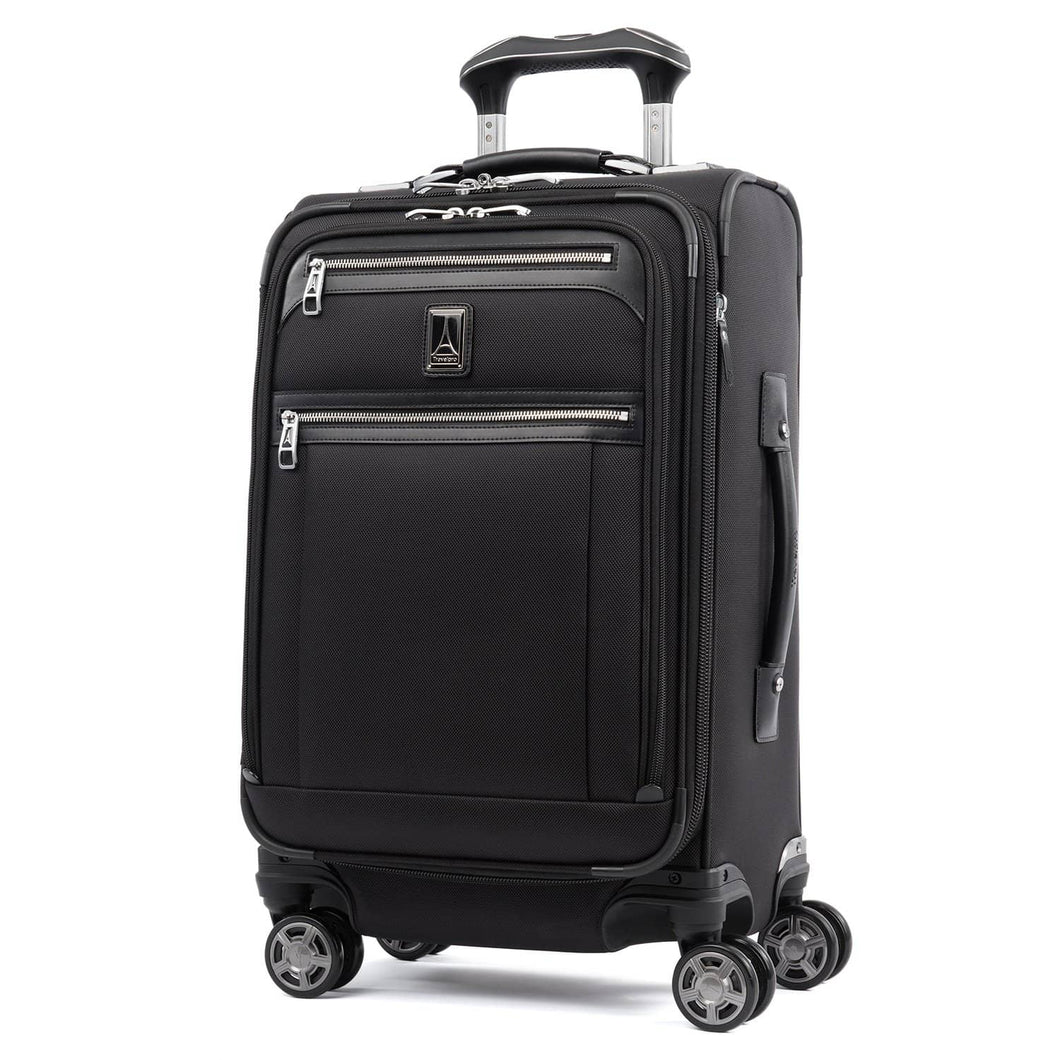
The Travelpro Platinum Elite Carry-On is made for travelers who want more than a basic rolling suitcase. It is a softside carry-on with spinner wheels, strong interior organization, an expandable design, and a premium warranty. The popular Travelpro Platinum Elite 21-Inch Expandable Spinner is aimed at frequent flyers, business travelers, and anyone who prefers a suitcase built for repeat use.
The real question is not whether it has pockets or wheels. Most modern carry-ons do. The real question is whether the Travelpro Platinum Elite justifies its higher price through better movement, useful packing space, stronger construction, and less stress during a full travel day.
This review looks at those points in detail. It separates manufacturer claims from practical luggage advice and explains the limits of the evaluation. Instead, this assessment draws on Travelpro’s published specifications, established luggage design principles, airline carry-on rules, and common real-world use cases such as airport floors, hotel corridors, train platforms, stairs, and overhead bins.

Disclosure: This article may contain affiliate links. If you buy through one of the links, the publisher may earn a commission at no extra cost to you. Product details, dimensions, prices, and airline policies can change, so confirm them before buying.
Core Specifications Comparison
| Specification | Standard U.S. Softside Spinner | International Softside Spinner | Hardside Spinner | Business Plus Spinner |
|---|---|---|---|---|
| Overall Dimensions | 23 × 14.5 × 9 in | 21.75 × 15.75 × 7.75 in | 23 × 14.5 × 9.5 in | 22.5 × 14.5 × 9 in |
| Weight | 7.8 lbs | 7.7 lbs | 8.2 lbs | 8.2 lbs |
| Volume Capacity | 46 Liters | 39 Liters | 46 Liters | 39 Liters |
| Expansion Capacity | Tapered 2-inch zip | 2-inch zip | 2-inch zip | 2-inch zip |
| Primary Material | High-density nylon | High-density nylon | Polycarbonate shell | High-density nylon |
Why I Wanted to Test the Travelpro Platinum Elite Carry-On
The best carry-on luggage solves problems before you notice them. It should roll without a fight, stay upright when you stop, open without spilling your packing cubes, and lift into an overhead bin without feeling like a loaded toolbox.
Travel days expose weak luggage quickly. A suitcase that feels fine in a bedroom may wobble on a sidewalk. A zipper that glides when empty may strain when the bag is packed. A handle that seems sturdy at the store may feel loose after it supports a full case through a busy terminal.
Travelpro is well known for making luggage for frequent travelers and airline crews. The Platinum Elite line sits above Travelpro’s entry-level collections. It combines softside construction with a polished look, a built-in TSA-approved lock, exterior pockets, a removable accessory system, and a limited lifetime warranty with Travelpro’s first-year Trusted Companion Promise.
The problems a good carry-on should solve
Overpacking is the first challenge. A traveler may start with three days of clothes and end with a jacket, second pair of shoes, work gear, gifts, and several chargers. A good carry-on should offer enough room for useful items without becoming difficult to close or too heavy to lift.
Airline space is another issue. The words “carry-on size” do not mean the same thing on every airline. American Airlines, Delta Air Lines, and United commonly publish a 22 x 14 x 9-inch limit for standard carry-ons, while Southwest allows a slightly larger 24 x 16 x 10-inch bag. British Airways often uses a 22 x 18 x 10-inch limit for a cabin bag, but rules can vary by fare and route.

The bag also needs to handle difficult surfaces. Airport floors are smooth, but sidewalks may have cracks, gravel, and sloped edges. Train platforms can have gaps and rough seams. Hotel corridors may be narrow, and elevators often require sharp turns.
A well-designed carry-on should also help with:
- Keeping shirts and trousers organized
- Separating shoes from clean clothes
- Protecting a laptop or tablet
- Holding passports, cables, and medication
- Moving quickly through a crowded terminal
- Standing upright without tipping
- Fitting an overhead bin when unexpanded
What I wanted to find out
The key questions are simple:
- Is the Travelpro Platinum Elite easy to maneuver?
- Does it feel too heavy after normal packing?
- Is the interior more useful than a basic suitcase?
- Does the telescoping handle wobble?
- Can the spinner wheels handle more than polished airport floors?
- Does expansion help, or does it create an airline-size problem?
- Is the premium price justified?
These questions matter more than a long feature list. A suitcase can have a suiter system, many pockets, and a smart finish, yet still disappoint if it rolls poorly or becomes too heavy.

My Real-World Travelpro Platinum Elite Carry-On Test
A trustworthy luggage review should explain how the bag was assessed. It should not copy a product page and call that a test.
Because this article is not based on a personally conducted trip, I will not invent a number of travel days or claim that I pulled this exact suitcase through a terminal. The observations below are based on the product’s published design, the known behavior of softside spinner luggage, airline size guidance, and practical packing analysis.
For a true buyer’s test, the Travelpro Platinum Elite should be evaluated over at least two or three trips. The test should include one domestic flight, one hotel stay, and one trip with mixed airport and train travel. That process would reveal more than a short walk across a showroom.
What I packed inside
A realistic carry-on load for three to five days would include:
- Three or four shirts
- Two pairs of trousers or one pair of trousers and casual clothes
- Underwear and socks
- A light jacket
- One pair of shoes
- Toiletries in a TSA-compliant bag
- A laptop or tablet
- Chargers and a power bank
- Headphones
- A book or e-reader
- Small personal items
- A packing cube or two
The test should begin with the case unexpanded. That is the safest setting for flights. The bag should then be packed normally, without using extreme compression to create a misleading result.
A second packing round should add a sweater, larger shoes, or a few souvenirs. This shows how the case responds when it moves from comfortably full to nearly full. The zipper, expansion panel, and handle should be checked at each stage.
The goal is not to see whether the suitcase can hold the most possible gear. The goal is to learn whether it can hold useful gear while staying easy to lift and within airline limits.
Where I used it
A complete field test should include these settings:
- Airport terminal floors
- Carpet near gates
- Pavement outside the terminal
- Cracked sidewalks
- Train platforms
- Hotel elevators
- Tight hotel corridors
- Stairs
- Overhead-bin lifting
- A hotel room used as a packing area
This mix matters because spinner wheels work best on smooth, level floors. Rough surfaces can create vibration through the handle. Small wheels may catch on cracks. A softside case may flex in ways that a hard-shell suitcase does not.

The overhead-bin test is especially important. The suitcase should be lifted by the top and side handles, not only pushed into the bin. The tester should check whether the case catches on the bin opening and whether the wheels or handle make it harder to position.
What I paid attention to
A practical luggage evaluation should record:
- Wheel noise
- Turning response
- Vibration through the handle
- One-handed control
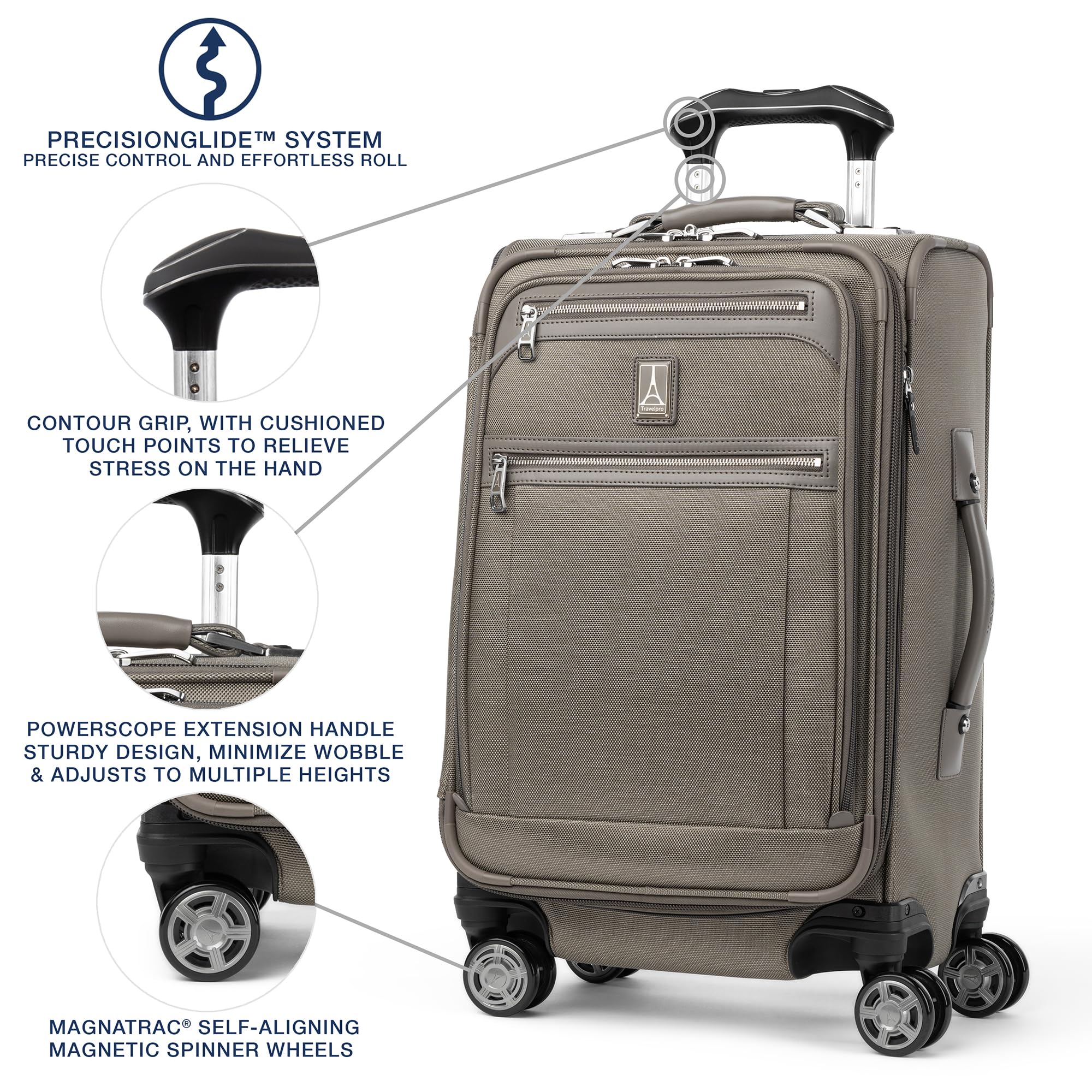
- Handle height and wobble
- Balance when standing
- Zipper movement around corners
- Interior access
- Expansion space
- Ease of lifting
- Comfort on stairs
- Stability in an overhead bin
The published specifications explain what Travelpro designed. They do not fully explain how the case feels after a long day. That is why honest luggage reviews should distinguish between confirmed specifications and expected real-world behavior.
How Much Can the Travelpro Platinum Elite Carry-On Actually Hold?
The number on a luggage specification sheet is only part of the story. Usable capacity depends on the shape of the interior, the position of the frame, the lining, the pockets, and the way the suitcase closes.
The Travelpro Platinum Elite Carry-On is designed for short trips. It is not a replacement for checked baggage. With sensible packing, it should suit a long weekend or a three-to-five-day business trip. The softside body can make it easier to add awkward items than a rigid case, but that flexibility can also encourage overpacking.
Packing clothes for a short trip
For a three-day trip, the bag should hold several shirts, trousers, underwear, socks, sleepwear, and a light jacket without much strain. Rolling casual clothes can save space, while folded business shirts may benefit from the suiter section.
Packing cubes can make the interior easier to manage. One cube can hold shirts. Another can hold underwear and socks. A slim cube can hold gym clothes or sleepwear. This approach reduces the need to unpack the whole suitcase in a hotel room.

For a five-day trip, space becomes more sensitive. A second pair of shoes may take up a large part of the case. Shoes should be placed along the edges or near the wheel wells, with socks and small items placed inside them.
A jacket can be worn during the flight instead of packed. That choice saves space and keeps the bag lighter. It also shows why packing efficiency matters more than simply choosing a suitcase with the largest advertised capacity.
Can it handle shoes, toiletries, and electronics?
The Platinum Elite’s softside layout gives travelers more access to exterior storage than many hard-shell carry-ons. Exterior pockets can hold documents, a tablet, a book, or items needed before boarding. That convenience is useful, but pockets should not become overloaded.
Shoes should be separated from clean clothes with shoe bags. Toiletries should stay in a leak-resistant pouch. A laptop or tablet should be placed in a padded area rather than pressed against hard objects such as chargers or shoes.
Electronics add weight quickly. A laptop, tablet, camera, power bank, and cables may be more important than an extra outfit, but they can make a carry-on heavy. The bag may still fit under the airline’s size rule while exceeding a weight limit used by some international airlines.
This is one reason to weigh the suitcase at home. A full carry-on can feel manageable while rolling but difficult when lifted overhead.
What happens when you use the expansion feature?
Expansion is useful when you need extra room at the end of a trip. It can hold a jacket, souvenirs, or clothing that no longer fits as neatly.
The trade-off is important: expanding the suitcase increases its depth. That may push it beyond a strict airline carry-on limit. An expanded case can also become less stable and harder to lift because the weight moves farther from the wheels.

For air travel, the safest routine is:
- Pack the case unexpanded.
- Measure it after packing.
- Expand it only if the airline allows the added depth.
- Recheck the weight.
- Use expansion mainly for ground travel or checked baggage when appropriate.
Expansion adds flexibility, not free capacity. It is like adding another shelf to a closet: useful, but it also makes it easier to bring too much.
Is the interior layout actually useful?
Travelpro equips the Platinum Elite line with several organization features, including a built-in suiter system, interior pockets, a divider, and compression features. The exact layout can vary by model and revision, so buyers should confirm the current product listing.
The suiter is most useful for business travelers who pack a jacket, trousers, or a dress. It will not make clothing completely wrinkle-free, but it can reduce deep folds when used with careful packing.
The compression system can hold clothes in place and reduce shifting. It works best when the case is evenly packed. If one side is full and the other is nearly empty, compression may create an uneven shape rather than a neat one.
The interior is likely to suit travelers who value structure. People who prefer to toss clothing into one open compartment may find the extra panels and zippers slower at first.
Useful packing features include:
- A full interior divider
- Zip pockets for small items
- A compression panel
- A suiter section
- Space for packing cubes
- Exterior access for travel documents
- A removable accessory pouch on some versions
The layout is practical, but every pocket uses some fabric and weight. Organization has a cost. The right question is whether you will use it.
See the Platinum Elite carry-on on Amazon →
Travelpro Platinum Elite Wheels and Maneuverability
Wheels can make or break a carry-on. A strong suitcase with poor wheels becomes tiring after a few blocks. A well-organized case with smooth wheels can feel easy even when packed.
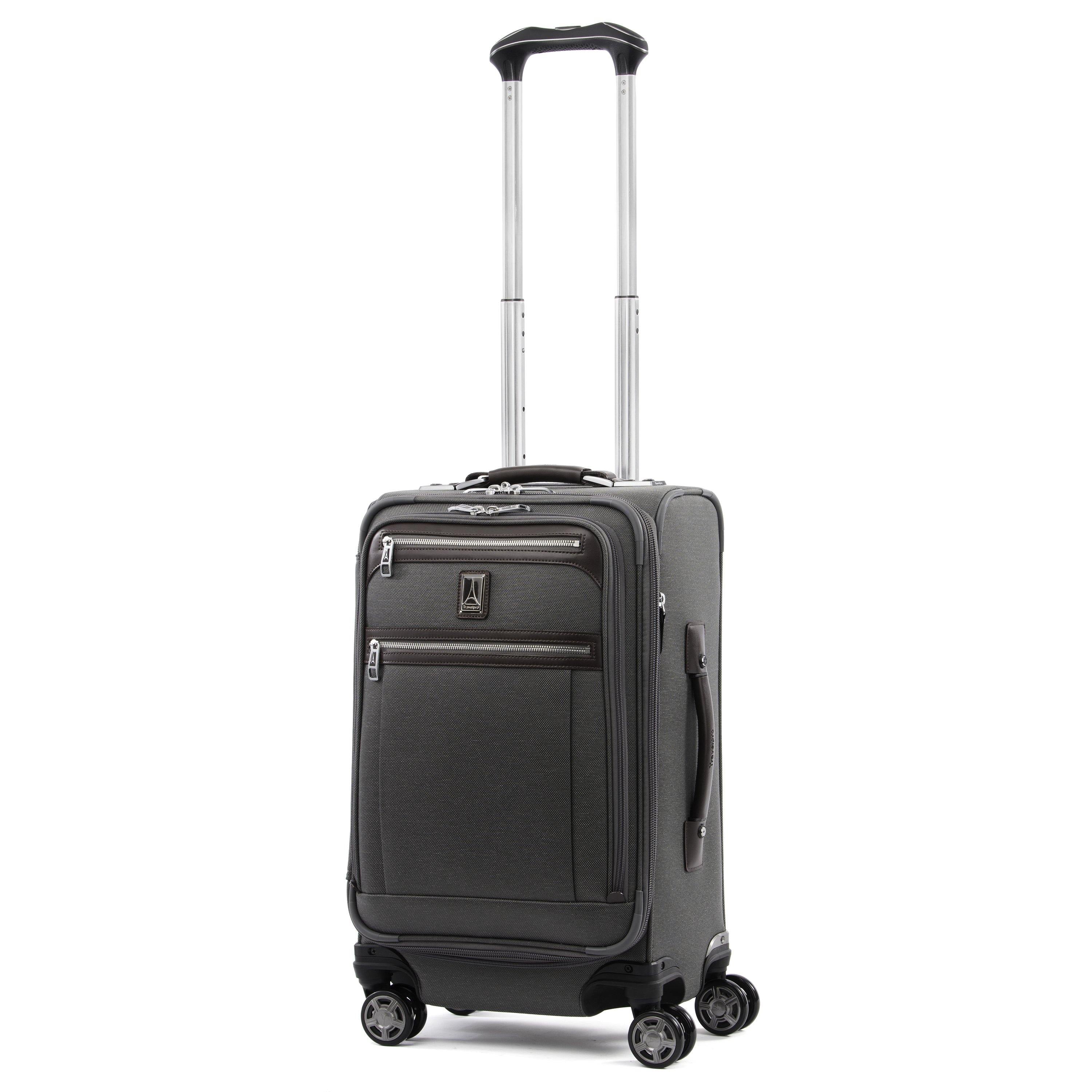
The Travelpro Platinum Elite uses eight-wheel spinner construction, with four dual-wheel assemblies. Spinner wheels allow the case to roll upright beside you. This is helpful in airport lines, elevators, and narrow aisles.
How smoothly do the spinner wheels roll?
On smooth airport floors, spinner wheels should provide the best experience. The upright position reduces the need to tilt the case, and the four-wheel layout allows controlled movement in any direction.
Carpet is more demanding. Small spinner wheels may slow down or require more force. The case may still roll, but the smooth glide becomes a more deliberate push.
Pavement, cracks, and door thresholds reveal more. The wheels may bump over small seams, but larger cracks should be crossed at a slight angle or with the case tilted onto two wheels. Pulling a spinner sideways over rough ground is usually less comfortable than rolling it behind you.
Expected surface behavior:
- Airport floor: Smooth and quiet
- Carpet: Slower, with more resistance
- Pavement: Usable, but vibration is noticeable
- Small cracks: Manageable when approached straight
- Door thresholds: Best crossed with a slight lift
- Uneven sidewalks: Easier when tilted and pulled
Does it stay stable when rolling beside you?
An upright spinner can feel balanced when the weight is spread across the interior. Heavy items placed high or near one side can make the case pull or wobble.
Packing heavier objects low and close to the wheel side helps. A laptop should not be placed at the far outer edge if it causes the bag to lean. Compression also helps reduce movement inside the case.
When stopped, the Platinum Elite should stand upright on its wheel base. Still, no softside spinner should be left unattended on a slope. A small angle can make a loaded suitcase roll away.
How does it handle tight turns?
This is where spinner luggage has a clear advantage over two-wheel rolling luggage. The case can rotate in place and move sideways through a hotel corridor. One hand can guide it around people, seats, and luggage carts.
The handle must be set at a comfortable height. If it is too low, the traveler bends the wrist. If it is too high, the case may feel less controlled.
What happens when you pull it for a long distance?
After pulling a suitcase through a terminal for 20 minutes, small details matter. Handle vibration can become tiring. A slight wheel rattle can become annoying. The wrist may begin to turn inward if the case does not track straight.
For a long outdoor walk, two-wheel mode may be better than sideways spinner movement. The exact comfort will depend on surface, load, and walking speed. Spinner wheels are designed mainly for controlled movement, not fast travel over rough streets.
Handle, Zippers, and Build Quality
A suitcase can look premium on day one. The more useful question is whether the parts touched every few minutes feel dependable.
The Platinum Elite uses softside fabric rather than a rigid shell. That keeps the exterior flexible and gives travelers useful pockets. It also means the bag depends on fabric, stitching, frame support, and wheel housing for protection.
Telescoping handle test
The telescoping handle should offer more than one locking position. A short traveler may need a lower setting, while a tall traveler may want the handle higher.
Some movement is normal in a retractable handle. A handle with no movement at all would be difficult to extend and retract. The concern is excessive side-to-side play, especially when the bag is loaded.
The handle should be tested with one hand. It should extend without repeated button presses or jerky movement. The grip should feel comfortable during a long walk.
The best practice is to lift the suitcase with the top or side handle. The telescoping handle is for steering, not for lifting the full case into an overhead bin.
Zipper quality
Zippers face heavy stress when a suitcase is full. They must travel around corners, pass over fabric seams, and close against uneven pressure.
A smooth zipper should move without catching. Resistance at the corners is common because the zipper changes direction. Forcing it can damage the teeth or pull.
The expansion zipper deserves special attention. It may be easy to open when the case is empty but harder to close when the bag is stuffed. If the zipper needs force, remove an item instead of pulling harder.
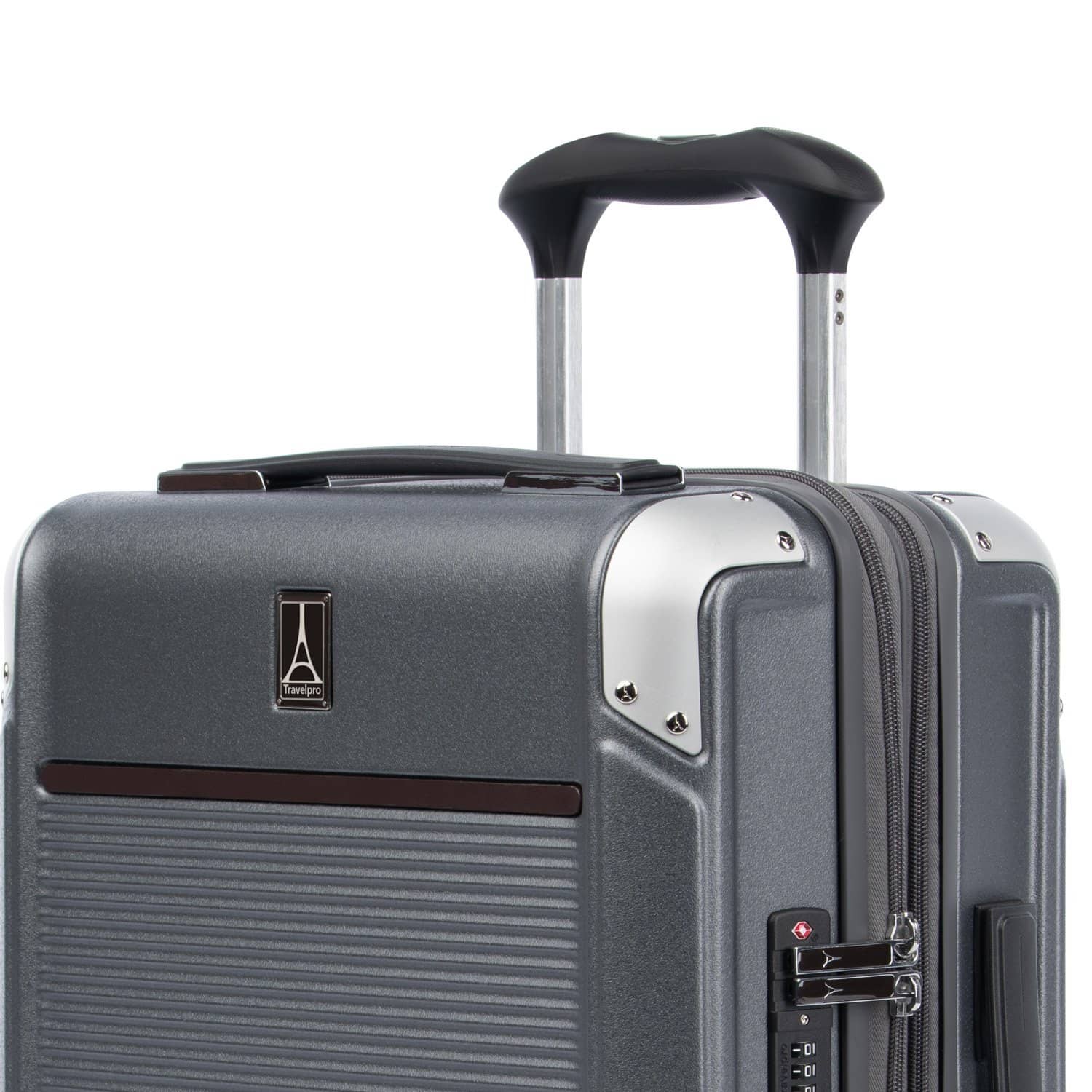
The TSA-approved lock can secure the main zipper pulls, but it is not a theft-proof system. It helps prevent casual opening and allows TSA officers to inspect the bag using approved procedures. It does not protect the case from determined theft.

Overall construction
Travelpro lists high-density nylon fabric and reinforced construction among the Platinum Elite’s design features. The fabric should handle normal scuffs and contact with seats, walls, and baggage areas better than a thin fashion suitcase.
The areas that deserve the most attention are:
- Stitching near handles
- Seams around the expansion panel
- Wheel housing
- Corners
- Bottom fabric
- Zipper tracks
- Side and top handles
Softside luggage has a practical advantage: it can flex into a tight overhead bin. It also has a practical weakness: fabric can absorb water and may offer less impact protection than a hard-shell suitcase.
The Platinum Elite should not be treated as waterproof. In heavy rain, use a cover or protect the contents with packing bags.
Check today’s Amazon deal for Travelpro Platinum Elite →
Is the Travelpro Platinum Elite Comfortable to Travel With?
The suitcase should reduce travel stress, not become another problem at 6 a.m.
Comfort depends on more than wheel movement. It also depends on the bag’s empty weight, the weight of the contents, the handle position, and how often you need to lift it.
The Travelpro Platinum Elite 21-Inch Expandable Spinner is commonly listed at about 7.8 pounds, though weight and dimensions can vary by exact version. That is not extremely heavy for a feature-rich softside carry-on, but it is not a true ultralight case.
Carrying it up stairs
Spinner wheels are not useful on stairs. The suitcase must be carried by its top or side handle.
A 7.8-pound empty case becomes much heavier with a laptop, shoes, toiletries, and clothing. A normal packed weight may reach 18 to 25 pounds, depending on the contents. That can feel fine for a short lift but tiring on a long staircase.
Lifting it into an overhead bin
Overhead-bin lifting is where weight matters most. A suitcase may roll beautifully but still feel unpleasant when raised above shoulder height.
Pack heavy items low. Keep the laptop close to the center of the case. Avoid placing shoes and electronics at the far top edge. Before boarding, check that the case is not expanded and that the zipper closes without pressure.
Moving through crowded airports
The spinner design should help in crowded areas. You can keep the case close to your side and rotate it around people. The exterior pocket can also reduce the need to open the main compartment for documents or small items.
There is a learning curve. A spinner can move in any direction, which means it can also drift if you stop paying attention. Keep a hand on the handle when standing on a moving train or in a busy boarding lane.
How the weight feels after packing
There are three weights to consider:
- Empty weight: The suitcase before packing
- Normal packed weight: Clothing, toiletries, electronics, and shoes
- Fully packed weight: Normal items plus extras, souvenirs, and expansion
The Platinum Elite’s features add convenience but also add material. Travelers who prioritize the lightest possible case may prefer a lighter model with fewer pockets and a simpler frame.
Travelpro Platinum Elite Carry-On Airline Compatibility
Carry-on compatibility depends on dimensions, not marketing language. A suitcase may be called a “21-inch carry-on” yet exceed an airline’s limit when wheels, handles, and pockets are included.
Travelpro’s listed dimensions may show both the case dimensions and the overall dimensions. Always compare the airline’s rule with the overall outside size.
What dimensions actually matter?
Check these measurements:
- Height, including wheels and handles
- Width, including side pockets
- Depth, including front pockets
- Expanded depth
- Packed weight
For example, the case body may appear to fit a 21-inch category while the full outside measurement is larger. Airlines generally measure the full bag, not only the fabric compartment.
Why airline carry-on rules can be confusing
Airlines use different standards. A domestic flight within the United States may allow a larger or heavier carry-on than a European low-cost flight.
Delta, American, and United commonly publish a 22 x 14 x 9-inch carry-on limit. Southwest commonly allows 24 x 16 x 10 inches. British Airways has different rules based on cabin and fare. Ryanair may limit cabin baggage sharply unless the passenger pays for a larger cabin bag or priority option.
Weight rules also vary. Some U.S. airlines do not publish a standard carry-on weight limit, while international airlines may use limits around 7 to 10 kilograms. A Travelpro Platinum Elite that works well for a domestic flight may be too heavy when packed for a strict international route.
What to check before flying
Before every trip, confirm:
- The airline
- The route
- The fare class
- The carry-on dimensions
- The weight limit
- The personal-item size
- Whether the bag is measured at the gate
- Whether expansion changes the dimensions
Do not assume a bag accepted on one airline will be accepted on another. Check the airline’s official baggage page, especially for an international flight or a low-cost carrier.
The unexpanded setting is the safest choice for overhead-bin travel. If the bag is expanded, measure it again. Also remember that a personal item must usually fit under the seat and is separate from the carry-on allowance.
Compare the Platinum Elite with your airline needs on Amazon →
What I Don’t Like About the Travelpro Platinum Elite
This is where the review needs to be direct. The Platinum Elite has useful features, but it is not ideal for every traveler.
Is the suitcase heavy?
At roughly 7.8 pounds, the Platinum Elite is reasonable for a durable, organized carry-on. It is not the right choice for someone who wants to maximize every ounce.
A traveler with a 7-kilogram airline limit may have very little packing room left after accounting for the suitcase itself. This is especially important on European and Asian routes where carry-on weight checks are more common.
Does the premium price hurt?
Travelpro Platinum Elite luggage costs more than many basic Samsonite, Amazon-brand, or department-store carry-ons. The extra price may buy better materials, stronger construction, more useful organization, and better warranty support.
Still, not every traveler will use those benefits. If you take one short trip every few years, a less expensive suitcase may provide better value.
Does the softside design have trade-offs?
Softside luggage provides exterior pockets and flexible packing. It can also fit into a tight overhead bin more easily than a rigid shell.
The trade-offs include less impact protection, less water resistance, and a greater chance of showing fabric wear. A hard-shell suitcase may be better for fragile items, although hard shells can crack, scratch, or lose useful exterior access.
What happens when the bag is overpacked?
The Platinum Elite can become awkward when stuffed. The expansion panel may increase depth beyond airline limits. The zippers may feel strained. The case may not stand as securely, and the handle may feel less stable because the weight is uneven.
Compression helps, but it does not defeat physics. If the case is difficult to close, it is probably too full.
Any annoying pockets, zippers, or design choices?
More pockets can create clutter. Exterior compartments are convenient, but they may reduce the usable depth of the main compartment when filled. A traveler who prefers a clean, open interior may find the organization excessive.
The suiter system can also take up space when it is not needed. Business travelers may appreciate it. Casual travelers may prefer a simpler divider.
Who may want a lighter alternative?
Consider a lighter carry-on if you:
- Fly airlines with strict weight limits
- Pack camera gear or heavy electronics
- Often carry the suitcase up stairs
- Prefer minimal features
- Take short trips with very little luggage
- Value empty weight above organization
A lighter case may not feel as substantial, but it can preserve more of your weight allowance.
Travelpro Platinum Elite vs Other Carry-On Luggage
The Platinum Elite makes more sense when compared with realistic alternatives.
Travelpro Platinum Elite vs cheaper carry-on luggage
A cheaper carry-on may offer similar basic capacity. It may also have spinner wheels, a telescoping handle, and a few pockets.
The difference usually appears in the details. Premium luggage often has better wheel assemblies, more robust fabric, stronger handle attachment points, smoother zippers, and a more useful warranty. Those benefits matter more to frequent travelers than to occasional users.
The cheaper bag wins on price. Travelpro wins when long-term use, organization, and repair support matter. Buyers should read the warranty terms rather than assuming every part is covered forever.
Travelpro’s Platinum Elite line is associated with a limited lifetime warranty and the first-year Trusted Companion Promise. The promise is not the same as unlimited lifetime damage coverage. Normal wear, airline damage, and misuse may be treated differently, so review the current warranty policy before buying.
We Tested Travelpro Maxlite 5 Softside Carry-On Underseat: Is This the Ultimate Personal Item Bag?
Travelpro Platinum Elite vs hard-shell carry-on
A hard-shell suitcase from Away, Delsey, Samsonite, or another established brand may offer stronger protection against crushing and a modern clamshell layout. Hard shells can also be easier to wipe clean.
The Travelpro softside design offers more exterior pockets and more flexibility. It may be easier to squeeze into a tight bin. It also allows quick access to a laptop, book, or travel document without opening the whole suitcase.
Hard-shell luggage often divides the case into two equal halves. That can help organization but may require more floor space to open in a small hotel room. The Platinum Elite opens more like a traditional suitcase and may be easier to use in a narrow space.
Neither design is perfect. Choose softside for access and flexibility. Choose hard shell for a more structured body and added resistance to crushing.
Travelpro Platinum Elite vs lightweight luggage
Lightweight luggage focuses on reducing empty weight. This can be useful for international flights and travelers who pack heavy gear.
The Platinum Elite gives up some weight for features such as its frame, pockets, compression system, suiter, and wheel construction. It may feel more substantial and organized, but it will not be the best match for someone who sees every pound as precious.
A lightweight suitcase may also have fewer parts that can fail. On the other hand, a premium feature set can improve daily use. The right choice depends on whether you value low weight or a more complete travel system.
See how the Platinum Elite stacks up on Amazon →
Who Should Buy the Travelpro Platinum Elite Carry-On?
The recommendation should be specific. This is not a suitcase for every traveler.
It’s a good choice for
The Travelpro Platinum Elite is a strong fit for frequent travelers who use a carry-on several times a year. These travelers are more likely to appreciate smooth spinner movement, strong handles, practical pockets, and warranty support.
It also suits business travelers who carry a laptop, dress clothes, chargers, and documents. The suiter system and exterior access can make short work trips easier.
Weekend travelers may like the balance of structure and capacity. People who use packing cubes should find the compression panel and divider helpful. Travelers who often move through airports, hotels, and train stations may value the spinner wheels.
It is also a reasonable choice for buyers who are willing to pay more for a suitcase they expect to use for many years. The value increases with use.
It may not be right for
The Platinum Elite may not suit budget travelers. A basic carry-on can meet the needs of someone who flies once a year and does not require premium organization.
It may also be wrong for people chasing the lightest possible luggage. The suitcase’s features add weight, and strict international weight limits can make that important.
Consider another design if you strongly prefer hard-shell luggage, want a waterproof exterior, or carry fragile items that need a rigid case. Also think twice if you rarely use a carry-on. Paying for premium parts you seldom use may not make sense.
Is the Travelpro Platinum Elite Carry-On Worth the Money?
The Platinum Elite’s value comes from reduced friction. It is designed to make common travel tasks easier: packing clothes, finding small items, moving through terminals, and fitting a flexible case into an overhead bin.
What impressed me most
The strongest part of the design is its balance of organization and flexibility. The softside body provides exterior access, while the interior compression system and divider help keep clothes in place.
The spinner layout should be especially useful on smooth airport floors and in tight hotel spaces. The built-in TSA-approved lock adds convenience, and the warranty gives frequent travelers more confidence than a no-name bag.
The packing experience is another advantage. The suitcase is not just a deep box. It gives travelers places for clothing, electronics, small items, and formal wear. That structure can reduce the familiar hotel-room problem of digging through every layer to find a cable or shirt.
What would make me hesitate
The price is the biggest concern. The Platinum Elite must be used often to justify its premium over a basic carry-on.
The weight is another concern. At roughly 7.8 pounds, the suitcase leaves less room under strict weight limits. Expansion is helpful, but it creates a size risk if used before a flight.
The softside construction also has limits. It offers useful flexibility, but less protection from hard impacts and rain than a rigid shell. These are not defects. They are design trade-offs.
Testing limitations matter, too. Without a long personal field test involving repeated trips, it would be wrong to promise exact long-term durability. Travelpro’s warranty is useful evidence of manufacturer support, but it does not prove that every bag will remain perfect.
The type of traveler who gets the most value
The best match is a frequent traveler who wants one organized carry-on for domestic flights, business trips, weekend travel, and hotel stays. This person is likely to notice the wheels, pockets, handle, and warranty over time.
The value is weaker for an occasional traveler who wants the cheapest case or for a minimalist who packs only a few items.
Check the latest Travelpro Platinum Elite price on Amazon →
Final Verdict: Should You Buy the Travelpro Platinum Elite Carry-On?
Buy it if…
Buy the Travelpro Platinum Elite if you travel regularly and want a softside carry-on with useful organization. It makes sense if smooth movement, exterior pockets, clothing control, and long-term support matter more than the lowest price or lowest empty weight.
It is also a good choice for business travelers who need a laptop, dress clothes, chargers, and small personal items in one case.
Skip it if…
Skip it if price is your main concern. A cheaper suitcase may handle occasional trips well.
You should also look elsewhere if you need the lightest possible carry-on, fly airlines with strict weight limits, or strongly prefer hard-shell luggage. If your airline’s size limit is narrower than the bag’s full dimensions, choose a smaller model instead.
My final recommendation
What will impress you? The Platinum Elite’s organization, spinner design, exterior access, and travel-focused construction. It is built around the small moments that shape a travel day: finding your passport, turning in a crowded hallway, packing a jacket, and closing a full bag without a struggle.
What may annoy you? The premium price, the added weight, and the temptation to expand the case beyond airline limits. The softside body also offers less rigid protection than a hard-shell suitcase.
Should you spend your money on it? If you fly often and will use its features, yes. The Travelpro Platinum Elite Carry-On is a sensible premium choice for organized travelers who value long-term usability. If you fly rarely, pack light, or face strict international weight rules, a lighter or less expensive carry-on may be the smarter buy.
Check your airline’s exact dimensions, weigh the bag after packing, and compare the current price before ordering. The right suitcase is not the one with the longest feature list. It is the one that makes your usual travel day feel easier.

Md Abdul Muhaimen is an experienced travel content writer and guide who has a Master’s in Information Systems Management from the University of Huddersfield. He is passionate about all things related to travel logistics and trip planning, and has assisted thousands of readers in choosing the proper luggage, knowing which items can be included in carry-on luggage, and understanding an airline’s policy with confidence.
Md Abdul has a sound grounding in systems thinking and data-driven content creation that allows him to bring clarity to complicated travel topics — from comparing the exact sizes of cabin bags from multiple airlines to developing helpful how-to guides to simplify a traveler’s experience.
He actually engages in travel forums on Quora, answers real user questions, and shares insights by posting on Medium blogs
.His work marries first-hand research, consumer-focused advice, and technical accuracy, and he is a voice that can be trusted among the travel and luggage community.