
 Posted by
 The 45-minute rule at the airport refers to the general recommendation that passengers arrive at least 45 minutes before a domestic flight’s boarding time to allow for check-in, security screening, and reaching the gate. This guideline helps ensure travelers have enough time to clear airport procedures without rushing. For international flights or busy airports, airlines often suggest arriving 90–120 minutes early to account for longer lines and additional document checks. Following this rule reduces the risk of missing your flight.
The 45 minute rule is a strict cutoff time used by many airlines
Since the “45-minute rule” is all about beating the clock, Here is the list of some recommended tools.
Product Why it helps with the “45 Minute Rule” Key Feature Apple AirTag / Tile Slim Speeds up the “lost bag” process if you’re rushing. Precise global tracking via phone. Venture 4th Passport Holder Saves minutes at security and Bag Drop by keeping docs ready. RFID blocking & neck-strap for hands-free. Bagsmart Tech Organizer Stops the “bag dig” at security, clearing the line faster. Multiple loops for cables and chargers.
If you’ve ever rushed to the counter and got turned away, you’ve felt this rule. In this guide, I’ll break down what is the 45 minute rule at the airport in clear, practical terms. You’ll learn why airlines care, what varies by carrier and airport, and how to plan so you never miss a flight again. I’ve helped travelers beat the clock for years, and I’ll share the playbook that actually works.
What is the 45 minute rule at the airport?
At many US airports, airlines set a hard deadline: you must complete check-in and drop checked bags at least 45 minutes before scheduled departure for most domestic flights. This is what most people mean when they ask what is the 45 minute rule at the airport. International flights often require 60 minutes or more.
“Complete check-in” means more than clicking a button on your phone. It means your reservation is checked in, your ID is verified if needed, bags are tagged and accepted, fees are paid, and you’re ready to head to security. If you arrive at the counter after the cutoff, the agent may refuse your bag, even if the plane is still boarding.
Key points that trip people up:
- Online check-in helps, but the 45-minute cutoff still applies to bag drop.
- Some carriers use 30 or 40 minutes at specific airports. Check the app before you leave.
- Gate cutoffs are separate. Many gates close 15 minutes before departure, even if you have no checked bags.
In short, what is the 45 minute rule at the airport? It’s a common airline deadline to keep flights safe, legal, and on time.

5 Shocking Items Not Allowed on Planes | Don’t Pack These In 2025
Why airlines use the 45-minute cutoff
This window is not random. It protects the critical steps that must happen before pushback.
- Checked-bag screening time. Bags need TSA screening and sometimes extra checks. This buffer reduces last-minute jams.
- Weight and balance planning. Load planners need stable numbers to place bags and cargo safely.
- Security and bag-to-passenger matching. Airlines avoid loading bags for a traveler who won’t board.
- Crew duty and departure slots. Late changes can risk missed slots, crew timing, and delay chains.
- Irregular operations control. A firm cutoff keeps a late passenger from cascading delays to many flights.
Because these steps are time-bound, agents cannot always “bend” what is the 45 minute rule at the airport, even if you plead your case. It’s tied to safety, compliance, and dispatch rules.
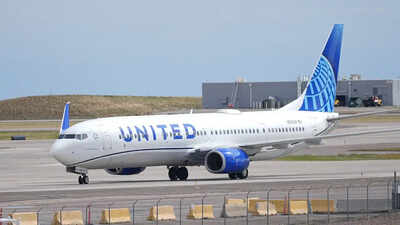
How the rule varies by airline, airport, and flight type
The 45-minute mark is common, but there are exceptions.
- Domestic flights. Many big US airlines set a 45-minute bag-drop cutoff at larger airports. Some use 30–40 minutes at smaller fields.
- International flights. Expect 60 minutes or more for check-in and bags due to document checks and added screening.
- Special airports. Busy hubs may tighten timelines; smaller airports can be more flexible but still firm.
- Flight type and fare. Basic fares, pets in hold, sports gear, or special services can require extra time.
Before you travel, open your airline app. It will show the exact check-in, bag-drop, and gate deadlines for your airport. That is the best way to confirm what is the 45 minute rule at the airport for your specific flight.
Is the 45-minute rule the same everywhere?
No. Airlines publish airport-specific deadlines. Domestic flights often use 45 minutes for bags, but some airports use 30–40 minutes, and international is often 60–75 minutes.
Does TSA set this rule?
No. TSA does not set airline check-in cutoffs. TSA suggests arriving early, but the 45-minute rule is an airline operations deadline for check-in and bag acceptance.
What if my connection is under 45 minutes?
Minimum connection times are different rules. If the airline sold you the ticket, they consider that connection legal—even if it’s less than 45 minutes—because your bags and seat are protected on the same ticket.
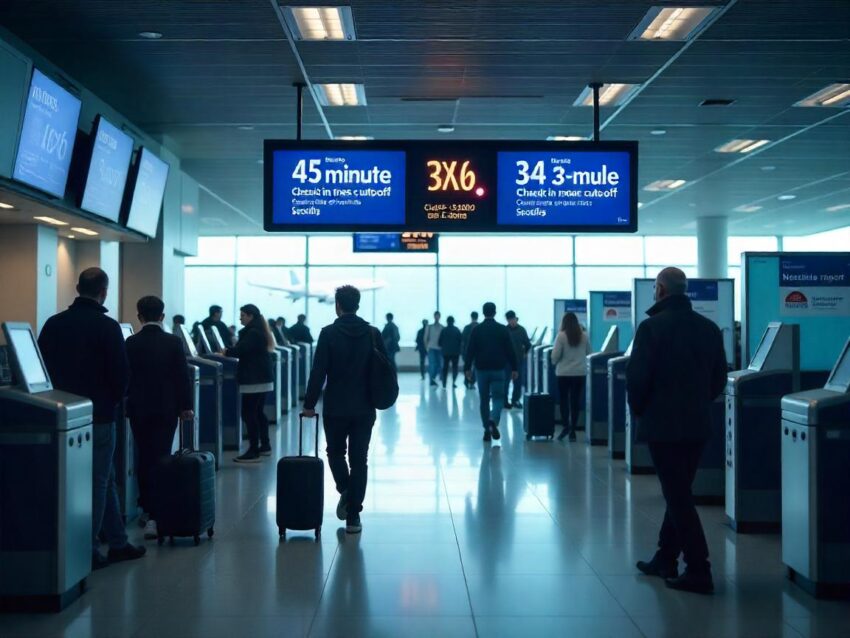
Planning guide: timelines to beat the 45-minute rule
Here’s a simple, stress-free playbook I use when I fly.
- T-24 hours: Check in online. Add known traveler number, verify passport info, and pay for bags if possible.
- T-3:00 to T-2:00 (domestic): Arrive at the airport. Go earlier at large hubs or during holidays.
- T-1:30 to T-1:15: Be at the bag-drop line. Lines can swell fast; give yourself slack.
- T-0:45: Latest safe moment for bag acceptance at many airports. Do not aim for this; beat it by 20–30 minutes.
- T-0:30: Through security, walking to the gate. Breakfast can wait until you see the gate area.
- T-0:15: Be at the gate. Many gates close then, even if boarding started early.
Extra tips that pay off:
- Use the airline app. It shows live cutoffs, bag-drop wait times, and gate changes.
- Try bag-drop kiosks. They move faster than full-service counters.
- Know your options. If traffic stalls, call the airline in-app while in the rideshare.
- Travel waivers help. During storms, airlines often let you switch flights with no fees.
When someone asks what is the 45 minute rule at the airport, I say it’s your last-ditch backstop—not your target. Beat it by a mile.

American Airlines Carry-On Luggage Size 2025: Exact Limits, What Counts, and How to Avoid Extra Fees
Real-life lessons and examples
I once coached a traveler into a big hub at rush hour. We hit the curb 47 minutes before departure. Because she had checked in online, used the bag-drop kiosk, and had PreCheck, her bag was accepted, she cleared security, and made the flight with five minutes to spare. The prep saved the day.
Another time, a friend reached the counter 44 minutes before departure with a checked bag. The agent could not accept it. He rebooked the next flight and missed a client meeting. That sting drove home the point: what is the 45 minute rule at the airport is firm. Leave a buffer.
Lessons learned that always help:
- Aim to hit bag drop 75–90 minutes before departure.
- Pay for bags in the app to cut a step at the counter.
- If you’re late, switch to carry-on only and gate-check if allowed.
Related rules you should know
Understanding neighbors of the 45-minute rule makes travel smoother.
- Gate deadlines. Many airlines require you to be at the gate 15 minutes before departure, earlier for international flights.
- Boarding end times. Boarding often ends 10–15 minutes before departure; your seat may be released if you’re late.
- Minimum connection time (MCT). This is a published standard that airlines use to build legal connections. It’s different from check-in cutoffs.
- Document checks. International flights may require a desk visit even if you checked in online. Plan extra time.
- Special services. Unaccompanied minors, checked pets, oversized items, and sports gear can add 10–30 minutes.
If you’re working out what is the 45 minute rule at the airport, keep these related timelines in view. They work together to get the flight out on time.
Frequently Asked Questions of what is the 45 minute rule at the airport
Is what is the 45 minute rule at the airport a law?
No. It’s an airline policy driven by safety and operations. Government rules influence it, but the exact cutoff is set by each airline and airport.
Does online check-in bypass what is the 45 minute rule at the airport?
Not if you have a checked bag. You can check in online, but bag-drop cutoffs still apply, and the system can block late bag acceptance.
What happens if I arrive 44 minutes before departure?
Agents may refuse your checked bag. You might be rebooked on the next flight, and change fees or fare differences could apply.
Do carry-on only travelers need to care about what is the 45 minute rule at the airport?
Less so, but there are still deadlines. Gates close early, and document checks for international flights may require extra time.
Is the 45-minute rule different for international flights?
Usually yes. Many international flights require you to finish check-in and bag drop 60–75 minutes before departure due to document and security steps.
Can airline agents override the 45-minute cutoff?
Rarely. Operational and safety processes lock in close to departure, so overrides can break rules and delay the flight.
Does TSA PreCheck change what is the 45 minute rule at the airport?
PreCheck speeds up security, not airline check-in. It helps you clear the checkpoint faster, but the bag-drop cutoff still applies.
Conclusion
The 45-minute cutoff is simple: finish check-in and bag drop well before departure so crews can plan, screen, and push on time. Now that you know what is the 45 minute rule at the airport, build a buffer, use the airline app, and aim to hit bag drop 75–90 minutes before takeoff.
Make your next trip calm, not a sprint. Save this guide, share it with a travel buddy, and subscribe for more clear, field-tested travel tips.

Md Abdul Muhaimen is an experienced travel content writer and guide who has a Master’s in Information Systems Management from the University of Huddersfield. He is passionate about all things related to travel logistics and trip planning, and has assisted thousands of readers in choosing the proper luggage, knowing which items can be included in carry-on luggage, and understanding an airline’s policy with confidence.
Md Abdul has a sound grounding in systems thinking and data-driven content creation that allows him to bring clarity to complicated travel topics — from comparing the exact sizes of cabin bags from multiple airlines to developing helpful how-to guides to simplify a traveler’s experience.
He actually engages in travel forums on Quora, answers real user questions, and shares insights by posting on Medium blogs
.His work marries first-hand research, consumer-focused advice, and technical accuracy, and he is a voice that can be trusted among the travel and luggage community.