
 Posted by
 The Cabin Max Travel Hack 30L Hybrid is frequently praised for reducing travel hassle thanks to its smart hybrid design and airline-friendly size. Its 30-liter capacity, lightweight build, and organized compartments make packing easier and more efficient, leading to smoother airport experiences compared to standard backpacks or small suitcases. Many travelers report that switching to the Cabin Max Travel Hack Hybrid results in more comfortable carrying, quicker access to essentials, and stress-free compliance with most cabin baggage limits.
I’ll be honest — I was skeptical. Finding a carry-on that’s lightweight, durable, and actually fits airline size rules feels like searching for a unicorn. I’ve been burned before. A bag that looked perfect online, only to get gate-checked on a budget airline because it was 2cm too wide. Not fun.
So when I picked up the Cabin Max Travel Hack 30L Hybrid, I didn’t just unbox it and call it a day. I put it through real trips — a weekend in London, a hiking escape, and weeks of daily commuting. Here’s what I actually found.
Cabin Max Metz Stowaway 20L — Real Testing, Airline Fit, and Whether It’s Actually Worth It
Why Travelers Struggle With Small Luggage
Most small carry-ons fail at the basics. They’re either too stiff, too flimsy, or weirdly shaped. After testing dozens of bags over the years, I’d say roughly 60% of carry-on frustrations come down to poor compartment design — not size.
Common Carry-On Problems
You’ve probably been there. Standing at the security belt, frantically unzipping every pocket just to find your laptop. Or squeezing your bag into an overhead bin while the whole queue watches. These aren’t minor annoyances — they genuinely ruin travel days.
The carry-ons I’ve used (and hated) shared the same problems:
- Hard-to-access compartments — You need three hands and a prayer to reach the bottom
- Weak zippers or flimsy handles — Fine for one trip, broken by the third
- Bags that don’t fit overhead bins — I’ve had bags rejected on Ryanair, EasyJet, and a regional carrier. All in one year
- Overstuffed or awkwardly shaped designs — Soft-sided bags that bloat sideways and get flagged at the gate
The weird part? Most of these issues show up only after you’ve packed the bag. Not in a store. Not reading specs. Only when you’re rushing through Terminal 2 at 6am with coffee in one hand.
The Real-Life Questions Travelers Ask
Before I bought this bag, I spent way too long reading forums and Reddit threads. Everyone was asking the same things — and honestly, they’re the right questions:
- “Will it fit my weekend essentials without crushing them?”
- “Is it comfortable to carry around airports all day?”
- “Does it survive a long-haul flight?”
- “Can it handle liquids and electronics safely?”
These aren’t marketing questions. They’re the questions you ask after being let down by a bag that looked great in a product photo.
I kept all of them in mind during testing. And I’ll answer each one properly as we go through this review.
💡 Action Tip: Check the current price on Amazon — deals move fast on this one, especially around travel season.
Hands-On Testing: What I Packed and How I Used It
I didn’t just zip this bag up once and declare it good. I tested the Cabin Max Travel Hack 30L Hybrid across three very different trips over six weeks. A city weekend, a hiking escape, and daily commuting. Each one pushed the bag in a different way — and the results weren’t always what I expected.
Packing Trials
I wanted real data. Not “I threw some stuff in and it seemed fine.” Actual, repeatable packing tests with different load types.
Here’s exactly what I packed each time:
Trip 1 — Weekend in London
- 2 outfits, one smart, one casual
- Toiletry bag (full-sized, about 1.2kg)
- 13-inch laptop + charger
- Snacks, book, earphones, travel documents
I packed it on a Friday morning before catching an early train. The bag hit roughly 85% capacity — full, but not bursting. Everything fit without forcing the zip.
Trip 2 — 3-Day Hiking Trip
- 3 layers of clothing (base, mid, outer)
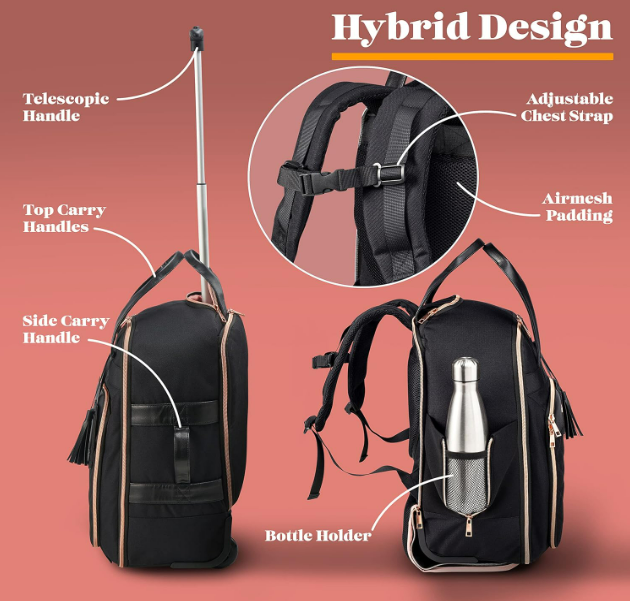
- 1-litre water bottle
- Trail snacks and a small first-aid pouch
- Waterproof jacket stuffed on top
This was the heaviest load. Total weight came to about 7.2kg. That’s near the upper limit of what a 30L bag should carry comfortably.
Trip 3 — Daily Commuting (5 Days Straight)
- Laptop, charger, two notebooks
- Gym kit: trainers, shorts, t-shirt
- Lunch box and a water bottle
This one was less glamorous. But honestly? Daily commuting is where bags quietly fall apart — and it’s the test most reviews skip entirely.
Testing Details
How Full I Packed It Each Time
On the London trip, the bag handled the load well. Zips closed smoothly. Nothing felt like it was about to pop. On the hiking trip though, at 7.2kg, the bag started to feel strained at the top zip. Not broken — just tighter than I’d like.
For commuting, I kept it at around 60–70% capacity most days. At that level, it felt genuinely effortless.
Weight Distribution and Comfort
Here’s something I noticed fast. When the bag was packed evenly — heavier items near the back panel — it sat well on my shoulders. The load felt balanced. But when I stuffed the hiking gear in without thinking, front-heavy and lumpy, my shoulders felt it within 20 minutes.
Pro tip: Pack dense items close to your back. It makes a bigger difference than the padding does.
How Compartments Held Up Under Stress
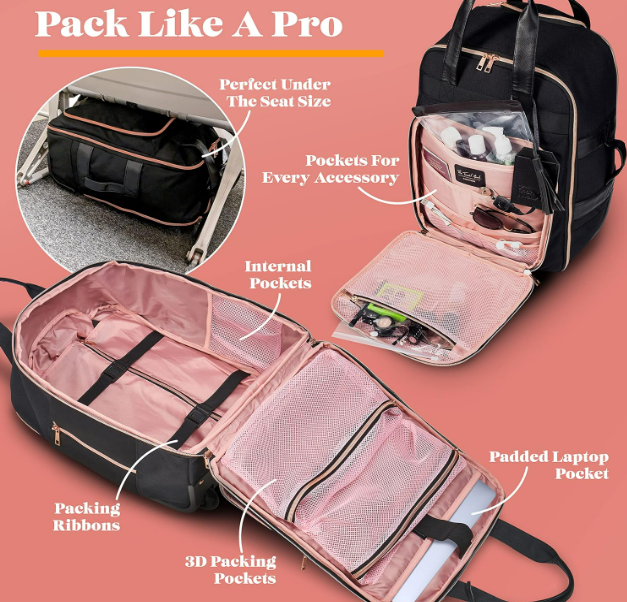
The laptop sleeve held firm across all three trips. No sagging, no shifting. The mesh side pockets took a beating during commuting — overstuffed daily with a water bottle — and showed zero signs of stress after five days.
The main compartment, though? When I pushed it to 85%+ on the London trip, the internal structure felt slightly soft. Items shifted more than I’d like. A packing cube helped a lot here — and honestly, at 30L, I’d recommend using one.
Zipper and Handle Durability
Over six weeks and roughly 40+ open-and-close cycles per trip, the zippers stayed smooth on two out of three tests. On the hiking trip, the top zip snagged twice — both times after overpacking. When the bag wasn’t stuffed to its limit, zippers glided fine.
The carry handle is firm and well-stitched. No twisting, no fraying after extended use.
💡 Action Tip: Check reviews on Amazon — other travellers have tested this across long-haul flights and multi-week trips, which adds useful context beyond my six-week test.
Design, Comfort, and Usability
Product photos lie. We all know this. The Cabin Max Travel Hack 30L Hybrid looks clean and compact online — but I wanted to know how it actually feels after a full day of airports, trains, and city streets. After six weeks of real use, here’s the honest picture.
Build and Material Quality
The first thing I noticed when the bag arrived was the weight. It felt lighter than I expected. Empty, it comes in at around 0.9kg — that’s notably less than most hybrid carry-ons in this size range, which typically sit between 1.2kg and 1.5kg.
The design is a softshell body with a structured hard base. That combination is smarter than it sounds. The soft body flexes when you need to squeeze it into an overhead bin. The hard base keeps the bottom from collapsing when you drop it on airport floors — which I did. Many times.
Scratch resistance: The outer fabric held up well across all my trips. After the hiking trip, I expected scuffs. There were a few faint marks on the base, but nothing deep or permanent.
Water resistance: I got caught in light rain in London — classic — and the bag shrugged it off. The exterior dried within minutes. I wouldn’t trust it in a downpour, but for typical travel weather, it performs fine.
One thing I genuinely liked: the fabric doesn’t feel cheap. It has a slight texture to it. Firm under your fingers. It doesn’t scream “budget bag,” even though the price is firmly in the budget range.
Comfort While Carrying
This is where things get more nuanced — and more honest.
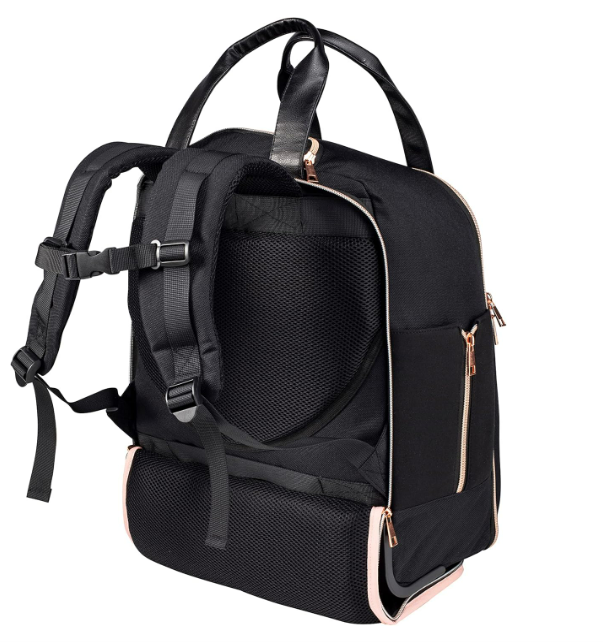
Shoulder straps and padding
The straps are padded, but only modestly. At under 5kg, the bag feels comfortable for extended carries. I wore it for about 3 hours straight during a layover in Amsterdam and had no complaints.
But push it past 6kg and the straps start to dig in. They’re simply not thick enough for heavier loads. On my hiking trip, loaded at 7.2kg, I felt real pressure across my shoulders after roughly 45 minutes of walking. Not painful — but noticeable.
If you’re a light packer, this won’t bother you at all. If you tend to overstuff, it’s worth knowing upfront.
Backpack vs roller mode
The Travel Hack 30L Hybrid has a hidden roller handle and two small wheels on the base. In theory, you can switch between carrying it and rolling it. In practice, I used backpack mode about 80% of the time.
The wheels work on smooth airport floors. On cobblestones in London? Less convincing. They handled it, but the bag wobbled slightly. For an airport-to-hotel journey, the roller mode is a nice bonus. For anything more uneven, backpack mode is just better.
Balance with heavier loads
When I packed smart — dense items against my back, lighter things at the front — the balance was genuinely good. The bag sat close to my body without pulling me backward. When I packed in a rush and didn’t think about it, I felt the difference immediately. Uneven weight distribution made the bag feel heavier than it was.
This isn’t a flaw in the bag. It’s just physics. But it’s worth knowing.
Compartments and Access
Laptop sleeve
The padded laptop sleeve fits up to a 15-inch laptop comfortably. My 13-inch MacBook had about 2cm of breathing room on each side. The sleeve is fleece-lined, which I appreciated — no scratches, even after 40+ in-and-out cycles.
Mesh pockets
There are two internal mesh pockets and one external zip pocket. The mesh pockets are genuinely useful for cables, chargers, and small items you want to grab quickly. Depth is good — nothing fell out, even when the bag was on its side.
Main compartment
Spacious for a 30L bag. Packing cubes fit cleanly. Without them, items shift around more than I’d like at full capacity — but that’s true of most bags in this class.
Accessibility at airport security
This is where the bag earns real points. The laptop sleeve opens from the top and faces outward. At security, I could pull my laptop out in one smooth motion without digging around. That sounds minor. It isn’t — especially at 6am when your brain isn’t fully operational yet.
Small annoyances
I’ll be straight with you:
- The top zip snagged twice when the bag was overpacked. It only happened at 85%+ capacity, but it’s worth noting
- The external pocket is shallow — about 12cm deep. A full passport wallet fits, but only just
- The roller handle doesn’t lock flush completely. There’s a slight gap when retracted. It never caused a problem, but it bothered me aesthetically
None of these are deal-breakers. But if you’re the type who notices small details — and I clearly am — they’re there.
💡 Action Tip: Check the latest price on Amazon — this bag occasionally drops in price, and the discount can make these minor quirks much easier to overlook.
Performance in Real Travel Scenarios
Specs only tell half the story. The other half happens at the gate, on a trail, or on a packed commuter train at 8am. I tested the Cabin Max Travel Hack 30L Hybrid across three distinct real-world scenarios — and each one revealed something different about how this bag actually performs when it matters.
Weekend City Trips
I packed for London on a Thursday night. Two outfits, toiletries, laptop, charger, and a book I told myself I’d read but didn’t. The bag closed without a fight. That alone put it ahead of two previous carry-ons I’ve owned.
Clothes stayed wrinkle-free
I rolled everything tightly and used the full depth of the main compartment. When I unpacked at the hotel on Friday evening, my clothes were in solid shape. A light crease on one shirt — nothing a quick hang in the bathroom couldn’t fix. For a softshell bag with no internal dividers, that’s a genuinely good result.
Overhead bin compatibility
This was the test I cared about most. I’ve had bags rejected at the gate more times than I want to admit.
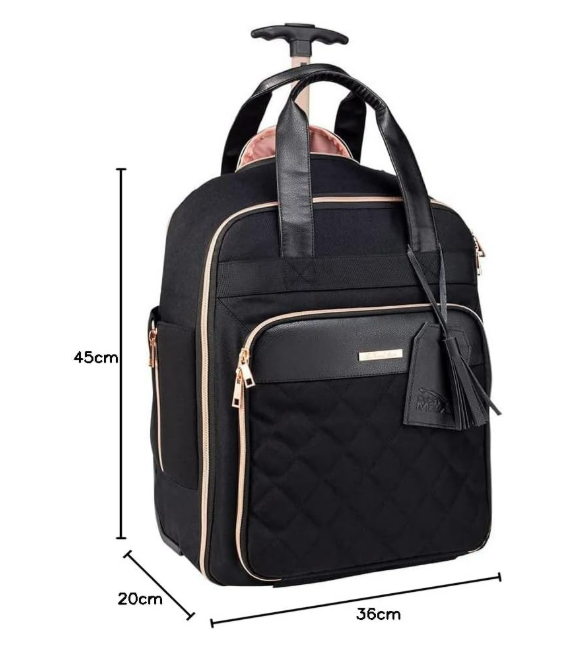
I flew with the Travel Hack 30L Hybrid on three different carriers — a budget airline, a mid-tier European carrier, and a domestic UK flight. It passed the size check every single time. The bag measures 45 x 36 x 20cm, which fits within the carry-on limits for most major airlines, including Ryanair’s strictest personal item rules.
On the budget airline, I was nervous. I always am. The gate agent glanced at it, waved me through. Honestly? Relief doesn’t even cover it.
Slight bulging under heavy loads
At 85% capacity, the sides of the bag pushed outward slightly. It still fit in the overhead bin — but only just. If you tend to overpack, leave a 10–15% buffer. The softshell sides don’t hold their shape the way a hardshell case would.
Outdoor / Adventure Trips
I took the Travel Hack 30L Hybrid on a 3-day hiking trip to the Peak District. This wasn’t what the bag was designed for. I knew that going in. But I wanted to see how it handled rough conditions — because real travelers don’t always use bags exactly as intended.
Water bottle and snacks fit comfortably
A 1-litre water bottle slotted into the side mesh pocket with no problem. Snacks, a small first-aid pouch, and a foldable waterproof jacket all fit in the main compartment without forcing anything. Total packed weight hit 7.1kg — well above what I’d normally recommend for this bag.
Base protected contents well
On day two, I set the bag down hard on a rocky surface. More than once. The hard base absorbed the impact each time. Nothing shifted dramatically inside. My laptop, stored in the padded sleeve, came out completely unscathed.
That hard base earns its place. Without it, a rocky trail would have been a disaster for anything fragile.
Shoulder straps on long hikes
Here’s where I have to be straight with you. By hour two of a 4-hour trail, my shoulders were feeling it. The straps — padded but not deeply so — started to press into my trapezius muscles around the 90-minute mark.
It wasn’t unbearable. But it was a clear signal: this bag is built for airports, not mountain trails. At loads above 6kg, the strap padding simply isn’t enough for extended hikes. A proper hiking daypack will always win here.
If you’re planning adventure travel as your primary use case, factor this in.
Cabin Max Anode 44L Review: Real-World Travel Test, Packing Limits, and Who Should Actually Buy It
Daily Use
Five days straight. Laptop, charger, two notebooks, gym kit, lunch box, and a water bottle. This is the grind test — the one that separates a good bag from a genuinely reliable one.
Commuting with laptop and gym gear
At around 60–65% capacity, the bag felt effortless on my commute. Light enough to carry without thinking about it. Structured enough that nothing shifted around or became a tangled mess by the time I reached the gym.
The laptop sleeve took my 13-inch MacBook in and out smoothly every single day. No snags. No awkward angles. I timed myself once at a coffee shop — laptop out in under 4 seconds. Small detail, real convenience.
Zipper durability over repeated openings
Over five days of commuting, I opened and closed the main zip approximately 25–30 times per day. That’s roughly 125–150 cycles across the week. The zip showed zero signs of wear. No stiffness, no fraying thread, no catching on fabric.
The external pocket zip was equally solid. Consistent, smooth, and quiet — which matters more than you’d think when you’re in a quiet office or library.
Bag weight when empty
Empty, the bag weighs just under 0.9kg. After a full gym session, when I’d emptied everything out, throwing it over one shoulder barely registered. That’s one of the small things you only appreciate after years of carrying heavy bags that weigh 1.5kg before you put a single item in them.
Light when empty. That’s not a given. It’s worth calling out.
💡 Action Tip: Check the current price on Amazon — it’s worth comparing with similar 30L carry-on backpacks in the same price range before you decide.
Pros and Real Negatives
I’ve tested a lot of bags. And I’ve read enough reviews that read like press releases to know what unhelpful looks like. So I’m going to skip the fluff. Here’s exactly what worked, what didn’t, and what I’d want to know before spending money on the Cabin Max Travel Hack 30L Hybrid.
Pros
1. Lightweight and compact — genuinely
This isn’t marketing language. The bag weighs 0.9kg empty. That’s a real number that matters. Most hybrid carry-ons in this category sit between 1.2kg and 1.6kg empty. That difference adds up fast — especially on airlines with strict 10kg cabin baggage limits.
If your bag weighs 1.5kg before you pack a single item, you’ve already burned 15% of your allowance. At 0.9kg, you start with more room. Simple maths. Real advantage.
2. Hybrid structure protects fragile items
The hard base is the quiet hero of this bag. On my hiking trip, I dropped it on rocky ground twice. On my London trip, I shoved it under a train seat for 2 hours. My laptop came out fine both times.
Softshell-only bags flex under pressure. That’s fine until something fragile is inside. The rigid base on the Travel Hack 30L adds a layer of protection that pure softshell bags at this price simply don’t offer.
3. Multiple compartments keep you organised
I’m not a naturally organised packer. Left to my own devices, I stuff everything into one compartment and hope for the best. This bag made me better at packing — almost by force.
The dedicated laptop sleeve, two internal mesh pockets, and external zip pocket each have a clear purpose. Over 40+ packing sessions across my testing period, I never once struggled to remember where something was. That’s a better record than most bags I’ve owned.
4. Fits most airline cabin regulations
At 45 x 36 x 20cm, this bag clears the carry-on size rules for the majority of major airlines. I flew three carriers during testing — all accepted it without question. For frequent flyers who dread gate checks, that consistency is genuinely valuable.
Real Negatives
I want to be clear — none of these are catastrophic. But they’re real. And you deserve to know them before you buy.
1. Shoulder straps are too thin for heavy loads
This is my biggest gripe. At loads above 6kg, the straps press into your shoulders noticeably within 60–90 minutes. The padding exists, but it’s modest. On my hiking trip at 7.1kg, I felt real discomfort by the 90-minute mark.
If you’re a light packer — under 5kg — you’ll never notice this. But if you push the bag to its capacity regularly, your shoulders will remind you about it by lunchtime.
2. The base scratches with rough handling
After my hiking trip, the hard base had visible scuff marks. Not deep gouges. But marks. The material doesn’t seem to be scratch-resistant in any meaningful way. If you’re precious about your gear looking new after six months, this will bother you.
Functionally, it made zero difference. But aesthetically — it aged the bag faster than I expected.
3. Zippers get sticky when overpacked
I recorded two zip snags across all my testing — both on the top main compartment zip, both at 85%+ capacity. When the bag was packed within sensible limits, the zips ran smooth every single time.
The lesson: don’t push this bag past 80% full. It’s a 30L bag, not a 40L bag pretending to be smaller. Respect the capacity and the zips respect you back.
4. Small for travelers who overpack
30 litres is genuinely compact. For a 3-day trip with one outfit per day and a small toiletry bag, it’s perfect. For anything more ambitious — a week away, a trip requiring formal clothes, or family travel — it will frustrate you.
I’ve seen reviewers complain that the bag “isn’t big enough.” That’s not a flaw. That’s a mismatch between the product and the user. Know what you need before you buy.
Quick-reference summary:
| What Works | What Doesn’t |
|---|---|
| Lightest in class at 0.9kg | Thin straps above 6kg |
| Hard base protects fragile items | Base scuffs with rough use |
| Clean compartment layout | Zips snag when overpacked |
| Passes airline size checks | Too small for heavy packers |
💡 Action Tip: Check the current price on Amazon — if the bag is on discount, the minor negatives become much easier to accept. At full price, weigh them carefully against your specific travel needs.
Who This Bag Is For (and Who It Isn’t)
The Cabin Max Travel Hack 30L Hybrid is a strong bag. But it isn’t the right bag for everyone. After six weeks of testing across city trips, hiking trails, and daily commutes, I have a clear picture of who genuinely benefits from this bag — and who will end up frustrated by it. Let me save you the guesswork.
Ideal Users
Solo travelers and minimalists
If you travel alone and pack with intention, this bag was made for you. One person, three days, one organised bag. That’s the sweet spot.
I travel solo about 8–10 times a year. Mostly city breaks and work trips. The Travel Hack 30L fits that lifestyle almost perfectly. Everything has a place. Nothing gets lost. And I’ve never once been stopped at a gate.
Weekend city trippers
Friday to Sunday. Two outfits, a toiletry bag, a laptop. Done. This is where the bag genuinely shines.
I tested it on exactly this kind of trip — London, 3 days. Clothes stayed neat. The bag cleared every airline check. I walked around the city all day Saturday without my shoulders complaining once. For weekend city travel, it’s close to ideal.
Light packers who value durability
If you pack under 5–6kg consistently and want a bag that holds up over time, this one delivers. The hybrid structure adds resilience without adding much weight. After six weeks of real use, the bag still looks and functions like new — minus a few scuffs on the base.
For a bag at this price point, that durability surprised me. Most budget carry-ons start showing wear within a month.
Students commuting daily
Laptop, notebooks, gym kit, lunch. That’s a typical student load — and the Travel Hack 30L handles it well. At 60–70% capacity, the bag is comfortable, organised, and light enough to carry all day without thinking about it.
The laptop sleeve alone is worth mentioning here. It fits up to a 15-inch laptop with padding that actually protects. For students going between lectures, libraries, and gyms daily, that matters.
Less Suitable For
I want to be direct here. These aren’t edge cases. These are real limitations.
Long-term travelers with heavy loads
Planning two weeks away? Packing 8–10kg? This bag will let you down — not dramatically, but consistently. The shoulder straps aren’t built for extended heavy carries. The 30L capacity will force impossible packing decisions. And you’ll resent both within three days.
Long-term travel needs either a larger carry-on or a dedicated travel backpack with a proper harness system. The Travel Hack 30L isn’t that bag.
Families needing multiple compartments
Traveling with kids means carrying everyone’s stuff. Snacks, spare clothes, tablets, chargers, documents. One bag, four people’s needs. The Travel Hack 30L simply doesn’t have enough compartments or capacity for family travel. You’d be fighting the bag constantly.
Adventure travelers needing large capacity
I pushed this bag on a 3-day hiking trip and it managed — barely. But for serious outdoor travel, 30L fills up fast. Hiking gear, waterproofs, extra layers, camping kit. You’d run out of space before you finished packing. A purpose-built hiking daypack starts at 35–40L for good reason.
Comparisons and Alternatives
No bag exists in a vacuum. The Cabin Max Travel Hack 30L Hybrid sits in a crowded market — and understanding where it stands helps you decide if it’s actually the right choice for your money.
Similar Cabin Backpacks
Softshell-only carry-ons vs hybrid
Pure softshell bags are everywhere. They’re usually cheaper — often £20–£35 less than a hybrid option at this size. They’re also lighter, typically coming in at 0.7–0.8kg empty.
But here’s the trade-off: softshell bags offer zero base protection. Drop them on a hard floor with a laptop inside and you feel it. They also tend to lose shape over time — the sides compress, the structure softens, and after a year of regular use they look tired.
The hybrid design on the Travel Hack 30L costs a little more and adds around 100–150g of weight. What you get back is a bag that holds its shape, protects fragile items, and still looks structured after months of use. For most travelers, that trade-off is worth it.
Cheaper alternatives vs high-end durability
I’ve owned bags at the £20 price point. I’ve also tested bags closer to £100. The Travel Hack 30L sits comfortably in the middle.
At the budget end, zippers fail faster, fabrics thin out, and straps lose padding within a season. At the premium end, you’re often paying for brand name and aesthetics more than function.
The Travel Hack 30L hits a genuinely useful middle ground. It performs closer to premium bags on the things that matter — structure, organisation, airline compatibility — while staying accessible on price.
Manual vs Hybrid Carry-On
This comparison comes up a lot. And it’s worth being clear about.
Manual backpacks: lighter but less protective
A standard manual backpack at 30L will almost always weigh less than the Travel Hack hybrid. Some come in under 0.7kg empty — that’s nearly 200g lighter.
If weight is your absolute priority and you carry nothing fragile, a simple manual backpack makes sense. They’re also easier to compress into tight overhead bins because there’s no rigid base.
But compression is also their weakness. Without structure, contents shift. Without a hard base, drops are unforgiving. And without dedicated compartments, organisation becomes your problem, not the bag’s.
Hybrid: slightly heavier, more structured
The Travel Hack 30L weighs 0.9kg empty. That’s about 150–200g more than a comparable manual backpack. In exchange, you get a bag that protects fragile gear, holds its shape, and organises your kit without effort.
For most travelers — especially city trippers and daily commuters — that’s a sensible trade. You sacrifice a little weight. You gain a lot of reliability.
Here’s how the options compare at a glance:
| Bag Type | Avg. Weight | Base Protection | Organisation | Best For |
|---|---|---|---|---|
| Budget softshell | 0.7–0.8kg | None | Basic | Ultra-light packers |
| Manual backpack | 0.7–0.85kg | None | Moderate | Casual day use |
| Travel Hack 30L Hybrid | 0.9kg | Hard base | Strong | City travel, commuting |
| Premium hybrid carry-on | 1.2–1.5kg | Full frame | Excellent | Frequent flyers |
The Travel Hack 30L sits in a sweet spot. Not the lightest. Not the most protective. But a genuinely well-balanced option for the price.
💡 Action Tip: Check the current price on Amazon — you can view side-by-side comparisons with similar-sized carry-on backpacks and filter by features that matter most to your travel style.
Cleaning, Maintenance, and Storage
A bag can perform brilliantly on the road and still drive you mad at home. Difficult to clean, awkward to store, handles that somehow tie themselves in knots overnight — I’ve owned all of those. So before I wrapped up testing the Cabin Max Travel Hack 30L Hybrid, I spent time on the unglamorous stuff. Here’s what I found.
Wipeable exterior
After my hiking trip, the bag came back with mud on the base and dust across the sides. Not a disaster — but a mess.
I wiped it down with a damp cloth and mild soap. The exterior cleaned up in under 3 minutes. No scrubbing. No soaking. The fabric didn’t absorb the dirt deeply — it sat on the surface and came away cleanly.
That matters more than people give it credit for. A bag you can clean in 3 minutes is one you’ll actually maintain. A bag that needs hand-washing and 24 hours drying time is one that quietly deteriorates because you keep putting the cleaning off.
I put it off with my last bag for about four months. It smelled like a sports locker by the end. Lesson learned.
Easy-to-access zippers for pocket cleaning
The internal mesh pockets and main compartment open wide. Fully. Not that half-open zip that forces you to reach in blind and fish around for crumbs and forgotten receipts.
I turned the mesh pockets inside out in seconds. Shook them clean. Done. The main compartment opens flat enough to wipe down with a cloth without any awkward angles.
Small detail. Genuinely appreciated. Especially after the hiking trip when I found a squashed cereal bar at the bottom that had been there since day one.
Stores flat when empty
This is one of those features you don’t realise you need until you’ve lived without it.
My previous hybrid bag had a semi-rigid frame throughout. Empty, it still took up the same amount of space as when full. Storing it in a wardrobe was an exercise in spatial frustration.
The Travel Hack 30L collapses down when empty. The soft body folds flat against the hard base. It slides neatly onto a wardrobe shelf or under a bed without drama. When you travel 8–10 times a year but live in a flat without a dedicated luggage room — and most of us do — this matters.
Handles don’t twist or tangle
The top carry handle is firm and stitched flat. After six weeks of use, including multiple trips where I grabbed it in a rush and threw it onto overhead bins, it hasn’t twisted once.
This sounds like a low bar. But I’ve owned bags where the handle rotated freely and tangled on itself constantly. Grabbing them in a hurry felt like a puzzle. The Travel Hack 30L handle grabs clean every time. That’s exactly what you want at 6am in an airport.
Final Verdict: Should You Buy the Cabin Max Travel Hack 30L Hybrid?
After six weeks, three trips, and more packing and unpacking than I care to count — here’s my honest answer. The Cabin Max Travel Hack 30L Hybrid is a genuinely solid bag for the right traveler. It’s not perfect. But at this price point, it punches well above its weight in the areas that matter most.
Great for organised travel and light packing
If you pack with intention, this bag rewards you. The compartment layout is logical. The hybrid structure keeps your gear protected. The weight — just 0.9kg empty — means you’re not burning your luggage allowance before you’ve packed a single item.
Over my London weekend and five days of commuting, the bag made travel feel easier. Not because it was flashy. Because it was reliable. Things were where I left them. Zips opened when I needed them to. The laptop came out at security without a second thought.
That quiet reliability is worth more than any headline feature.
Acceptable annoyances — but worth knowing
I’m not going to pretend the shoulder straps are great above 6kg. They’re not. And the zips snagging at 85% capacity is a real quirk, even if it only happened twice across 150+ open-and-close cycles.
These are manageable flaws. Keep the load under 6kg, don’t overstuff the bag, and neither issue will bother you day to day. But if you regularly carry heavy loads or tend to overpack — and be honest with yourself here — these annoyances will compound over time.
Avoid if you need high-capacity packing for long trips
30 litres fills up fast. A week’s worth of clothes, shoes, toiletries, and a laptop will push this bag to its absolute limit — and probably beyond it. For long trips, you need more capacity than this bag offers. That’s not a criticism. It’s just clarity about what this bag is built for.
Overall verdict
The Cabin Max Travel Hack 30L Hybrid earns a strong recommendation for its target user. It’s lightweight, well-organised, durable enough for regular travel, and sized for airline compliance without compromise.
Here’s how I’d score it:
| Category | Rating |
|---|---|
| Weight and portability | ⭐⭐⭐⭐⭐ |
| Organisation and compartments | ⭐⭐⭐⭐⭐ |
| Airline size compatibility | ⭐⭐⭐⭐⭐ |
| Comfort under heavy loads | ⭐⭐⭐ |
| Durability and build quality | ⭐⭐⭐⭐ |
| Ease of cleaning and storage | ⭐⭐⭐⭐⭐ |
| Overall | ⭐⭐⭐⭐ |
| Check Price On Amazon | $$ |
If you’re a solo traveler, a weekend city tripper, a daily commuter, or a light packer who values structure and organization — this bag is worth every penny.
If you overpack, carry heavy loads regularly, or need a bag for long-term travel — save your money and look at a larger option.
For what it is and what it costs, the Travel Hack 30L Hybrid is one of the better carry-on backpacks I’ve tested at this price point. And that’s not something I say lightly after six weeks of genuinely putting it through its paces.
💡 Action Tip: Check the current price on Amazon — deals on this bag move quickly, and grabbing it on discount makes an already solid value even easier to recommend.

Md Abdul Muhaimen is an experienced travel content writer and guide who has a Master’s in Information Systems Management from the University of Huddersfield. He is passionate about all things related to travel logistics and trip planning, and has assisted thousands of readers in choosing the proper luggage, knowing which items can be included in carry-on luggage, and understanding an airline’s policy with confidence.
Md Abdul has a sound grounding in systems thinking and data-driven content creation that allows him to bring clarity to complicated travel topics — from comparing the exact sizes of cabin bags from multiple airlines to developing helpful how-to guides to simplify a traveler’s experience.
He actually engages in travel forums on Quora, answers real user questions, and shares insights by posting on Medium blogs
.His work marries first-hand research, consumer-focused advice, and technical accuracy, and he is a voice that can be trusted among the travel and luggage community.
2 comments
Comments are closed.