
 Posted by
 Most luggage locks reset by opening them with the current code, holding the reset control, and choosing a new combination. Learning how to reset luggage lock settings is simple once you know the lock type. This guide explains the safest steps for combination locks, TSA locks, built-in suitcase locks, and locks with a reset button or lever. It also covers common mistakes, forgotten combinations, and ways to test your new code before a trip.
Identify Your Luggage Lock Type
Before learning how to reset luggage lock settings, check the design of your lock. Most suitcase locks use a three-digit combination, but the reset method can vary by brand and model.
Look for these common types:
• External combination lock: This small lock clips onto zipper pulls or suitcase rings.
• Built-in combination lock: This lock is fixed to the suitcase and often has two zipper release buttons.
• TSA-approved lock: This lock has a red diamond symbol. Airport security agents can open it with a special key without breaking it.
• Reset button lock: This model has a small pinhole or button near the number wheels.
• Reset lever lock: This model uses a sliding switch that moves to a reset position.
A TSA keyhole does not usually mean you can use a normal key to reset the lock. TSA agents use special tools, while the owner normally changes the code with the lock’s reset button or lever.

How to Reset a Luggage Lock With the Current Code
The standard process is similar for many three-digit combination locks. You must know the current code before changing it.
Step-by-step instructions
- Set the number wheels to the current combination.
- Open the lock. On a built-in lock, press or slide the release button.
- Find the reset button, pin, or lever.
- Press and hold the reset button, or move the lever to the reset position.
- Turn the number wheels to your new code.
- Release the button or return the lever to its original position.
- Scramble the wheels.
- Enter the new code and test the lock several times.
Do not close your suitcase until you confirm the new code works. This small check can prevent a stressful problem at the airport.
For example, if your current code is 000 and you want to use 527, open the lock with 000. Hold the reset control, set the wheels to 527, and release the control. Then scramble the wheels and test 527.
How to Reset a Luggage Lock With a Reset Button
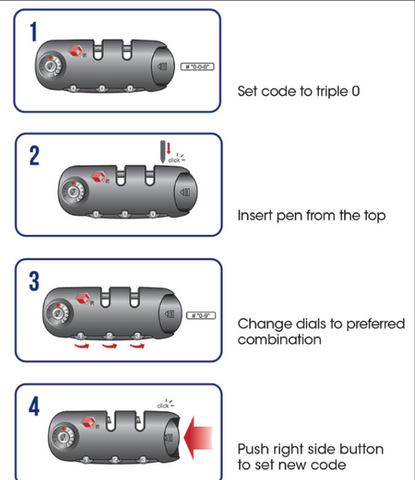
A reset button is common on small combination locks and some built-in suitcase locks. It may be marked with a tiny arrow or the word “SET.”
To reset the lock, open it with the current code. Use a pen tip or similar blunt object to press the reset button if it sits inside a small hole. Avoid using a sharp needle, since it may damage the button or your hand.
Keep the button pressed while you select a new code. Once the numbers are set, release the button and test the lock.
Some buttons stay down after you press them. Others must be held during the entire reset. If the button does not move, check the product instructions. Forcing it may break the internal spring.
How to Reset a Luggage Lock With a Reset Lever
A reset lever is often easier to use than a reset button. It may sit beside the number wheels or near the zipper release.
Follow these steps:
- Enter the current combination.
- Open the lock.
- Slide the reset lever toward the marked arrow.
- Hold the lever in that position.
- Choose a new three-digit code.
- Move the lever back to its normal position.
- Mix the numbers and test the new code.
Some levers lock into the reset position. In that case, you can release the lever only after selecting the new combination. Read the small markings around the lever, since each model can work in a slightly different way.
A common mistake is moving the lever before opening the lock. Many locks will not enter reset mode unless the correct code is already set.
How to Reset a Built-In Suitcase Lock
Built-in locks are attached to the suitcase body. They may secure two zipper pulls or release a latch on the case.
To learn how to reset luggage lock settings on a built-in model, start by opening the suitcase. Set the wheels to the current code, then press the release button. Look around the wheels for a small switch, button, or recessed reset hole.
The usual process is:
• Set the current code.
• Open the suitcase lock.
• Hold or move the reset control.
• Select the new code.
• Return the reset control to its normal position.
• Scramble the numbers.
• Test the lock before closing the suitcase.
If the suitcase has two release buttons, press them only after the correct code is displayed. Do not pull hard on the zipper tabs. Tension can make the lock feel stuck even when the code is correct.
10 Best TSA Approved Locks for Secure Travel (Never Get Your Bag Cut Open Again)
How to Reset a TSA-Approved Luggage Lock
A TSA-approved lock resets in much the same way as another combination lock. The red diamond symbol only shows that the lock is designed for approved security inspections.
To reset it, enter the existing code and open the lock. Then use the reset button or lever, set the new code, and return the control to its original position.
Keep these points in mind:
• The TSA keyhole is not normally used by travelers.
• The lock still needs the correct combination for regular use.
• TSA approval does not make the lock theft-proof.
• A lock can help deter casual access, but it cannot protect against every form of tampering.
The Transportation Security Administration advises travelers to use TSA-recognized locks on checked bags when they want to lock them. Still, airline rules and inspection procedures can change, so check current travel guidance before flying.
What to Do If You Forgot the Combination
Most combination luggage locks cannot be reset without opening them or entering the current code. This design prevents anyone from changing the code without permission.
If you forgot the code, try these safe options:
- Check the original packaging or instruction card.
- Look for a saved code in your password manager or travel notes.
- Contact the luggage or lock manufacturer.
- Take the lock to a qualified luggage repair shop.
- Ask an authorized locksmith for help.
Avoid online tricks that claim to reveal every lock combination. Some methods may damage the lock, violate a warranty, or help someone bypass a security device. If the lock belongs to you, proof of ownership may help a professional provide service.
Trying every possible three-digit combination may work in some cases, but it can take time and may be tiring. A three-digit lock has 1,000 possible codes, from 000 through 999. A four-digit lock has 10,000 possible codes, so professional help may be more practical.

Common Problems When Resetting a Luggage Lock
Even when you follow the correct steps, a luggage lock may not reset. Most problems come from one of a few simple causes.
The reset button will not move
The lock may still be closed, or the current code may be incorrect. Set the known code again and make sure the release mechanism is open before pressing the reset button.
The new code does not work
You may have released the reset control too early. Repeat the process slowly and keep the wheels aligned while you hold the button or lever.
The wheels feel stiff
Dirt, sand, or pressure from the zipper pulls can affect the wheels. Remove tension from the lock, clean the outside with a dry soft brush, and avoid spraying oil into the mechanism unless the manufacturer allows it.
The lock opens with the old code
The new code may not have saved. This often happens when the reset lever did not return fully or the button was not held long enough.
The zipper pulls will not release
The code may be correct, but the zipper tabs may be under pressure. Push the zipper pulls slightly toward the lock while pressing the release button. Do not force them sideways.
How to Choose a Secure New Combination
A good luggage code should be easy for you to remember but hard for another person to guess. Avoid simple patterns such as 000, 111, 123, or your birth year.
Try a private number that you can recall without writing it on the suitcase. You might use the last three digits of an old, non-sensitive number or a personal memory that is not visible on your luggage tags.
For better security:
• Avoid numbers printed on your passport, ticket, or ID.
• Do not use the same code for every lock.
• Keep the code away from the suitcase handle.
• Do not share the code in public areas.
• Record the code in a secure password manager if you often forget it.
A luggage lock is a small layer of protection, not a bank vault. Keep valuable items in your carry-on when airline rules allow it, and follow airline guidance for electronics, medication, documents, and other important belongings.
How to Test a Reset Luggage Lock
Testing is the most important step after you reset a luggage lock. It confirms that the new code saved and helps you find problems before travel day.
Use this simple test:
- Leave the suitcase open.
- Set the wheels to the new code.
- Close and lock the mechanism.
- Scramble the wheels.
- Enter the new code.
- Open the lock.
- Repeat the test two or three times.
For a zipper lock, test both zipper pulls. For a built-in lock, check that the release button moves smoothly. If the lock fails once, reset it again before packing.
I have seen travelers test a lock only once and then discover that one wheel had shifted slightly. Testing it several times takes less than a minute and can save a trip from starting with a broken suitcase.
Mistakes to Avoid When Resetting a Luggage Lock
The most common mistake is changing the code while the lock is still attached to a closed suitcase. If the new code fails, you may not know whether the problem is the lock or the suitcase tension.
Avoid these errors:
• Do not reset the lock without recording the new code.
• Do not close the suitcase before testing the code.
• Do not force a reset button with a sharp object.
• Do not assume every lock uses the same reset method.
• Do not turn the wheels while the reset lever is only partly engaged.
• Do not spray harsh chemicals into the lock.
• Do not rely on the TSA keyhole as a personal backup key.
Read the instructions for your exact brand when possible. Product manuals are the most reliable source because reset designs differ across models, even when two locks look nearly identical.
When to Replace a Luggage Lock
Resetting a luggage lock may not solve a mechanical problem. Replace the lock if the wheels skip numbers, the shackle does not close, or the reset control stays stuck.
A built-in suitcase lock may also need replacement if its zipper release breaks. Contact the suitcase manufacturer first, especially if the bag is still under warranty.
Choose a replacement with a strong body, smooth number wheels, and a clear reset system. For air travel, a TSA-recognized lock may be useful for checked luggage. For local trips, a standard combination lock may meet your needs.
Remember that no luggage lock guarantees complete protection. The best approach combines a working lock, sensible packing, secure storage, and careful handling of valuable items.
Frequently Asked Questions About How to Reset a Luggage Lock
How do I reset a luggage lock if I know the old code?
Set the wheels to the old code and open the lock. Hold the reset button or move the reset lever, choose a new code, return the control to its normal position, and test the lock.
Can I reset a luggage lock without the current combination?
Usually, no. Most locks require the correct code before they allow a reset, so contact the manufacturer, a luggage repair shop, or a locksmith if you forgot it.
How do I reset a TSA luggage lock?
Use the current combination to open the TSA lock. Then press its reset button or move its reset lever, set a new code, return the control, and test the lock several times.
Why will my luggage lock not reset?
The lock may be closed, the current code may be wrong, or the reset control may not be fully engaged. Remove pressure from the zipper pulls and follow the exact instructions for your model.
What is the best luggage lock combination?
Use a code that is not obvious, such as 000, 123, or a repeated number. Choose a private number you can remember and store it safely if you are likely to forget it.
Can I use a TSA key to reset my luggage lock?
No. The TSA keyhole is intended for authorized security inspection tools, not regular owner resets. Travelers normally reset the lock with the combination and its button or lever.
Should I test a luggage lock before a trip?
Yes. Test the new code at least two or three times while the suitcase is open. This confirms that the reset worked before you pack and close the bag.
Conclusion
Resetting a luggage lock usually takes only a few steps: open it with the current code, use the reset button or lever, choose a new combination, and test it before packing. The exact process can vary, so check the instructions for your lock and never force the mechanism.
Choose a code that is private and easy to remember. If you forget the combination, use the manufacturer or a qualified professional instead of trying risky bypass methods. Reset your lock today, test it twice, and share your best luggage security tips in the comments.

Md Abdul Muhaimen is an experienced travel content writer and guide who has a Master’s in Information Systems Management from the University of Huddersfield. He is passionate about all things related to travel logistics and trip planning, and has assisted thousands of readers in choosing the proper luggage, knowing which items can be included in carry-on luggage, and understanding an airline’s policy with confidence.
Md Abdul has a sound grounding in systems thinking and data-driven content creation that allows him to bring clarity to complicated travel topics — from comparing the exact sizes of cabin bags from multiple airlines to developing helpful how-to guides to simplify a traveler’s experience.
He actually engages in travel forums on Quora, answers real user questions, and shares insights by posting on Medium blogs
.His work marries first-hand research, consumer-focused advice, and technical accuracy, and he is a voice that can be trusted among the travel and luggage community.