Yes, but only small amounts in 3.4 oz containers inside one quart bag.
If you have ever wondered are liquids allowed in carry on luggage, you are not alone. I travel often and have tested these rules in the US and abroad. This guide breaks down what counts as a liquid, the 3-1-1 rule, key exceptions, and smart packing tips. You will leave clear on the rules and ready to breeze through security.
Are liquids allowed in carry on luggage? The short rule you need
Yes. Are liquids allowed in carry on luggage? They are, if they follow the 3-1-1 rule used by US airport security and many countries worldwide.
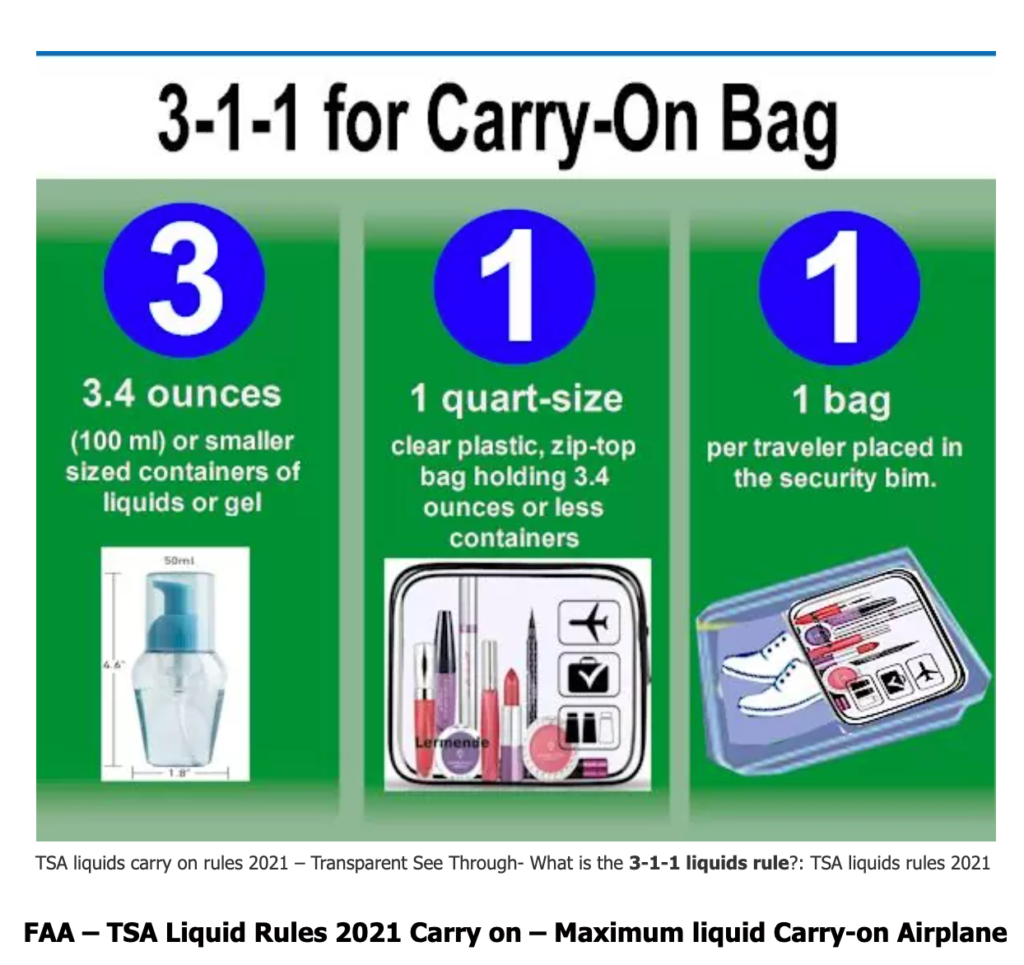
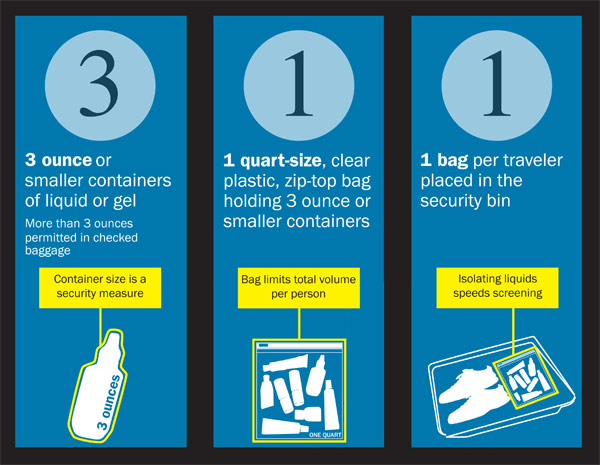
Here is the 3-1-1 rule in simple terms:
- 3.4 ounces or 100 milliliters per container.
- 1 quart-size, clear, resealable bag.
- 1 bag per traveler, placed in a bin for screening.
Only the container size matters. A 150 ml bottle that is half full is not allowed. The bag should close flat. If it bulges, expect extra screening or removal.
Are liquids allowed in carry on luggage on every airline? Airline staff follow airport security rules. Still, crew may check items during boarding if a bag looks unsafe. Keep liquids neat, sealed, and easy to inspect.
Pro tip from the road: keep the liquids bag at the top of your carry-on. You will save time, and you will avoid a flustered search at the front of the line. I learned this after holding up a queue in Chicago, and I never forgot it.
:max_bytes(150000):strip_icc()/TAL-tsa-liquid-info-TSALIQUIDS0325-f6405ea0f5e64a3db7b9badcf1420183.jpg)
What counts as a liquid, gel, aerosol, cream, or paste
If it can pour, spread, pump, smear, spray, or slosh, treat it as a liquid. Security uses this broad view for safety.
Common items that count as liquids or similar:
- Drinks and soups.
- Shampoo, conditioner, body wash, lotion, sunscreen.
- Toothpaste, mouthwash, lip gloss, mascara, liquid foundation.
- Peanut butter, yogurt, hummus, jam, soft cheese.
- Contact lens solution, saline, disinfecting liquids.
- Liquid medicine, cough syrup, insulin, IV fluids.
- Aerosol toiletries like hairspray, dry shampoo, shaving foam, deodorant spray.
Items that do not count as liquids:
- Bar soap, shampoo bars, lotion bars, deodorant sticks.
- Powder makeup under local powder limits.
- Solid perfume and balm sticks.
Aerosols in carry-ons must be toiletries or medical items only. Non-toiletry aerosols, like spray paint, are not allowed. Caps must be secure to prevent accidental spray.
Are liquids allowed in carry on luggage if they are in food form? If it spreads like a liquid, the 3-1-1 rule applies. That includes your favorite nut butter.
Quick PAA-style answers
Can I bring hand sanitizer?
Yes, but it now follows the 3-1-1 rule again. Pack travel-size bottles inside your quart bag.
Do e-liquids for vapes count?
Yes. E-liquids are subject to 3-1-1. E-cigarettes go in carry-on only, never in checked bags.
Are snow globes allowed?
Yes, if they are small enough to fit in the quart bag and hold less than 100 ml total liquid. Larger ones must go in checked luggage.

The 3-1-1 bag in practice: examples, layout, and mistakes to avoid
A real-world packing list that fits the rule:
- Travel toothpaste 0.85 oz.
- Face wash 1 oz.
- Moisturizer 1 oz.
- Sunscreen 3.4 oz.
- Contact solution 2 oz.
- Mini perfume 0.5 oz.
- Lip gloss 0.3 oz.
Pack all of these in one quart-size zip bag. Place it on top of your carry-on so you can reach it fast. If a screener asks, remove it and place it in a bin.
Common mistakes I see at checkpoints:
- Full-size toothpaste or sunscreen. The container is over 100 ml, even if half full.
- Two bags of liquids. Only one bag per person is allowed.
- Oversized aerosols. Only small toiletry aerosols are allowed in the cabin.
- Loose bottles without a bag. They must all fit in the quart bag.
Are liquids allowed in carry on luggage if you use refillable bottles? Yes. But the bottle must be labeled or clearly under 100 ml. Avoid 120 ml travel bottles. They look small but are too big for the rule.
Personal note: I lost a 6 oz sunscreen at LAX years ago. It was brand new. Since then, I decant sunscreen into a marked 100 ml bottle and add a backup stick in my backpack.
Wenger Luggage Patriot II Review: A high-capacity “tank-like” sturdiness for a budget-friendly price
Exceptions that can exceed 3.4 oz and how to declare them
Some liquids can go over 3.4 oz. You must remove and declare them at the checkpoint. Tell the officer you have medically necessary liquids or baby items. Expect testing of the outside of containers.
Common exceptions in the US and many countries:
- Baby formula, breast milk, and baby food in reasonable amounts. A child does not need to be present in the US. Ice packs are allowed to keep them cool.
- Medications and medical liquids in reasonable amounts. Bring original labels or a note if you have one.
- Liquid nutrition for dietary needs. Declare these and separate them.
- Water for CPAP machines or distilled water for medical use.
- Duty-free liquids in a sealed, tamper-evident bag with the receipt. Follow connection rules below.
Are liquids allowed in carry on luggage when they are for health or infant care? Yes, but declare them and allow extra time. Pack them where you can reach them fast. This keeps the line moving and reduces stress for you and the officers.

International differences you should know
The 100 ml limit and 1 liter bag are common in many places. The US uses 3.4 oz and one quart bag. Canada, the EU, Australia, and others follow similar rules. Local rules can differ in small ways.
Some airports now use advanced CT scanners. They may allow larger liquids at those checkpoints. Rollouts are not the same across all terminals. In the UK, limits have been in transition at select airports. Always check your departure airport’s latest rules before you fly.
Are liquids allowed in carry on luggage on international trips? Yes, with the same size rule in most places. But every country and even each airport can vary. When in doubt, check the airport website or your airline travel page the day before you go.
:max_bytes(150000):strip_icc()/carry-on-luggage-rules-9b7cac5a929b4189b64e1a564265f0bd.png)
Duty-free liquids and connections without trouble
Large duty-free bottles can travel if handled right. Follow these tips to avoid losing them at a connection:
- Ask for a STEB. This is a tamper-evident duty-free bag.
- Keep the item sealed in the bag. Do not open it before your final arrival.
- Keep the receipt in the STEB. Screeners may ask to see it.
- Check connection airports. In the US, you often re-clear security after customs. If your duty-free is not in a proper STEB, it can be taken.
- On EU and many international connections, sealed STEBs with same-day receipts are often allowed past transfer screening.
Are liquids allowed in carry on luggage if they are duty-free? Yes, if sealed in a STEB with the receipt and your connection airport accepts them. Ask the duty-free clerk to pack it for transfers and confirm your route.
Smart packing strategies and solid swaps
You can cut leaks, save space, and glide through screening with a few habits.
Simple steps that work:
- Use 100 ml or smaller, wide-mouth bottles. They fill and clean fast.
- Label bottles with painter’s tape. Add product and date.
- Double-bag in a thin freezer bag if you fly often. It limits leaks.
- Put twist-off caps on the bottom of the bag to avoid pressure leaks.
- Keep the liquids bag on top of your carry-on or in an outer pocket.
Solid swaps that reduce your liquid count:
- Shampoo and conditioner bars.
- Toothpaste tablets.
- Bar soap.
- Solid deodorant or cream deodorant in a small pot under 100 ml.
- Sunscreen sticks and face balm sticks.
- Solid perfume or cologne sticks.
Are liquids allowed in carry on luggage if you use solid swaps? You will need fewer. That means more room in your quart bag for items you must bring as liquids.
Frequently Asked Questions of are liquids allowed in carry on luggage
Are liquids allowed in carry on luggage on international flights?
Yes, most countries follow the 100 ml or 3.4 oz rule with one small bag. Check your departure airport for any scanner-based changes.
Does toothpaste count as a liquid?
Yes, toothpaste is a paste and follows 3-1-1. Use a small travel tube under 3.4 oz.
Can I bring a water bottle through security?
You can bring an empty bottle. Fill it after screening at a fountain or cafe.
Are perfumes and colognes allowed in hand luggage?
Yes, if the bottle is 3.4 oz or less and fits in your liquids bag. Keep the cap tight and consider tape over the sprayer.
Can I bring medicine that is over 3.4 oz?
Yes, for medically necessary liquids. Declare them and allow screening.
Are aerosols allowed in carry-on bags?
Toiletry aerosols like hairspray and shaving foam are allowed in travel size. Non-toiletry aerosols are not allowed.
What about baby formula and breast milk?
They are allowed in reasonable amounts above the limit. Declare them, and bring ice packs if needed.
Conclusion
You now know the full picture. Are liquids allowed in carry on luggage? Yes, within the 3-1-1 limit, with clear exceptions for medicine and baby needs. Keep liquids small, sealed, and easy to inspect. Use solid swaps to save space and stress.
Pack your quart bag tonight and place it on top of your carry-on. Check your airport’s latest rules before you leave. If this helped, share it with a friend, subscribe for more travel tips, or drop your questions in the comments.

Md Abdul Muhaimen is an experienced travel content writer and guide who has a Master’s in Information Systems Management from the University of Huddersfield. He is passionate about all things related to travel logistics and trip planning, and has assisted thousands of readers in choosing the proper luggage, knowing which items can be included in carry-on luggage, and understanding an airline’s policy with confidence.
Md Abdul has a sound grounding in systems thinking and data-driven content creation that allows him to bring clarity to complicated travel topics — from comparing the exact sizes of cabin bags from multiple airlines to developing helpful how-to guides to simplify a traveler’s experience.
He actually engages in travel forums on Quora, answers real user questions, and shares insights by posting on Medium blogs
.His work marries first-hand research, consumer-focused advice, and technical accuracy, and he is a voice that can be trusted among the travel and luggage community.