
 Posted by
 A carry on briefcase keeps work items neat, secure, and ready for fast airport travel. A carry on briefcase sits between a laptop bag and a small suitcase. It gives business travelers a clean way to carry a laptop, papers, chargers, clothes, and daily items without checking a bag. After comparing materials, layouts, wheels, handles, and airline rules, this guide will help you choose a carry on briefcase that fits your work style and travel needs.
What Is a Carry On Briefcase?
A carry on briefcase is a compact work bag designed to fit in an aircraft cabin. It often has a laptop sleeve, document space, pockets for tech gear, and a handle for easy carrying. Some models also include wheels and a telescoping handle.
Unlike a standard briefcase, a carry on briefcase usually has more room and stronger travel features. Unlike a small suitcase, it often gives faster access to a laptop, passport, pen, and papers.
Most travelers use a carry on briefcase for:
- Business flights
- Train and bus travel
- Daily office trips
- Client meetings
- Short overnight work trips
- Airport commutes
The term can describe more than one shape. Some bags look like classic leather briefcases. Others look like slim rolling luggage. The best choice depends on how much you carry and how often you move through airports.
Why Choose a Carry On Briefcase?
A carry on briefcase can make travel simpler. It keeps work tools in one place and helps you avoid opening a large suitcase at security or during a meeting.
The main benefits include:
- Easy access to a laptop and documents
- A professional look in formal settings
- Better organization than a basic tote bag
- More protection than a soft document case
- Compatibility with many cabin travel plans
- Space for a change of clothes in larger models
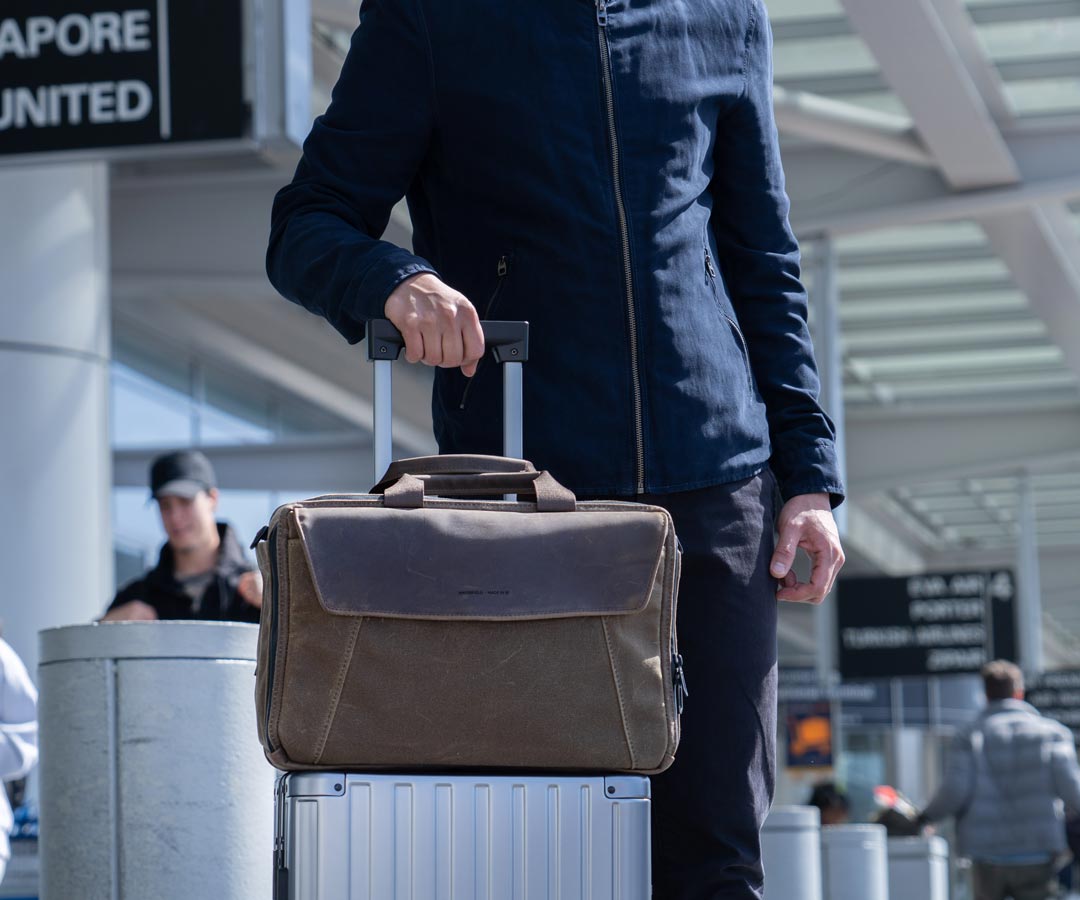
A well-made carry on briefcase can also reduce strain. A shoulder strap helps when you walk short distances. Wheels help when the bag is full. A rear sleeve lets the bag sit on top of rolling luggage.
There is also a time benefit. You can remove your laptop, charger, and liquids without digging through clothes. That small detail can make a busy airport feel much less stressful.
Still, size matters. A large carry on briefcase may not fit beneath the seat. A rigid model may also use more space than its listed measurements suggest. Always check the bag’s full outside size, including wheels, handles, and pockets.
Carry On Briefcase Versus Other Travel Bags
Choosing the right bag starts with knowing how it differs from similar options. Each style solves a different travel problem.
Carry On Briefcase vs. Laptop Bag
A laptop bag is usually lighter and slimmer. It works well for commuting with a computer, charger, and a few papers.
A carry on briefcase offers more structure and more room. It may include a clothing section, file storage, and a trolley sleeve. For air travel, this extra space can be useful.
Carry On Briefcase vs. Rolling Laptop Bag
A rolling laptop bag has wheels and a pull handle. It is helpful when the bag becomes heavy.
The tradeoff is weight. Wheels, frames, and handles add bulk. If you often walk on stairs or use crowded public transport, a shoulder carry briefcase may be easier.
Carry On Briefcase vs. Small Carry On Suitcase
A small suitcase is better for clothes and general packing. It may hold more than a briefcase.
A carry on briefcase is better for work access. It keeps a laptop, files, and office items easier to reach. Many frequent travelers use both: a small suitcase for clothes and a briefcase for work gear.
8 Best Carry On Briefcase: Tested and Reviewed That Fit Everything
Key Features to Look For
The best carry on briefcase balances size, comfort, protection, and access. A stylish design is helpful, but function should come first.
Laptop Protection
Look for a padded laptop compartment with a secure closure. The sleeve should hold your device firmly without pressing on the screen.
Check the stated laptop size. A bag made for a 15 inch laptop may not fit every 15 inch model because computers have different bezels and shapes. Measure your device before buying.
A raised laptop sleeve is useful too. It keeps the computer away from the floor when you set the bag down.
Strong Materials
Common materials include:
- Full grain or top grain leather
- Ballistic nylon
- Cordura style fabric
- Polyester
- Polycarbonate or other hard shells
- Recycled synthetic fabric
Leather looks polished and can last for years with care. It is often heavier and may show scratches. Nylon is usually lighter and handles rain better. Hard shells offer stronger shape protection but may crack under severe impact.
No material is perfect. Think about your climate, work setting, and travel habits before choosing.
Comfortable Handles and Straps
A carry on briefcase should feel stable in your hand. Handles with soft padding can reduce pressure during long walks.
A removable shoulder strap adds flexibility. Look for a wide strap with a non-slip pad. Thin straps can dig into your shoulder when the bag is full.
If you choose a rolling carry on briefcase, test the handle length. A short handle can force you to bend your arm or twist your wrist.
Smooth Wheels
Two-wheel and four-wheel designs both have strengths.
Two-wheel bags often roll well over rough sidewalks and door thresholds. Four-wheel spinner bags turn easily in airports and narrow aisles. However, spinner wheels may take more space and can suffer damage if exposed.
Check whether the wheels are recessed. Recessed wheels take up less packing space and receive more protection.
Secure Closures
Zippers should move smoothly and should not catch on fabric. Metal zippers feel strong, but high-quality plastic zippers can also perform well.
Some business bags include combination locks. A lock may discourage casual access, but it does not make the bag theft-proof. Keep valuable items with you and follow airport security rules.
Carry On Size and Airline Rules
Airlines set their own cabin bag limits. Rules can vary by carrier, fare type, aircraft, and route. A bag that fits one airline may not fit another.
In the United States, many airlines use limits close to 22 by 14 by 9 inches for a main carry on. This is not a universal rule. Some airlines allow smaller bags, while basic economy fares may include only a personal item.
A carry on briefcase may count as:
- A personal item
- A standard carry on
- A business bag
- One part of a two bag allowance
The label does not decide the rule. The airline does.
Before a flight, check:
- The airline’s current cabin baggage size.
- The maximum weight, if one applies.
- Whether wheels and handles count.
- Whether your fare includes a carry on.
- Whether the bag must fit under the seat.
- Whether a laptop bag counts as a separate item.
The Transportation Security Administration generally allows laptops in carry on bags, but screening instructions can change. Keep electronics easy to remove unless the airport uses newer screening equipment. Follow the instructions given at the checkpoint.
When traveling with a briefcase, its classification and size requirements depend on whether you plan to store it in the overhead bin (as a standard carry-on) or slide it under the seat in front of you (as a personal item).
Most briefcases easily qualify as personal items, but larger rolling briefcases or attaché cases must adhere to specific size limits.
1. Personal Item vs. Carry-On Briefcases
- As a Personal Item (Under-Seat): Most standard briefcases, messenger bags, and laptop bags fall under this category. They must fit completely under the seat in front of you.
- Standard Personal Item Size Limit: Roughly 18 x 14 x 8 inches (45 x 35 x 20 cm) on major U.S. carriers, though budget airlines can be smaller (around 16 x 12 x 6 inches / 40 x 30 x 15 cm).
- As a Carry-On (Overhead Bin): Larger rolling briefcases or structured hard-shell attaché cases are treated as main cabin bags.
- Standard Carry-On Size Limit: Typically 22 x 14 x 9 inches (56 x 36 x 23 cm) for major U.S. airlines, and slightly smaller 55 x 40 x 23 cm for international carriers.
2. Major Airline Size Quick-Reference
| Airline Type | Max Personal Item Size (Under-Seat) | Max Carry-On Size (Overhead) | Weight Limits |
| Major U.S. Carriers (American, Delta, United, Alaska) | 18 x 14 x 8 in (45 x 35 x 20 cm) | 22 x 14 x 9 in (56 x 36 x 23 cm) | None for domestic carry-ons |
| European & International (Air France, Lufthansa, KLM) | 16 x 12 x 6 in (40 x 30 x 15 cm) | 21.5 x 13.5 x 9 in (55 x 35 x 25 cm) | Often 15–26 lbs (7–12 kg) enforced |
| Budget Carriers (Spirit, Frontier, Ryanair) | Varies strictly by fare. Free item must fit under the seat. | Extra fee usually required for overhead bags. | Varies; strict enforcement. |
How to Pack a Carry On Briefcase
Good packing is less about filling every inch and more about keeping key items easy to reach.
Start with the laptop. Place it in its padded sleeve. Do not stack heavy items on top of it.
Next, pack flat items such as folders, a tablet, and a notebook. Use the center space for a light shirt, underwear, or other soft items if the bag has room.
Keep small items in separate pockets:
- Charger and power adapter
- Mouse and presentation clicker
- Earbuds
- Pens
- Passport
- Business cards
- Medication
- Charging cables
- Travel-size liquids
Avoid loose cables. They turn a neat bag into a pocket-sized nest. A small cable pouch saves time and protects connectors.
Put items you may need at security near the top. The same rule works for meetings. A pen, notebook, and charger should not hide beneath clothes.
One mistake I often see in travel packing is overloading the front pocket. It can make the bag fall forward and place pressure on the zipper. Keep heavier items close to the center of the bag.
Best Carry On Briefcase Styles
Different travelers need different designs. Consider the way you move, not only the way the bag looks.
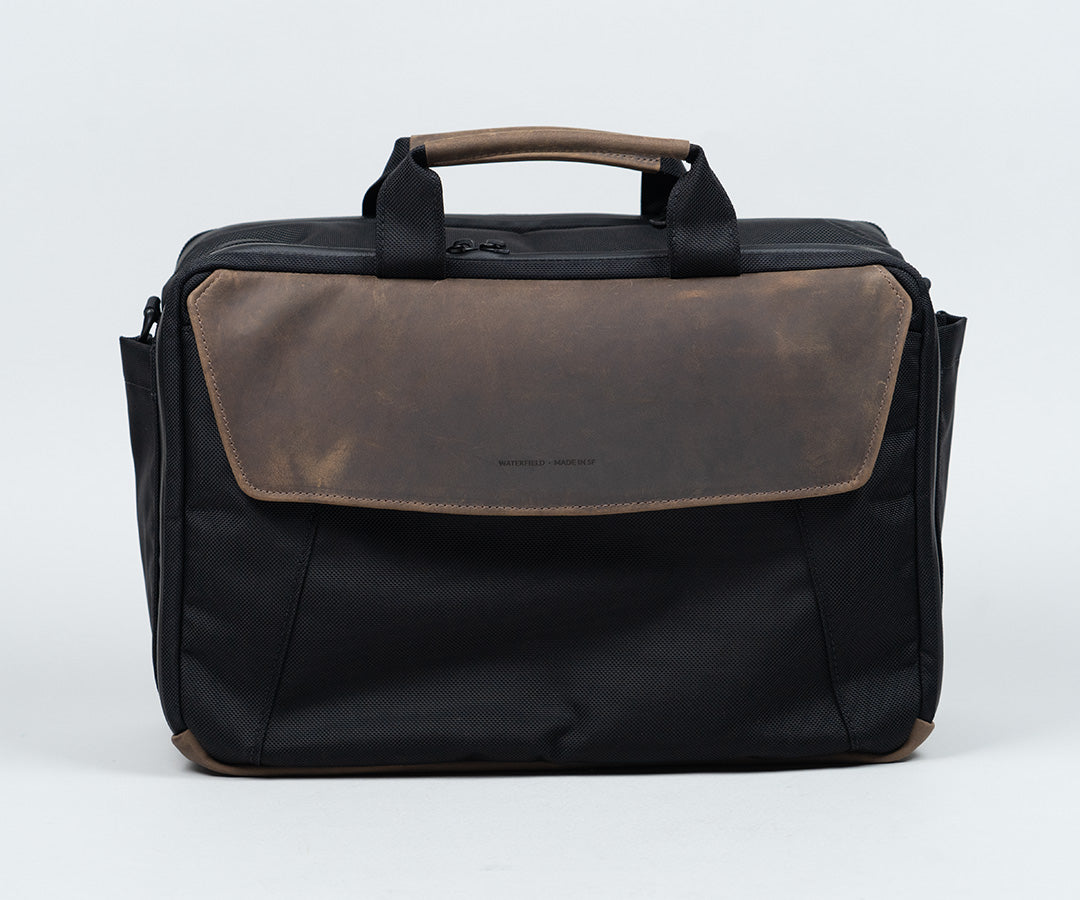
Leather Carry On Briefcase
Leather is a strong choice for formal offices, law firms, finance roles, and client meetings. It has a classic look and can develop a rich patina over time.
Choose leather with strong stitching, reinforced corners, and quality hardware. A very heavy leather bag can become tiring on long trips.
Rolling Carry On Briefcase
A rolling carry on briefcase suits travelers who carry a laptop, files, clothes, and accessories. It reduces shoulder strain and can replace a small suitcase on short trips.
The main risks are weight and wheel damage. Never judge a rolling briefcase only by its empty weight. Add your laptop and daily gear, then test the total load.
Soft Nylon Carry On Briefcase
Nylon bags are light and practical. Many include water-resistant coatings and flexible outer panels.
This style works well for frequent travelers who value low weight. It may look less formal than leather, but modern nylon designs can still appear polished.
Expandable Carry On Briefcase
An expandable design gives extra room when needed. You can keep it slim during the flight and open the expansion section for a jacket or small clothing load.
Do not expand it so much that it becomes too deep for the airline’s limit. Expansion is useful only when you still measure the full bag.
Underseat Carry On Briefcase
An underseat briefcase is smaller than a normal cabin suitcase. It can be a smart choice for short trips or fares that allow only a personal item.
Measure the bag with the front pocket filled. Bulging pockets can stop it from sliding under the seat.
5 Best Carry On Luggage For Men’s Suits: : Expert-Tested & Wrinkle-Free
How Much Should a Carry On Briefcase Cost?
Prices vary from budget models to premium leather cases. A higher price does not always mean a better travel bag.
Pay for features that affect daily use:
- Strong stitching
- Reliable zippers
- A stable handle
- Protective laptop padding
- Smooth wheels
- Useful pockets
- A solid warranty
- Repair support
A low-cost bag may be fine for occasional travel. A frequent flyer may save money with a stronger bag that lasts longer.
Look at the total value. A briefcase that costs more but protects a computer and avoids replacement may be a better choice than a cheap bag that fails after a few trips.
Be careful with luxury branding. A logo does not prove that the bag has better padding, stronger wheels, or a safer layout. Read the product measurements and warranty terms before buying.
Common Mistakes to Avoid
Small mistakes can turn a good carry on briefcase into an annoying travel tool.
Buying by Appearance Alone
A slim, attractive bag may have little usable space. Check the internal layout and read reviews about real packing capacity.
Ignoring Empty Weight
A heavy leather or rolling bag may feel fine in a store. Add a laptop, charger, and files before deciding. Weight becomes more noticeable after a long airport walk.
Forgetting Handle and Wheel Space
Manufacturers may list the main body size rather than the full outside size. Measure the bag with all parts extended or attached.
Using a Weak Laptop Sleeve
A thin sleeve may not protect your device from drops or pressure. Look for padding on the bottom, sides, and back.
Overpacking the Front
A full front pocket can strain the zipper and make the briefcase unstable. Use a small pouch for loose items instead.
Skipping Rain Protection
Water-resistant fabric helps, but it may not be waterproof. A rain cover or simple plastic sleeve can protect important documents during wet weather.
Assuming Every Lock Is Secure
A built-in lock may stop casual opening. It cannot protect a bag from forceful theft. Keep sensitive files and expensive electronics under your control.
Care and Maintenance Tips
A carry on briefcase can last much longer with simple care.
For leather, wipe away dust with a soft cloth. Use a conditioner made for the specific leather type. Test it on a hidden area first, since some products darken the material.
For nylon and polyester, follow the care label. Spot clean with mild soap and water. Avoid strong bleach, high heat, and machine washing unless the manufacturer allows it.
Check the bag every few trips:
- Test the zippers.
- Tighten loose screws.
- Inspect the shoulder strap clips.
- Clean the wheels.
- Look for torn stitching.
- Empty old receipts and cables.
- Confirm that the laptop padding still holds its shape.
Do not drag a rolling carry on briefcase over stairs. Lift it by the main handle. This protects the wheels, frame, and telescoping handle.
How to Choose the Right Carry On Briefcase
Use this simple process before you buy.
- Measure your laptop and tablet.
- Check the airline size rules you use most.
- Decide whether you need wheels.
- Estimate your usual load.
- Choose leather, nylon, or a hard shell based on your climate and work setting.
- Check the handle, strap, wheels, and zipper quality.
- Read the warranty and return policy.
- Test the bag with your real work items.
- Measure it again when full.
- Keep a small margin below the airline limit.
For daily business flights, a rolling carry on briefcase may be the most comfortable choice. For short commutes and formal meetings, a slim leather model may suit you better. For mixed travel, a lightweight expandable bag often offers the best balance.
The right carry on briefcase should feel like a quiet assistant. It should protect your gear, save time, and stay out of your way.
Frequently Asked Questions About Carry On Briefcase
Is a carry on briefcase allowed on an airplane?
Usually, yes, but the airline decides whether it counts as a personal item or standard carry on. Check the carrier’s size, weight, and fare rules before your trip.
Can a carry on briefcase hold clothes?
Many larger models can hold a shirt, underwear, and light travel items. A slim briefcase may hold only work gear, so check the interior dimensions before buying.
Is a rolling carry on briefcase better than a shoulder bag?
A rolling model is better when you carry heavy items or walk long distances. A shoulder bag is often better on stairs, crowded trains, and short trips.
What size laptop fits in a carry on briefcase?
The answer depends on the sleeve design, not just the advertised bag size. Measure your laptop and compare its length, width, and thickness with the sleeve measurements.
Can a carry on briefcase fit under an airplane seat?
Some compact models can fit under a seat, but the available space differs by aircraft and seat location. Measure the fully packed bag and check the airline’s personal item limits.
How do I clean a leather carry on briefcase?
Use a soft, dry cloth for dust and a suitable leather cleaner for marks. Test any cleaner or conditioner in a hidden spot before applying it widely.
Is a carry on briefcase worth the money?
It can be worth it if you travel with work equipment and need quick access. Compare protection, comfort, durability, and warranty instead of choosing by brand name alone.
Conclusion
A carry on briefcase offers a smart middle ground between a laptop bag and a small suitcase. The best model protects your computer, organizes your work items, fits your airline’s rules, and stays comfortable during long walks.
Focus on real measurements, empty weight, laptop padding, handle quality, wheels, materials, and warranty support. Choose a leather briefcase for a classic office look, a nylon model for light travel, or a rolling design for heavier loads.
Before your next trip, pack the bag with your real gear and test it at home. That simple step can prevent airport stress and help you choose a carry on briefcase that works for years. Explore reliable options, compare the details, and share your favorite travel setup with other business travelers.

Md Abdul Muhaimen is an experienced travel content writer and guide who has a Master’s in Information Systems Management from the University of Huddersfield. He is passionate about all things related to travel logistics and trip planning, and has assisted thousands of readers in choosing the proper luggage, knowing which items can be included in carry-on luggage, and understanding an airline’s policy with confidence.
Md Abdul has a sound grounding in systems thinking and data-driven content creation that allows him to bring clarity to complicated travel topics — from comparing the exact sizes of cabin bags from multiple airlines to developing helpful how-to guides to simplify a traveler’s experience.
He actually engages in travel forums on Quora, answers real user questions, and shares insights by posting on Medium blogs
.His work marries first-hand research, consumer-focused advice, and technical accuracy, and he is a voice that can be trusted among the travel and luggage community.