100 TSA Carry-On Rules FAQs: What You Can (and Can’t) Bring on a Plane in 2026
100 TSA Carry-On Rules: Know what you can and cannot bring on a plane! From liquids, gels, and electronics to prohibited items, this comprehensive guide covers all TSA regulations for carry-on luggage to ensure a smooth airport experience. Avoid delays and pack smart with these essential rules.
Hi, I’m Abdul, a seasoned travel writer and frequent flyer with over a decade of experience navigating airline baggage policies—especially when it comes to American Airlines carry-on luggage size requirements. I’ve flown with American on numerous domestic and international routes, tested different carry-on bags to find the perfect fit, and dealt firsthand with everything from overhead bin limits to unexpected gate checks. . I have listed best carry-on luggage of 2025 which are tested by expert
I have personally tested and reviewed cabin max anode 24l twinwheel which need to meet strict personal-item size limits on budget airlines such as Ryanair and Wizz Air.
I. Official Carry-On Size & Weight Guidelines: Navigating Airline Restrictions
This section provides authoritative information on the fundamental rules that manage carry-on bags, which are essential to the know-how of all passengers. These guidelines are the first step towards a hassle-free travel experience.
1. What are the standard carry-on luggage size limits (dimensions)?
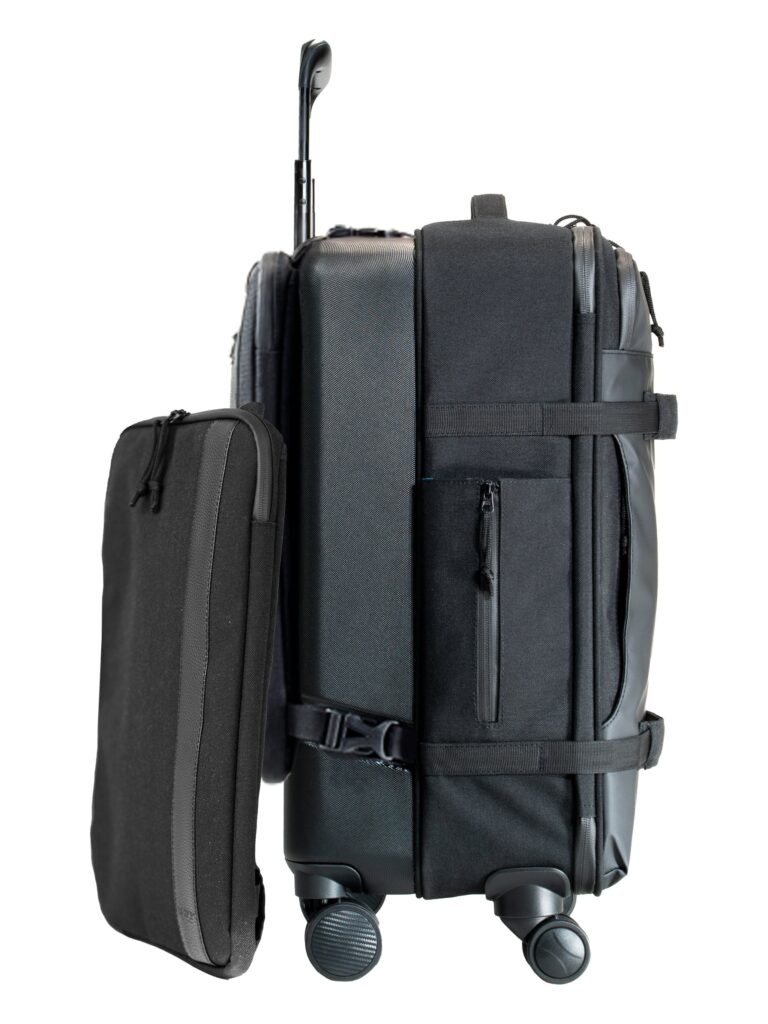
Although there isn’t one universal standard, the most common carry-on dimensions are 22 x 14 x 9 inches (56 x 35 x 23 cm), complete with handles and wheels. It’s large enough to go into overhead compartments on most major airlines. But be sure to check with your specific airline in advance of flight, since low-cost carriers and regional aircraft have stricter specs.
2. What are the typical carry-on baggage weight allowances on major airlines?
For the major US domestic airlines (like American, Delta, and United), there is no limit on how heavy the carry-on bag can be. The norm is that you must be able to lift it up into the overhead bin yourself. It is otherwise for most international and low-cost carriers, who have strict weight limits normally ranging from 7 kg (15 lbs) to 10 kg (22 lbs).
3. Are carry-on size and weight restrictions the same on all airlines?
No, they’re not. Carry-on restrictions vary significantly from airline to airline. Factors like the airline’s business model (e.g., budget versus legacy), the specific aircraft being flown, and whether or not it’s an international or domestic flight are considered. Always review the policy for your specific flight on the airline website.
4. What is the biggest carry-on bag size permitted in both inches and centimeters (IATA standard)?
Recommendations are provided by the International Air Transport Association (IATA) that are widely used by most airlines. Recommended maximum sizes are 22 x 14 x 9 inches (56 x 35 x 23 cm). This is a recommendation, not a rule, but bags labeled as “carry-on compliant” will typically be built to this size.
5. What is the maximum weight for a carry-on in pounds (lbs) and kilograms (kgs)?
There isn’t one that fits all. It depends on the airline. While most US carriers have no limit, foreign airlines normally restrict carry-ons at 7 kg (15 lbs), 8 kg (17 lbs), or 10 kg (22 lbs). Business or first-class fare occasionally has an increased amount.
6. Defining the “Personal Item”: What is it and what are its standard dimensions?
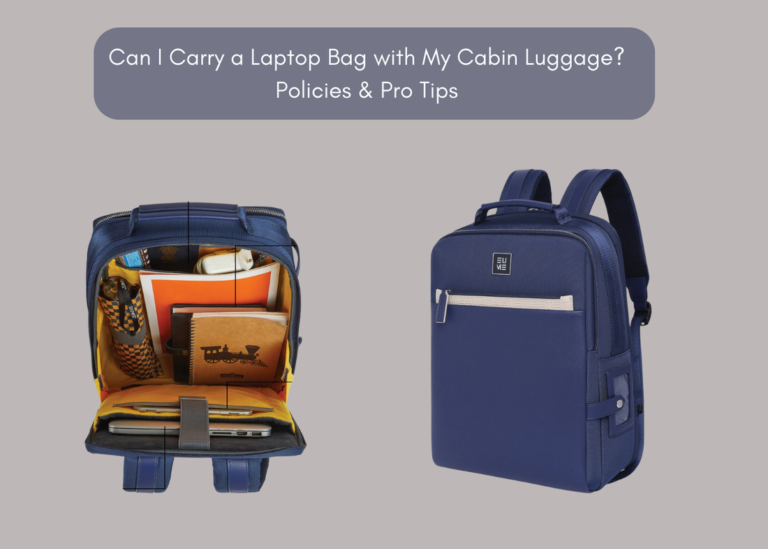
A “personal item” is a smaller bag that must be stowed under the seat in front of you. A typical item is a purse, laptop bag, briefcase, or small backpack. Normal size is approximately 18 x 14 x 8 inches (45 x 35 x 20 cm), though this is not always standardized. Carriers like United and American care about these sizes, so check on it.
7. Can I bring on both a carry-on and a “personal” item on my flight?
Yes, on most major commercial airlines. The default is one carry-on (for the overhead bin) and one personal item (under the seat). However, passengers who purchase “Basic Economy” fares on some airlines will usually be restricted to a single personal item, with a carry-on bag incurring an additional fee.
8. Will low-cost carriers (e.g., Spirit, Ryanair, Frontier) be more likely to enforce strict carry-on size and weight?
Yes, absolutely. Low-cost carriers charge a tremendous amount of money for bags. They are extremely adamant about the weight and size of carry-on bags and will actually weigh and measure bags at the gate. Exceeding their limits almost always incurs a high fee.
9. Which airlines are specifically notorious for enforcing strict carry-on weight limits?
Several low-cost carriers and international airlines are strict. Ryanair, easyJet, Emirates, Singapore Airlines, and Qantas are well-known for enforcing strictly their weight limits, as low as 7 kg (15 lbs) in most situations.
10. What is the fine if my carry-on bag turns out to be overweight or oversized?
If your bag is too heavy or oversized for the gate, you’ll need to gate-check. That is, the bag will be labeled and pushed down into the flight’s cargo bay. This is done most always for a high fee, often much greater than the cost of checking a bag at the ticket counter.
11. Will my carry-on bag be weighed or measured at the check-in counter or the boarding gate?
It can occur at either place. International and budget carriers are more likely to have sizers and scales at the check-in counter. Any airline can, however, and will use a sizer at the boarding gate if a bag is found to be oversized. Get ready for your bag to be inspected at any time.
12. How do I accurately measure my carry-on bag at home to avoid gate issues?
Get out the tape measure and measure the bag from floor to top of handle (when retracted), side to side at its widest point, and front to back. Most importantly, include the wheels and any handles in the measurements, as these are included in the airline’s official measurement.
13. Is the weight allowance the weight of the empty bag too?
Yes. The weight allowance is on the total weight of the packed bag, plus the weight of the luggage itself. That is why most experienced travelers treat themselves to lightweight carry-on luggage to make the most of the weight of the contents they carry.
14. Will a 24-inch suitcase ever be a good carry-on bag?
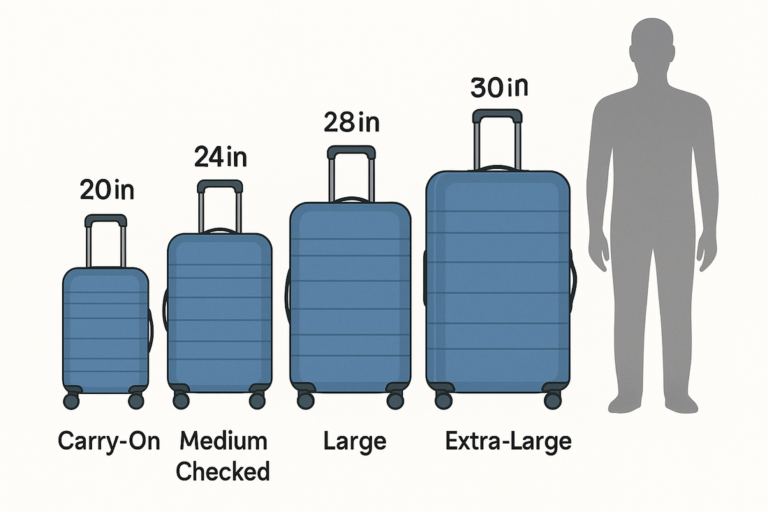
No. A 24-inch bag is a checked bag. The 22-inch size is the standard for a carry-on. Attempting to use a 24-inch bag as a carry-on will have it gate-checked with associated fees.
15. What are the precise carry-on size limitations on principal US airlines (Delta, United, American)?
Up until the end of 2025, the sizes for these three major US carriers are all uniform at 22 x 14 x 9 inches (56 x 35 x 23 cm). They do not generally have a declared weight limit on their main cabin tickets.
16. What are precise carry-on size limits for large international airlines?
This does differ, but most use the 22 x 14 x 9 inch rule. Some are slightly different, though. Some are a bit deeper or wider, for instance. It is necessary to verify the airline’s website. Here is a table for reference:
| Airline | Size Limit (Inches) | Weight Limit (kg) |
|---|---|---|
| British Airways | 22 x 18 x 10 | 23 kg |
| Lufthansa | 22 x 16 x 9 | 8 kg |
| Emirates | 22 x 15 x 8 | 7 kg |
| Singapore Airlines | Sum of L+W+H < 45.3 in | 7 kg |
17. What is the “linear inches” policy on carry-on bags?
Pay attention. Some airlines, particularly in the old days, had a “linear inches” or “linear centimeters” rule. That means the addition of the height, width, and length of the bag isn’t the correct answer. An example would be the standard 45 linear inches limit. Less common than the fixed size rule now, it’s worth checking if an airline uses the measuring system.
18. Where should my carry-on bag go (overhead bin or under seat)?
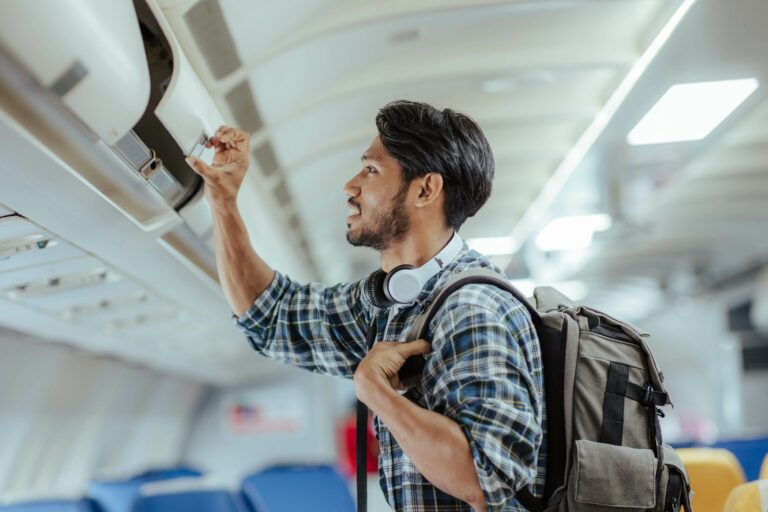
Your carry-on bag should be placed in the overhead bin. Your personal item will be stowed under the seat before you. Flight attendants may require you to store items under the seat if overhead bins are filled.
19. Are there different carry-on restrictions for domestic versus international flights?
Yes, often. The largest difference is the existence of weight limits. International flights are far more likely to have and apply a strict carry-on bag weight limitation. Size restrictions are more typical, though it is still worth checking.
20. What is the best strategy for avoiding having my compliant carry-on bag gate-checked?
Even if your bag is carry-on compliant, it could be gate-checked if the flight is full. To reduce this risk:
Board early. Overhead bin space is available on a first-come, first-served basis.
Select a soft-sided bag that will compress slightly if necessary.
Be polite and accommodating with the gate agents and flight attendants.
Have important items (medication, electronics, documents) in your personal item in case your main carry-on gets checked.
II. TSA’s 3-1-1 Rule and Liquid Limitations (Trustworthiness & Expertise)
This is where the necessary security regulation on liquids, gels, and aerosols is discussed and the section relies substantially on TSA guidelines. Knowing this rule is a prerequisite for a seamless security screening process.
21. What is the TSA 3-1-1 rule for liquids, gels, and aerosols?
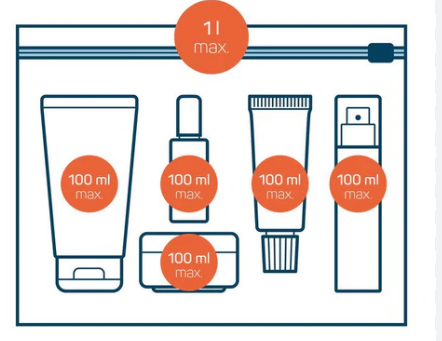
The TSA 3-1-1 rule is a handy acronym for remembering the carry-on luggage liquid restrictions. It means:
3.4 ounces (100 milliliters) or smaller per container.
1 clear, quart-sized, zip-top bag.
1 bag per traveler.
All of your containers holding travel-sized liquids need to fit neatly inside this one bag, allowing it to be taken out of your carry-on and put into another bin for X-ray examination.
22. How much liquid can each container hold within a carry-on bag?
Each container of liquid, gel, or aerosol can be no larger than 3.4 ounces (100 milliliters). Even if a larger container (like a 6-ounce bottle of shampoo) is only partially full, it cannot be put in a carry-on bag.
23. What is the maximum container size that can hold liquids in carry-on bags (in ml and oz)?
The biggest one is 3.4 ounces or 100 milliliters. They must all be that size or smaller.
24. What kinds of typical items are categorized as a “liquid” or “gel” by TSA?
Most everyday toiletries and foods are classified as liquids or gels. If you can squeeze it, spread it, spray it, or spill it, the TSA classifies it as a liquid. This would include:
Toiletries: Toothpaste, shampoo, conditioner, mouthwash, lotion, liquid soap, mascara, liquid foundation, sunscreen, and hair gel/spray.
Food Items: Peanut butter, yogurt, jelly, jam, salad dressing, salsa, and other dips and spreads.
25. May I carry a full-size aerosol can (e.g., shaving cream, hairspray) as a carry-on?
No. Full-size aerosol cans may not be packed in carry-on because they are above the 3.4-ounce limit. Travel-sized aerosol containers that contain 3.4 ounces or less can be packed, as long as they fit in your one quart-sized bag.
26. Is hand sanitizer subject to the 3-1-1 liquid rule?
For public health purposes, the TSA has made a hand sanitizer exception. You may bring one container of hand sanitizer with a maximum capacity of 12 ounces (355 milliliters) per passenger in your carry-on bag. The container will be screened separately, so remove it from your carry-on at the security checkpoint.
27. Can I have liquid makeup (foundation, liquid lipstick, etc.) in my carry-on bag?
Yes, liquid makeup is permitted in your carry-on if it complies with the 3-1-1 rule. Your bottles must be 3.4 ounces or less and all of them must fit in your personal quart-sized bag.
28. Is stick deodorant or solid deodorant included in the 3-1-1 rule?
No. Stick or solid deodorant is neither a liquid nor subject to the 3-1-1 rule. Any size of solid deodorant is permitted in your carry-on bag without stowing it in your liquids bag.
29. May I carry a quart-sized liquids bag in addition to my allowance for a carry-on and personal item?
No. The liquids bag quart-sized must fit inside your carry-on bag or personal item. It is not a third item.
30. Where do I find TSA-approved travel-size toiletry containers?
TSA-approved travel-size containers can be purchased at most grocery stores, drugstores, and on sites like Amazon. You can use empty reusable bottles to refill with your own material, or use pre-packaged travel-size amounts of popular brands.
31. Can I bring pre-packaged food and snacks through airport security in my carry-on?
Yes, you are usually permitted to bring solid food items with you through the security check point. Sandwiches, salads, fruit, granola bars, and chips are examples. Expect, though, that you might be required to undergo further screening.
32. What types of solid foods are routinely allowed in a carry-on bag?
Solid foods are routinely permitted. These are:
Baked goods (bread, cakes, cookies)
Cheese (solid)
Chocolate
Cooked meat and seafood
Dried fruit and nuts
Pizza
Sandwiches
Protein/energy bars
33. Are solid foods (chips, cookies, candy, protein bars) permitted in my carry-on?
All solid foods mentioned are permitted in your carry-on bag without any quantity limits.
34. Do I have permission to bring liquid or gel food items (yogurt, peanut butter, dips, sauces) in my carry-on?
Yes, but under the 3-1-1 rule. Any liquid or gel food must be contained in a jar of 3.4 ounces (100 ml) or smaller and must be placed in your one quart-sized bag. This is a source of confusion for many, as they do not realize peanut butter or hummus is a liquid.
35. May I bring an empty water bottle through security and refill it?
Yes, absolutely. You can bring an empty water bottle, of any size, through the security checkpoint. Once you are in the secure area of the airport, you can fill it up from a water fountain or water bottle filling station. It is a great way to get hydrated and save money.
36. Are alcoholic beverages (miniature bottles) permitted in my carry-on?
Yes, alcohol mini bottles are permitted in your carry-on provided they are 3.4 ounces (100 ml) or less and fit into your quart-sized bag. But FAA regulations specifically prohibit passengers from consuming alcoholic beverages on board an aircraft except when offered by a flight attendant.
37. What are the TSA rules for carrying baby food, formula, and juice in a carry-on?
Breast milk, formula, and baby food are medically required liquids that are exempt from the 3-1-1 rule. You can take them in quantities greater than 3.4 ounces. You should remove them from your carry-on item to be inspected as a distinct item. It is also recommended that you inform the TSA officer that you are carrying these items.
38. Are there any special exceptions for carrying breast milk in my carry-on baggage?
Yes. Breast milk is medically necessary liquid as well and is exempt from the 3-1-1 rule. You can take amounts greater than 3.4 ounces with you, and you need not be accompanied by the baby to transport breast milk. Like baby food, it needs to be removed from your bag for screening separately.
39. What is the rule for transporting a frozen liquid product (e.g., ice packs) in my carry-on?
Frozen liquid products are fine as long as they are frozen solid when you pass through security. If they are thawed partially or there is liquid in the bottom of the container, they will need to follow the 3.4-ounce liquid limit. It’s a common method of cooling medically necessary products.
40. Can I bring coffee beans or ground coffee in my carry-on?
Yes, coffee beans and ground coffee are solid food items and may be placed in your carry-on bag without restriction. Bulky quantities of powders may require additional screening.
IV. Electronics, Batteries, and Power Devices (Technical Expertise)
This section covers the specific regulations for modern electronic products as well as the necessary safety guidelines for batteries.
41. Do I need to remove my laptop from my bag when going through the security screening process?
At most regular security checkpoint stations, yes, you will need to remove your laptop and place it in a separate bin to be scanned. This is for getting a good X-ray image. But if you’re going through a lane with newer generations of CT scanners, you can leave your laptop and other electronics inside your bag.
42. Can I include a power bank or portable charger in my carry-on?
Yes, and you should. Spare lithium-ion batteries in the shape of portable chargers (power banks) must not be placed in checked bags and must be in your carry-on bags. It is a crucial safety regulation in order to prevent fire hazards in the cargo hold.
43. Are there any regulations regarding size, capacity, or Watt-hours (Wh) of power banks in carry-on luggage?
Yes, there are definite limitations depending on the Watt-hour (Wh) rating of the battery:
100 Wh or less: Generally permitted without airline permission (most basic power banks fall in this group).
101 Wh to 160 Wh: Permitted with airline permission, and you can only bring two spare batteries.
Above 160 Wh: Prohibited in all commercial airplanes.
44. Can I pack a hair dryer, curling iron, or straightener as carry-on?
Yes, these non-cordless styling tools are usually fine in carry-on as well as checked luggage. Lithium-ion battery-powered cordless curling irons are under the same battery restrictions and need to have the heat-producing portion isolated from the battery.
45. Are there rules regarding carrying expensive camera and video gear in a carry-on?
You are strongly recommended to bring all expensive and delicate camera and video equipment in your carry-on. It protects from damage, theft, and the cargo bay’s extreme temperatures. Lenses, camera bodies, and flashes are permitted. Spare camera lithium batteries should also be in your carry-on.
46. Am I allowed to bring a drone and batteries in my carry-on bag?
Yes, both in carry-on and checked bags. The lithium batteries themselves should be removed from the drone and carried separately in your carry-on. They are subject to the same Wh limit as power banks (100 Wh or less is typical).
47. Are e-cigarettes, vape pens, and liquid connected to them permitted in carry-on bags?
E-cigs and vape pens (all lithium battery-powered devices) need to be placed in your carry-on bag and not checked. The liquid (vape juice) follows the 3-1-1 rule and needs to be placed in a 3.4-ounce container and in the quart-sized bag.
48. Can I carry a gaming console (e.g., Nintendo Switch, Steam Deck, PS5) in my carry-on?
Yes, any and all standard game consoles can go in carry-on bags. You will have to be ready to remove them from your bag so that they can be screened individually, similar to a laptop.
49. Do all electronic devices need to be charged and able to turn on for security inspection?
Yes. TSA officers will request that you switch on your electronic devices, including cell phones, laptops, and tablets. If a device cannot be switched on, it will not pass security. This is a security measure to ensure that the device works and is not an explosive masquerading as a device.
50. Can I bring full-size computer peripherals such as a mouse or keyboard in my carry-on?
Yes, non-powered computer peripherals like keyboards, mice, and external drives are permitted in carry-on. They do have a chance to cause a security officer to physically examine your bag if the X-ray image is weak.
V. Medical, Health, and Accessibility Items (Trustworthiness & Empathy)
Satisfying the requirements of passengers with medical issues, this section provides trustworthy information regarding essential health and accessibility items.
51. Can I bring prescription medicine (liquids and pills) in my carry-on?
Yes, you are always encouraged to bring prescription medication in your carry-on. You will have it handy even if your checked luggage is lost or delayed. Pills are generally not restricted. Liquid medicines have specific exemptions.
52. Do I require an original packaging or doctor’s note for my prescription medicine?
Though not mandatory by the TSA, it is extremely recommended to keep medication in the original container with the pharmacy label so as not to get things mixed up. It is also extremely recommended to carry a doctor’s note for liquid meds, syringes, or any controlled medicine, especially when traveling abroad.
53. Are liquid medications exempt from the standard 3-1-1 rule?
Yes. Liquid medicine is medically required and does not fall under the 3-1-1 rule. You can take them in amounts over 3.4 ounces. You must inform the TSA officer at the start of the screening process that you are bringing these items, and they will be given special screening.
54. Can a pill box or will medicine have to remain in the original bottle?
You can have a pill box for domestic travel in the US. International travel, or for not having to answer any questions from security or customs officials, it is recommended that you have a small quantity of each medication in their original labeled pack.
55. Can I bring a syringe or needles (e.g., for diabetes) in my carry-on?
Yes, syringes and needles may be in a carry-on bag if being used with an injectable medication. You will be required to have the medication that has a patient’s name and medication’s name marked on the label. Discarded needles need to be placed in a hard-surface disposal container (sharps container).
56. What are the rules on carrying medical oxygen or other respiratory equipment?
You should notify your airline in advance to warn them if you are planning to travel with medical oxygen or other breathing aids. Individual oxygen cylinders are prohibited by the FAA, but approved portable oxygen concentrators (POCs) are generally acceptable in the cabin.
57. Am I able to bring a CPAP machine as an extra item separate from my carry-on and personal item?
Generally, yes. CPAP (Continuous Positive Airway Pressure) machines are medical equipment and are typically allowed as an additional carry-on item separate from your one carry-on and one personal item limit. Take it out of its case for X-ray scanning.
58. Can I bring a cane, crutches, or a walker on board in the aircraft cabin?
Yes. Crutches, canes, and walkers are permitted in the cabin of the airplane. They are not counted within your carry-on limit. The flight attendants will assist you in stowing them.
59. May I include a digital or mercury thermometer in my carry-on?
Digital Thermometers: Permitted in carry-on and checked baggage.
Mercury Thermometers: Permitted only in checked baggage and must be contained within a protective covering.
60. Can I pack over-the-counter pain medications (pills/liquids) in my carry-on?
Yes. Over-the-counter pain medications (e.g., Tylenol or Advil) are unrestricted in pill form. Liquid over-the-counter pain relievers are subject to the 3-1-1 rule (3.4 ounces or less) unless they are medically necessary, in which case inform the TSA officer.
VI. Prohibited Items: Sharp Objects, Tools, and Flammables (Security & Safety)
An important section defining the things that are strictly prohibited or must be treated separately due to safety concerns. If in doubt, place it in checked luggage.
61. Is a razor (safety razor, disposable, and electric) permissible in my carry-on?
Disposable Razors: Permitted in carry-on bags.
Electric Razors: Permitted in carry-on bags.
Safety Razors: The blades may be removed and stowed in checked bags. The handle may be brought in the carry-on. Straight razors are prohibited.
62. Can nail clippers, nail files, or small scissors be included in my carry-on?
Yes. Metal nail clippers and metal nail files are acceptable. Small scissors also are allowed if the blades are not more than 4 inches (10.2 cm) from the pivot point. Scissors with blades longer than 4 inches have to be placed in checked bags.
63. What is the maximum blade length permitted in carry-on scissors or tools?
The longest blade that can be in scissors is less than 4 inches (10.2 cm) from the pivot. Any blade longer must be placed in checked baggage.
64. Can I carry a pocket knife or multi-tool with a blade in my carry-on?
No. All pocket knives and multi-tools with a blade, regardless of length, are prohibited in carry-on luggage. They must be in checked baggage.
65. May small tools like screwdrivers, wrenches, or pliers be packed in a carry-on?
Tools are permitted in a carry-on bag if they are 7 inches (17.78 cm) or less in length. Tools longer than 7 inches must be placed in checked baggage.
66. Can I pack knitting needles or crochet hooks in my carry-on bag?
Yes. Crochet hooks and knitting needles are permitted in carry-on bags. But TSA recommends that the final discretion is up to the security officer, so carrying non-metal needles (plastic or bamboo) avoids questioning.
67. Is a small-bladed corkscrew permitted in a carry-on?
A bladeless corkscrew is permitted. If the corkscrew includes a very small foil cutter blade, it is subject to the same rules as scissors (blade must be less than 4 inches long). For safety, it’s best to pack corkscrews in checked luggage.
68. May I bring a lighter, matches, or other burning items in my carry-on?
Lighters: Regular disposable or Zippo lighters are permitted in your carry-on or on your person (one per traveler). Torch lighters are prohibited.
Matches: One book of safety matches is permitted in your carry-on or on your person.
Flammable Items: Lighter fluid, gasoline, and flammable paint are prohibited in your carry-on or checked luggage.
69. May a golf umbrella or heavy walking stick be brought in my carry-on?
Umbrella: Collapsible miniature umbrellas are permitted. Large, non-collapsible style golf umbrellas or cane umbrellas are up to the discretion of the security officer for a final decision.
Walking Stick: Walking stick or cane, as an assistive device, is permitted and not included in your carry-on allowance.
70. What are the rules about multi-tools (such as a Leatherman) in carry-on?
Multi-tools are typically excluded from carry-ons as they virtually always feature a blade or tool greater than 7 inches in size when opened. They must be placed in checked bags.
VII. Special and Miscellaneous Carry-On Items (LSI & User Experience)
Talking about less common but more frequently searched-for items, this section makes use of LSI terms in an attempt to account for more user searches.
71. Can I bring a musical instrument (e.g., guitar, violin) as a carry-on?
You can bring a musical instrument as a carry-on, provided that it can fit in the overhead bin or under a seat. Violins and compact guitars work. Large instruments are only permitted if you purchase an extra seat or require checking.
72. Can I bring a sports ball (e.g., soccer ball, basketball) in my carry-on bag?
Yes, deflated sports balls may be included in carry-on items. Inflated balls are also permitted, but security may request you deflate them if they are a block in the X-ray image.
73. May I include a tent, camp equipment, or hiking poles in my carry-on?
Tent: Tent material is permitted. Tent poles and stakes are normally permitted, but at the discretion of the security officer.
Hiking Poles: Hiking poles must travel in checked luggage due to their sharp points.
74. May I bring a travel blanket, neck pillow, or pillow along with my bags?
Yes. A travel blanket, neck pillow, or small pillow is generally acceptable as an item of comfort and not a personal item or carry-on bag. You can bring it separately.
75. How are cremated remains and ashes transported in a carry-on?
Cremated remains are allowed to be in a carry-on bag, but the container (urn) should be made of something that will easily screen by the X-ray machine (such as wood, plastic, or cardboard). Metal urns cannot be allowed because they will obscure the X-ray view.
76. Am I able to carry a wedding dress, suit, or garment bag as a carry-on item?
Yes, a garment bag with a wedding dress or suit is usually permitted as a carry-on item. Make sure you pre-check with the airline to see if they have a closet in which to hang the item, as not all aircraft have this facility.
77. Are personal massagers or sex toys acceptable in carry-on bags?
Yes, personal massagers and sex toys may be carried in carry-on bags. If the device is battery-operated, extra lithium batteries must be packed in the carry-on and the device itself must be protected from accidental discharge.
78. Can I bring a large quantity of books or magazines in my carry-on?
Yes, books and magazines are permitted. An excessive amount of heavy content could lead to having the security officer empty your bag for screening because it is difficult for the X-ray to penetrate.
79. Can I bring a skateboard, scooter, or roller skates in my carry-on?
Skateboard/Scooter: Permitted, provided they meet the airline’s carry-on size and weight requirements.
Roller Skates/Blades: Permitted in carry-on.
80. Can I bring a cast iron pan, blender, or cooking utensils in my carry-on?
Cast Iron Pan: Permitted, but due to weight, it might be screened apart.
Blender: Permitted, but blades must be dull or safely stored.
Cooking Utensils: All are permitted, except knives with sharp edges must be placed in checked bags.
VIII. Real-World Travel Situations and Gate Agent Interactions (Experience & Trustworthiness)
This chapter offers practical advice and answers common questions that tourists post in forums and Q&A forums, emphasizing real travel experience.
81. Why do foreign carriers usually have a carry-on weight limit, while US carriers typically don’t?
International carriers, particularly the Asian and European carriers, use weight restrictions primarily due to fuel efficiency and aircraft weight and balance calculations. Each additional kilogram counts on long-haul flights. US carriers are inclined to incorporate carry-on weight into the fare and rely on the “you have to be able to lift it yourself” approach, placing stress on size restrictions due to less overhead bin space available.
82. Based on traveler experience, which airlines are reputed to be strictest on carry-on adherence?
Low-cost airlines like Ryanair, Spirit, Frontier, and Wizz Air are well known to be strictest across the board, since bag fees are a key component of their model. In full-service carriers, the majority of Middle Eastern and Asian airlines (e.g., Emirates, Qatar Airways, and Singapore Airlines) strictly enforce their weight limits.
83. What are top one-bag packing tips for a long trip using only a carry-on bag (One-Bagging)?
The “One-Bagging” philosophy is rooted in compression and versatility. Best tips are:
Rolling and folding clothing with the KonMari fold.
Utilizing packing cubes to compress and organize clothing.
Bringing your bulkiest items (e.g., your jacket and heaviest shoes) on the flight.
Picking multi-purpose clothing items.
84. What must one always have in a carry-on bag in case of delay in checked baggage?
One must always keep a survival kit in one’s carry-on, which includes:
Medication (at least 3 days’ worth).
Travel documents (passport, ID, itinerary).
Electronics and chargers (laptop, phone, power bank).
A spare set of clothes (underwear, socks, shirt).
Basic toiletries (toothbrush, travel-sized deodorant).
85. How should I professionally and remain calm when dealing with a gate agent who claims my bag is too big?
Remain calm and respectful. If you are certain your bag meets the requirements, you can:
Politely ask to attempt using the sizer box to prove it fits.
In case it does not fit, suggest reorganizing items into your own bag.
If forced to check it, confirm the cost and ask for a receipt. Do not argue, as the gate agent has the final authority.
86. What is the best type of carry-on luggage to purchase (hardshell vs. soft-sided vs. backpack)?
| Type | Pros | Cons | Best For |
|---|---|---|---|
| Hardshell | Excellent protection, weather-resistant. | No external pockets, less flexible on size. | Protecting fragile items. |
| Soft-Sided | External pockets, can compress slightly. | Less protection, can be overstuffed. | Frequent flyers needing quick access. |
| Backpack | Easiest for “One-Bagging,” fits under seats. | Less structure, can look bulky. | Budget airlines and long-term travel. |
87. What is the fundamental difference between a carry-on and a checked bag in access and liability?
Carry-on: Remains with you, is available in flight, and your possession. Airline has limited liability for loss or damage.
Checked Bag: In the cargo area, not onboard. More responsibility is assumed by the airline for loss or damage, but also the potential for delay.
88. Would a laptop bag and a backpack qualify as an acceptable carry-on and personal item combination?
Generally, yes, as long as the laptop bag is the personal item and may be placed in front of you, and the backpack is the carry-on and can fit in the overhead compartment. However, some airlines may consider a large backpack as a carry-on and a small laptop bag as a personal item.
89. Are there any types of items that need to be in a carry-on for safety (e.g., additional lithium batteries)?
Yes. Additional lithium batteries (such as power banks) and e-cigarettes/vaping devices need to be in your carry-on bag for safety. They cannot travel in checked bags because of the potential for fire in the cargo hold.
90. What can I do if my flight is full and my compliant carry-on is gate-checked?
If your compliant bag is gate-checked, it will be handled as a checked bag. You should receive a claim tag. If it’s misplaced or delayed, you’re in the same position as a regular checked bag. If you had to pay a fee for a compliant bag, you should keep your receipt and call the customer service of your airline for a refund upon your return.
91. Will I need to remove my shoes, belt, or light jacket at the airport security screening?
At standard security checkpoints, you’ll be required to remove your shoes, belts, and any jackets (blazers) for X-ray screening. TSA PreCheck members typically do not need to remove these items.
92. What are the current policies on removing large electronics (laptops, tablets) from my bag?
In regular security lanes, all devices larger than a cell phone (laptops, tablets, e-readers, gaming consoles) have to be removed and placed in a special bin. If the lane contains a Computed Tomography (CT) scanner, you may be permitted to leave them in your bag.
93. How do I pack my carry-on to speed up the security screening process?
To optimize efficiency:
Place your 3-1-1 liquids bag and laptop/electronics in accessible outer pockets.
Do not pack heavy items of goods on top of each other so the X-ray picture is obscured.
Use a clear, systematized packing system to allow easy identification of contents by packages.
94. What does it mean that the “final decision on an item rests with the TSA officer?”
This statement means that even when an object is in overall compliance with TSA policy, the final decision to deny it from passing through is left to the individual security checkpoint officer if they perceive it as a security threat or if the object cannot be scanned out by the screening device.
95. What are the stringent policies for carrying a firearm or firearm parts in a carry-on?
Firearms and ammunition are never allowed in carry-on luggage. They should be unloaded, reported to the airline during check-in, and placed in a locked, hard-sided case in checked baggage.
96. How does one screen a carry-on bag with a potentially prohibited item?
If the X-ray view of the bag is unclear or indicates a potential prohibited item, the bag will be removed for a physical, hand search. The TSA officer will ask the passenger to open the bag and possibly swab the bag’s contents for explosives trace detection.
97. Does TSA PreCheck change the liquids and electronics requirements in my carry-on?
Yes. TSA PreCheck members typically do not need to remove their shoes, belts, light jackets, or most electronics. They also do not need to remove the 3-1-1 liquids bag from their carry-on.
98. What is the best way to organize my carry-on for easy and efficient screening?
Organize your bag into zones and layers. Put clothes on the bottom, liquids and electronics at the top entry point, and do not mix heavy items with electronics. This makes it simple for the X-ray operator to differentiate between categories of items.
99. What are the rules for bringing pet supplies, food, and carriers in a carry-on?
Pet Carrier: A pet carrier is typically an personal item or a carry-on item, depending on the airline.
Pet Food: Dry pet food is fine. Wet pet food (canned) must adhere to the 3-1-1 liquid rule.
100. How do new security technologies (e.g., CT scanners) affect what I can leave in my carry-on?
New Computed Tomography (CT) scanners display a 3D image of bag contents. At airports where these scanners are installed, passengers no longer have to take laptops, electronics, or the 3-1-1 liquids bag out. This speeds up the screening process significantly and is the wave of the future in airport security.

Md Abdul Muhaimen is an experienced travel content writer and guide who has a Master’s in Information Systems Management from the University of Huddersfield. He is passionate about all things related to travel logistics and trip planning, and has assisted thousands of readers in choosing the proper luggage, knowing which items can be included in carry-on luggage, and understanding an airline’s policy with confidence.
Md Abdul has a sound grounding in systems thinking and data-driven content creation that allows him to bring clarity to complicated travel topics — from comparing the exact sizes of cabin bags from multiple airlines to developing helpful how-to guides to simplify a traveler’s experience.
He actually engages in travel forums on Quora, answers real user questions, and shares insights by posting on Medium blogs
.His work marries first-hand research, consumer-focused advice, and technical accuracy, and he is a voice that can be trusted among the travel and luggage community.
Section 4 heading: Moving day execution and post-move setup.
commercial moving services https://bestnosefiller.com/services/commercial-moves/